Ruohua Lyu, Kiersten M Ruff, Catherine S Palmer, Alejandra E Ramirez, Angelique R Ormsby, Daniel J Scott, Rohit V Pappu, Diana Stojanovski, David A Stroud, Danny M Hatters
{"title":"ASAP-ID: Proximity Labelling With Small Tags.","authors":"Ruohua Lyu, Kiersten M Ruff, Catherine S Palmer, Alejandra E Ramirez, Angelique R Ormsby, Daniel J Scott, Rohit V Pappu, Diana Stojanovski, David A Stroud, Danny M Hatters","doi":"10.1016/j.mcpro.2026.101616","DOIUrl":null,"url":null,"abstract":"<p><p>Biotinylation-based proximity labelling methods are valuable for discovering protein-protein interactions within cellular systems. However, one limitation of these approaches is that most require fusing the target protein with the enzyme that biotinylates nearby proteins (i.e., TurboID or APEX2), which risks sterically disrupting the protein's native function. Here, we present a method designed to reduce the steric impact of these fusions and offer greater flexibility in labelling modalities. The method, Antibody and Small-tag Assembly on Proteins for Interaction Detection (ASAP-ID), involves a bipartite system. Target proteins are fused to a small peptide antigen that recruits TurboID or APEX2 fused to an antibody directed to the antigen. Using two different antigen/antibody systems (SunTag and MoonTag), we show that ASAP-ID can specifically label human Lamin A in cells. The method works when the target protein and nanobody are co-expressed together in cis (ASAP-ID<sup>IC</sup>). We also demonstrate that the approach works when the antibody fusion is added in trans to fixed cells post-expression (ASAP-ID<sup>IT</sup>). ASAP-ID<sup>IT</sup> identified more than 448 known and previously undescribed potential interactors of lamin. We further used ASAP-ID<sup>IT</sup> to study how ALS-mutant profilin one affected its interactome. The method identified proteins involved in protein quality control that correlated with aggregation propensity. Moreover, the different mutants showed variation in the cellular location where aggregates formed. ASAP-ID<sup>IT</sup> revealed preferences for mitochondrial proteins for the two profilin mutants that tend to aggregate in the cytoplasm, C71G and M114T, and nuclear proteins for a mutant more prone to nuclear aggregation. These findings position ASAP-ID as a powerful addition to the proximity labelling toolkit, capable of probing subtle differences in interactomes in a less invasive manner.</p>","PeriodicalId":18712,"journal":{"name":"Molecular & Cellular Proteomics","volume":" ","pages":"101616"},"PeriodicalIF":6.3000,"publicationDate":"2026-08-01","publicationTypes":"Journal Article","fieldsOfStudy":null,"isOpenAccess":false,"openAccessPdf":"https://www.ncbi.nlm.nih.gov/pmc/articles/PMC13430183/pdf/","citationCount":"0","resultStr":null,"platform":"Semanticscholar","paperid":null,"PeriodicalName":"Molecular & Cellular Proteomics","FirstCategoryId":"1085","ListUrlMain":"https://doi.org/10.1016/j.mcpro.2026.101616","RegionNum":2,"RegionCategory":"生物学","ArticlePicture":[],"TitleCN":null,"AbstractTextCN":null,"PMCID":null,"EPubDate":"2026/6/26 0:00:00","PubModel":"Epub","JCR":"Q1","JCRName":"BIOCHEMICAL RESEARCH METHODS","Score":null,"Total":0}
引用次数: 0
Abstract
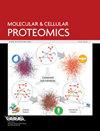
Biotinylation-based proximity labelling methods are valuable for discovering protein-protein interactions within cellular systems. However, one limitation of these approaches is that most require fusing the target protein with the enzyme that biotinylates nearby proteins (i.e., TurboID or APEX2), which risks sterically disrupting the protein's native function. Here, we present a method designed to reduce the steric impact of these fusions and offer greater flexibility in labelling modalities. The method, Antibody and Small-tag Assembly on Proteins for Interaction Detection (ASAP-ID), involves a bipartite system. Target proteins are fused to a small peptide antigen that recruits TurboID or APEX2 fused to an antibody directed to the antigen. Using two different antigen/antibody systems (SunTag and MoonTag), we show that ASAP-ID can specifically label human Lamin A in cells. The method works when the target protein and nanobody are co-expressed together in cis (ASAP-IDIC). We also demonstrate that the approach works when the antibody fusion is added in trans to fixed cells post-expression (ASAP-IDIT). ASAP-IDIT identified more than 448 known and previously undescribed potential interactors of lamin. We further used ASAP-IDIT to study how ALS-mutant profilin one affected its interactome. The method identified proteins involved in protein quality control that correlated with aggregation propensity. Moreover, the different mutants showed variation in the cellular location where aggregates formed. ASAP-IDIT revealed preferences for mitochondrial proteins for the two profilin mutants that tend to aggregate in the cytoplasm, C71G and M114T, and nuclear proteins for a mutant more prone to nuclear aggregation. These findings position ASAP-ID as a powerful addition to the proximity labelling toolkit, capable of probing subtle differences in interactomes in a less invasive manner.
期刊介绍:
The mission of MCP is to foster the development and applications of proteomics in both basic and translational research. MCP will publish manuscripts that report significant new biological or clinical discoveries underpinned by proteomic observations across all kingdoms of life. Manuscripts must define the biological roles played by the proteins investigated or their mechanisms of action.
The journal also emphasizes articles that describe innovative new computational methods and technological advancements that will enable future discoveries. Manuscripts describing such approaches do not have to include a solution to a biological problem, but must demonstrate that the technology works as described, is reproducible and is appropriate to uncover yet unknown protein/proteome function or properties using relevant model systems or publicly available data.
Scope:
-Fundamental studies in biology, including integrative "omics" studies, that provide mechanistic insights
-Novel experimental and computational technologies
-Proteogenomic data integration and analysis that enable greater understanding of physiology and disease processes
-Pathway and network analyses of signaling that focus on the roles of post-translational modifications
-Studies of proteome dynamics and quality controls, and their roles in disease
-Studies of evolutionary processes effecting proteome dynamics, quality and regulation
-Chemical proteomics, including mechanisms of drug action
-Proteomics of the immune system and antigen presentation/recognition
-Microbiome proteomics, host-microbe and host-pathogen interactions, and their roles in health and disease
-Clinical and translational studies of human diseases
-Metabolomics to understand functional connections between genes, proteins and phenotypes

 求助内容:
 应助结果提醒方式:


 京公网安备 11010802042870号


