{"title":"[Reshaping surgical strategies for pancreatic cancer in the era of neoadjuvant therapy: challenges and opportunities].","authors":"J He, Z Li","doi":"10.3760/cma.j.cn112139-20260311-00097","DOIUrl":null,"url":null,"abstract":"<p><p>With the widespread adoption of neoadjuvant therapy in pancreatic cancer, the traditional surgery-centered treatment paradigm is undergoing a profound shift. Against the background of upfront systemic therapy, surgery no longer naturally occupies the starting point of the treatment sequence; instead, its indications, timing, and expected benefits must be re-evaluated and redefined within the new treatment framework. By improving completion of the entire treatment course, enabling biological selection, and optimizing patient selection for surgical intervention, neoadjuvant therapy has driven a shift in resectability assessment from a purely anatomical judgment toward a comprehensive decision-making model that integrates tumor biology and treatment response. Nevertheless, surgical practice faces multiple challenges, including blurred boundaries of surgical indications, greater complexity in determining the optimal timing of surgery, evolving technical difficulty and perioperative risk, and the limitations of traditional evaluation frameworks. On this basis, the role of surgeons is evolving from executors of surgical techniques to central decision-makers within multidisciplinary teams, accompanied by increasing refinement of surgical strategies and ongoing innovation in surgical techniques and assessment concepts. Overall, the reshaping of surgical strategies for pancreatic cancer in the era of neoadjuvant therapy is not centered on the binary question of whether to operate, but rather on determining for whom, when, and how surgery should be performed, with the ultimate goal of achieving precise surgical decision-making oriented toward long-term survival benefit for patients.</p>","PeriodicalId":60685,"journal":{"name":"中华外科杂志","volume":"64 8","pages":"850-855"},"PeriodicalIF":0.0000,"publicationDate":"2026-08-01","publicationTypes":"Journal Article","fieldsOfStudy":null,"isOpenAccess":false,"openAccessPdf":"","citationCount":"0","resultStr":null,"platform":"Semanticscholar","paperid":null,"PeriodicalName":"中华外科杂志","FirstCategoryId":"3","ListUrlMain":"https://doi.org/10.3760/cma.j.cn112139-20260311-00097","RegionNum":0,"RegionCategory":null,"ArticlePicture":[],"TitleCN":null,"AbstractTextCN":null,"PMCID":null,"EPubDate":"","PubModel":"","JCR":"","JCRName":"","Score":null,"Total":0}
引用次数: 0
Abstract
With the widespread adoption of neoadjuvant therapy in pancreatic cancer, the traditional surgery-centered treatment paradigm is undergoing a profound shift. Against the background of upfront systemic therapy, surgery no longer naturally occupies the starting point of the treatment sequence; instead, its indications, timing, and expected benefits must be re-evaluated and redefined within the new treatment framework. By improving completion of the entire treatment course, enabling biological selection, and optimizing patient selection for surgical intervention, neoadjuvant therapy has driven a shift in resectability assessment from a purely anatomical judgment toward a comprehensive decision-making model that integrates tumor biology and treatment response. Nevertheless, surgical practice faces multiple challenges, including blurred boundaries of surgical indications, greater complexity in determining the optimal timing of surgery, evolving technical difficulty and perioperative risk, and the limitations of traditional evaluation frameworks. On this basis, the role of surgeons is evolving from executors of surgical techniques to central decision-makers within multidisciplinary teams, accompanied by increasing refinement of surgical strategies and ongoing innovation in surgical techniques and assessment concepts. Overall, the reshaping of surgical strategies for pancreatic cancer in the era of neoadjuvant therapy is not centered on the binary question of whether to operate, but rather on determining for whom, when, and how surgery should be performed, with the ultimate goal of achieving precise surgical decision-making oriented toward long-term survival benefit for patients.
期刊介绍:
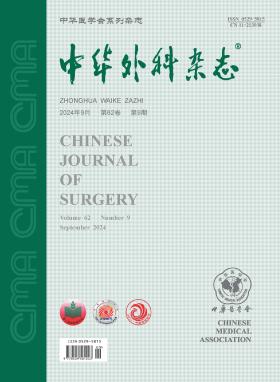
Chinese Journal of Surgery|Chin J Surg (monthly) is a high-level medical science and technology journal approved by the General Administration of Press and Publication of the People's Republic of China, under the supervision of the China Association for Science and Technology, and organised by the Chinese Medical Association for domestic and international public circulation. It was founded in January 1951, and is published on the basis of the Journal of Chinese Surgery. The Journal is aimed at senior and intermediate surgeons and related researchers, mainly reporting the leading scientific research results and clinical experience in the field of surgery, as well as the basic theoretical research that has a guiding effect on the clinical work of surgery.
Chinese Journal of Surgery|Chin J Surg is committed to reflecting the major research progress in the field of surgery in China and promoting academic exchanges at home and abroad. The main columns include thesis, meta-analysis, review, expert forum, synthesis, case report, diagnosis and treatment experience, technical exchange, clinical case discussion, academic controversy, and special lectures, etc. The journal has been accepted by the National Academy of Medicine of the United States. The journal has been included in many famous databases at home and abroad, such as the Biomedical Analysis and Online Retrieval System (MEDLINE) of the U.S. National Library of Medicine.

 求助内容:
 应助结果提醒方式:


 京公网安备 11010802042870号


