
Electrochemical amination of acetone using Ag as cathode: mechanism and role of Pb impurities for hydrogen transfer

IF 4 3区 化学 Q2 CHEMISTRY, PHYSICAL
Catalysis Science & Technology Pub Date : 2026-06-22 Epub Date: 2026-05-19 DOI:10.1039/d6cy00189k
Yani Guan, Justus Kümper, Angelina Cuomo, Simran Kumari, Sonja D. Mürtz, Pavlo Nikolaienko, Karl J. J. Mayrhofer, Regina Palkovits, Philippe Sautet
{"title":"Electrochemical amination of acetone using Ag as cathode: mechanism and role of Pb impurities for hydrogen transfer","authors":"Yani Guan,&nbsp;Justus Kümper,&nbsp;Angelina Cuomo,&nbsp;Simran Kumari,&nbsp;Sonja D. Mürtz,&nbsp;Pavlo Nikolaienko,&nbsp;Karl J. J. Mayrhofer,&nbsp;Regina Palkovits,&nbsp;Philippe Sautet","doi":"10.1039/d6cy00189k","DOIUrl":null,"url":null,"abstract":"<div><div>Electrochemical reductive amination of acetone using Ag electrodes is strongly enhanced by 1 ppm Pb in the solution but the underlying mechanisms and the nature of the Pb species remain poorly understood. To understand how trace elements alter reaction pathways and enhance catalytic performance, the catalytic behavior of Pb traces in electrochemical hydrogenation was theoretically investigated. Using computational modeling, we examined the formation of Pb hydrides (PbH<sub>2</sub> and PbH<sub>4</sub>) on the electrified silver surface at the highly reducing potential used experimentally and their reactivity either at the polarized surface or in the solution in proximity of the electrode, including for hydrogen transfer towards the imine intermediate in the electrocatalytic amination of acetone with methylamine. Our results highlight a key role of Pb hydride species (PbH<sub>2</sub> at the electrode surface or PbH<sub>4</sub> in the near-electrode solution) for the imine hydrogenation step. In the absence of Pb, hydrogenations directly on the Ag electrode by proton-coupled electron transfer or by surface hydrides both suffer from high energy barriers, altogether explaining the experimental requirement of Pb traces for activity. One possible scenario is a dynamic cycle where PbH<sub>4</sub>, a highly unstable compound, is formed by the reducing potential at the Ag electrode and acts as a short-lived hydrogen shuttle in the near-electrode solution, either homogeneously hydrogenating the imine or producing hydrogen evolution, by decomposition or interaction with water. Another scenario underlines PbH<sub>2</sub> as the main actor, formed on the electrode, and hydrogenating the imine on the Ag surface heterogeneously. This study proposes an original hypothesis for the role of Pb as a hydrogen transfer agent, offering a mechanistic understanding of its catalytic behavior. Our findings not only explain the enhanced efficiency and selectivity observed in Pb-catalyzed electrochemical hydrogenation but also open avenues for the rational design of advanced catalysts based on trace elements to optimize sustainable electrochemical processes.</div></div>","PeriodicalId":66,"journal":{"name":"Catalysis Science & Technology","volume":"16 12","pages":"Pages 4090-4102"},"PeriodicalIF":4.0000,"publicationDate":"2026-06-22","publicationTypes":"Journal Article","fieldsOfStudy":null,"isOpenAccess":false,"openAccessPdf":"","citationCount":"0","resultStr":null,"platform":"Semanticscholar","paperid":null,"PeriodicalName":"Catalysis Science & Technology","FirstCategoryId":"92","ListUrlMain":"https://www.sciencedirect.com/org/science/article/pii/S2044475326002352","RegionNum":3,"RegionCategory":"化学","ArticlePicture":[],"TitleCN":null,"AbstractTextCN":null,"PMCID":null,"EPubDate":"2026/5/19 0:00:00","PubModel":"Epub","JCR":"Q2","JCRName":"CHEMISTRY, PHYSICAL","Score":null,"Total":0}
引用次数: 0

Abstract

Electrochemical reductive amination of acetone using Ag electrodes is strongly enhanced by 1 ppm Pb in the solution but the underlying mechanisms and the nature of the Pb species remain poorly understood. To understand how trace elements alter reaction pathways and enhance catalytic performance, the catalytic behavior of Pb traces in electrochemical hydrogenation was theoretically investigated. Using computational modeling, we examined the formation of Pb hydrides (PbH2 and PbH4) on the electrified silver surface at the highly reducing potential used experimentally and their reactivity either at the polarized surface or in the solution in proximity of the electrode, including for hydrogen transfer towards the imine intermediate in the electrocatalytic amination of acetone with methylamine. Our results highlight a key role of Pb hydride species (PbH2 at the electrode surface or PbH4 in the near-electrode solution) for the imine hydrogenation step. In the absence of Pb, hydrogenations directly on the Ag electrode by proton-coupled electron transfer or by surface hydrides both suffer from high energy barriers, altogether explaining the experimental requirement of Pb traces for activity. One possible scenario is a dynamic cycle where PbH4, a highly unstable compound, is formed by the reducing potential at the Ag electrode and acts as a short-lived hydrogen shuttle in the near-electrode solution, either homogeneously hydrogenating the imine or producing hydrogen evolution, by decomposition or interaction with water. Another scenario underlines PbH2 as the main actor, formed on the electrode, and hydrogenating the imine on the Ag surface heterogeneously. This study proposes an original hypothesis for the role of Pb as a hydrogen transfer agent, offering a mechanistic understanding of its catalytic behavior. Our findings not only explain the enhanced efficiency and selectivity observed in Pb-catalyzed electrochemical hydrogenation but also open avenues for the rational design of advanced catalysts based on trace elements to optimize sustainable electrochemical processes.

Abstract Image

银为阴极的丙酮电化学胺化反应:Pb杂质对氢转移的机理及作用
在溶液中加入1ppm的Pb后,Ag电极对丙酮的电化学还原性胺化反应得到了明显的增强,但其机制和Pb物质的性质尚不清楚。为了了解痕量元素如何改变反应途径并提高催化性能,从理论上研究了痕量Pb在电化学加氢中的催化行为。利用计算模型,我们研究了在实验中使用的高还原电位下,在带电的银表面上形成的Pb氢化物(phh2和phh4),以及它们在极化表面或电极附近溶液中的反应性,包括在丙酮与甲胺的电催化胺化过程中氢向亚胺中间体的转移。我们的研究结果强调了Pb氢化物质(电极表面的phbh2或近电极溶液中的phbh4)在亚胺加氢步骤中的关键作用。在没有Pb的情况下,通过质子耦合电子转移或表面氢化物直接在Ag电极上加氢都受到高能量势垒的影响,共同解释了Pb痕量活性的实验要求。一种可能的情况是动态循环,其中phbh4(一种高度不稳定的化合物)由Ag电极上的还原电位形成,并在近电极溶液中充当短暂的氢穿梭体,通过分解或与水相互作用均匀地氢化亚胺或产生析氢。另一种情况强调phbh2是主要的参与者,在电极上形成,并在Ag表面上不均匀地氢化亚胺。本研究提出了铅作为氢转移剂作用的原始假设,为其催化行为提供了机制理解。我们的发现不仅解释了在铅催化的电化学加氢中观察到的效率和选择性的提高,而且为合理设计基于微量元素的先进催化剂以优化可持续的电化学过程开辟了道路。
本文章由计算机程序翻译,如有差异,请以英文原文为准。
求助全文
约1分钟内获得全文 求助全文
来源期刊
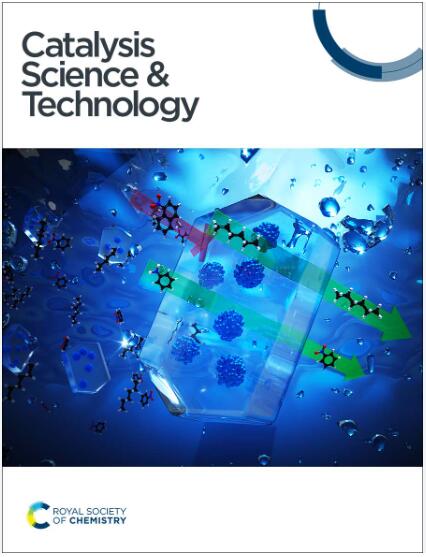
Catalysis Science & Technology
Catalysis Science & Technology CHEMISTRY, PHYSICAL-
CiteScore
8.70
自引率
6.00%
发文量
587
审稿时长
1.5 months
期刊介绍: A multidisciplinary journal focusing on cutting edge research across all fundamental science and technological aspects of catalysis. Editor-in-chief: Bert Weckhuysen Impact factor: 5.0 Time to first decision (peer reviewed only): 31 days

×
引用
GB/T 7714-2015
复制
MLA
复制
APA
复制
导出至
BibTeX EndNote RefMan NoteFirst NoteExpress
×
提示
您的信息不完整,为了账户安全,请先补充。
现在去补充
×
提示
您因"违规操作"
具体请查看互助需知
我知道了
×
提示
确定
请完成安全验证×
copy
已复制链接
快去分享给好友吧!
我知道了
右上角分享
点击右上角分享
0
联系我们:info@booksci.cn Book学术提供免费学术资源搜索服务,方便国内外学者检索中英文文献。致力于提供最便捷和优质的服务体验。 Copyright © 2023 布克学术 All rights reserved.
京ICP备2023020795号-1
ghs 京公网安备 11010802042870号
Book学术文献互助
Book学术文献互助群
群 号:604180095
Book学术官方微信
小红书


