Anneroos E Nederstigt, Samiksha Sardana, Francine Rodrigues Ianiski, Marc P Baggelaar
{"title":"Long-Chain S-Acylation Is a Key Modulator During the Macrophage Inflammatory Response.","authors":"Anneroos E Nederstigt, Samiksha Sardana, Francine Rodrigues Ianiski, Marc P Baggelaar","doi":"10.1016/j.mcpro.2026.101600","DOIUrl":null,"url":null,"abstract":"<p><p>Long-chain S-acylation is a reversible lipid modification critical for regulating protein localization, stability, and signaling, yet its role in macrophage-mediated inflammation remains incompletely understood. Here, we combine stable isotope labeling by amino acids in cell culture (SILAC) with site-specific acyl-biotin exchange (ssABE) to generate a comprehensive map of the long-chain S-acylation landscape in THP-1 macrophages polarized to M0 and M(LPS + IFNɣ) states. Our quantitative proteomics reveal polarization-specific S-acylation patterns and uncover numerous inflammation-related modification sites, including novel S-acyl-peptidoforms, which are distinct S-acylated variants of the same peptide such as WARS (C305/C309), highlighting their potential relevance in macrophage activation. Pharmacological inhibition of S-acylation with the broad-spectrum inhibitor 2-bromopalmitate suppresses secretion of key pro-inflammatory chemokines (CXCL9, CXCL10, and CCL4) and disrupts IDO1-mediated tryptophan catabolism, while Palmostatin B mainly stabilizes S-acylation on GPCR signaling proteins. Together, these findings position long-chain S-acylation as a key regulatory mechanism during macrophage activation and a promising target for therapeutic intervention in inflammatory disease.</p>","PeriodicalId":18712,"journal":{"name":"Molecular & Cellular Proteomics","volume":" ","pages":"101600"},"PeriodicalIF":6.3000,"publicationDate":"2026-07-01","publicationTypes":"Journal Article","fieldsOfStudy":null,"isOpenAccess":false,"openAccessPdf":"https://www.ncbi.nlm.nih.gov/pmc/articles/PMC13380729/pdf/","citationCount":"0","resultStr":null,"platform":"Semanticscholar","paperid":null,"PeriodicalName":"Molecular & Cellular Proteomics","FirstCategoryId":"1085","ListUrlMain":"https://doi.org/10.1016/j.mcpro.2026.101600","RegionNum":2,"RegionCategory":"生物学","ArticlePicture":[],"TitleCN":null,"AbstractTextCN":null,"PMCID":null,"EPubDate":"2026/6/10 0:00:00","PubModel":"Epub","JCR":"Q1","JCRName":"BIOCHEMICAL RESEARCH METHODS","Score":null,"Total":0}
引用次数: 0
Abstract
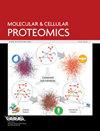
Long-chain S-acylation is a reversible lipid modification critical for regulating protein localization, stability, and signaling, yet its role in macrophage-mediated inflammation remains incompletely understood. Here, we combine stable isotope labeling by amino acids in cell culture (SILAC) with site-specific acyl-biotin exchange (ssABE) to generate a comprehensive map of the long-chain S-acylation landscape in THP-1 macrophages polarized to M0 and M(LPS + IFNɣ) states. Our quantitative proteomics reveal polarization-specific S-acylation patterns and uncover numerous inflammation-related modification sites, including novel S-acyl-peptidoforms, which are distinct S-acylated variants of the same peptide such as WARS (C305/C309), highlighting their potential relevance in macrophage activation. Pharmacological inhibition of S-acylation with the broad-spectrum inhibitor 2-bromopalmitate suppresses secretion of key pro-inflammatory chemokines (CXCL9, CXCL10, and CCL4) and disrupts IDO1-mediated tryptophan catabolism, while Palmostatin B mainly stabilizes S-acylation on GPCR signaling proteins. Together, these findings position long-chain S-acylation as a key regulatory mechanism during macrophage activation and a promising target for therapeutic intervention in inflammatory disease.
期刊介绍:
The mission of MCP is to foster the development and applications of proteomics in both basic and translational research. MCP will publish manuscripts that report significant new biological or clinical discoveries underpinned by proteomic observations across all kingdoms of life. Manuscripts must define the biological roles played by the proteins investigated or their mechanisms of action.
The journal also emphasizes articles that describe innovative new computational methods and technological advancements that will enable future discoveries. Manuscripts describing such approaches do not have to include a solution to a biological problem, but must demonstrate that the technology works as described, is reproducible and is appropriate to uncover yet unknown protein/proteome function or properties using relevant model systems or publicly available data.
Scope:
-Fundamental studies in biology, including integrative "omics" studies, that provide mechanistic insights
-Novel experimental and computational technologies
-Proteogenomic data integration and analysis that enable greater understanding of physiology and disease processes
-Pathway and network analyses of signaling that focus on the roles of post-translational modifications
-Studies of proteome dynamics and quality controls, and their roles in disease
-Studies of evolutionary processes effecting proteome dynamics, quality and regulation
-Chemical proteomics, including mechanisms of drug action
-Proteomics of the immune system and antigen presentation/recognition
-Microbiome proteomics, host-microbe and host-pathogen interactions, and their roles in health and disease
-Clinical and translational studies of human diseases
-Metabolomics to understand functional connections between genes, proteins and phenotypes

 求助内容:
 应助结果提醒方式:


 京公网安备 11010802042870号


