
Optimizing rapeseed protein purification: a continuous chromatographic approach for napin and cruciferin

IF 2.7 4区 生物学 Q3 BIOTECHNOLOGY & APPLIED MICROBIOLOGY
Journal of chemical technology and biotechnology Pub Date : 2026-06-09 Epub Date: 2025-08-04 DOI:10.1002/jctb.70032
Jonas Arnecke, Jessica Gillmann, Tim Börner, Mathias Hafner, Christian Frech
{"title":"Optimizing rapeseed protein purification: a continuous chromatographic approach for napin and cruciferin","authors":"Jonas Arnecke,&nbsp;Jessica Gillmann,&nbsp;Tim Börner,&nbsp;Mathias Hafner,&nbsp;Christian Frech","doi":"10.1002/jctb.70032","DOIUrl":null,"url":null,"abstract":"<div>\n \n \n <section>\n \n <h3> BACKGROUND</h3>\n \n <p>Napin and cruciferin, the predominant storage proteins in <i>Brassica napus</i> (rapeseed), exhibit favorable techno-functional properties such as emulsification and gel formation, positioning them as promising candidates for the encapsulation and delivery of bioactive compounds. Their classification as GRAS (Generally Recognized As Safe), combined with their biodegradability and biocompatibility, highlights their potential as sustainable alternatives to synthetic delivery matrices. However, their broader application is hindered by the absence of scalable purification processes that concurrently ensure high purity and yield.</p>\n </section>\n \n <section>\n \n <h3> RESULTS</h3>\n \n <p>This study presents the development of a fully continuous chromatographic platform for the simultaneous isolation of napin and cruciferin from crude rapeseed extracts. Napin was purified via cation-exchange chromatography, whereas cruciferin was isolated using anion exchange. Key process parameters were identified through systematic batch screening, with emphasis on the initial binding conditions to enable direct coupling of both chromatographic steps. The optimized protocol permitted efficient sequential protein capture with minimal buffer adjustment, leading to significantly reduced process time and resource consumption. The purified proteins exhibited high purity and are of suitable quality for future applications.</p>\n </section>\n \n <section>\n \n <h3> CONCLUSION</h3>\n \n <p>The continuous purification process established in this study constitutes a significant step toward the scalable and sustainable processing of plant-derived proteins. By applying principles of process intensification, the method enhances overall operational efficiency and environmental compatibility. Importantly, the high-purity napin and cruciferin obtained through this platform provide a promising foundation for future development of bioactive compound encapsulation and delivery systems, supporting the broader integration of plant-based biopolymers in pharmaceutical and nutraceutical applications. © 2025 The Author(s). <i>Journal of Chemical Technology and Biotechnology</i> published by John Wiley &amp; Sons Ltd on behalf of Society of Chemical Industry (SCI).</p>\n </section>\n </div>","PeriodicalId":15335,"journal":{"name":"Journal of chemical technology and biotechnology","volume":"101 7","pages":"1370-1383"},"PeriodicalIF":2.7000,"publicationDate":"2026-06-09","publicationTypes":"Journal Article","fieldsOfStudy":null,"isOpenAccess":false,"openAccessPdf":"https://onlinelibrary.wiley.com/doi/epdf/10.1002/jctb.70032","citationCount":"0","resultStr":null,"platform":"Semanticscholar","paperid":null,"PeriodicalName":"Journal of chemical technology and biotechnology","FirstCategoryId":"5","ListUrlMain":"https://onlinelibrary.wiley.com/doi/10.1002/jctb.70032","RegionNum":4,"RegionCategory":"生物学","ArticlePicture":[],"TitleCN":null,"AbstractTextCN":null,"PMCID":null,"EPubDate":"2025/8/4 0:00:00","PubModel":"Epub","JCR":"Q3","JCRName":"BIOTECHNOLOGY & APPLIED MICROBIOLOGY","Score":null,"Total":0}
引用次数: 0

Abstract

BACKGROUND

Napin and cruciferin, the predominant storage proteins in Brassica napus (rapeseed), exhibit favorable techno-functional properties such as emulsification and gel formation, positioning them as promising candidates for the encapsulation and delivery of bioactive compounds. Their classification as GRAS (Generally Recognized As Safe), combined with their biodegradability and biocompatibility, highlights their potential as sustainable alternatives to synthetic delivery matrices. However, their broader application is hindered by the absence of scalable purification processes that concurrently ensure high purity and yield.

RESULTS

This study presents the development of a fully continuous chromatographic platform for the simultaneous isolation of napin and cruciferin from crude rapeseed extracts. Napin was purified via cation-exchange chromatography, whereas cruciferin was isolated using anion exchange. Key process parameters were identified through systematic batch screening, with emphasis on the initial binding conditions to enable direct coupling of both chromatographic steps. The optimized protocol permitted efficient sequential protein capture with minimal buffer adjustment, leading to significantly reduced process time and resource consumption. The purified proteins exhibited high purity and are of suitable quality for future applications.

CONCLUSION

The continuous purification process established in this study constitutes a significant step toward the scalable and sustainable processing of plant-derived proteins. By applying principles of process intensification, the method enhances overall operational efficiency and environmental compatibility. Importantly, the high-purity napin and cruciferin obtained through this platform provide a promising foundation for future development of bioactive compound encapsulation and delivery systems, supporting the broader integration of plant-based biopolymers in pharmaceutical and nutraceutical applications. © 2025 The Author(s). Journal of Chemical Technology and Biotechnology published by John Wiley & Sons Ltd on behalf of Society of Chemical Industry (SCI).

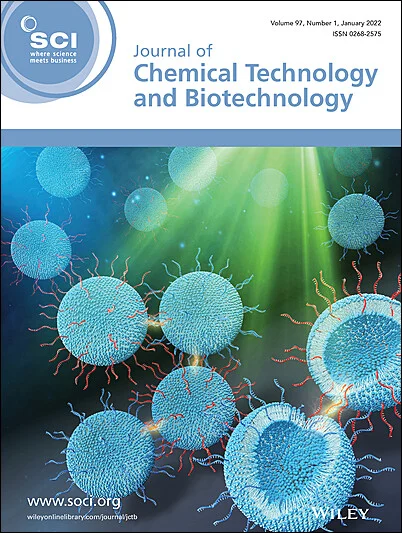
Abstract Image

优化油菜籽蛋白的纯化:一种连续色谱法分离油菜蛋白和十字花素
Napin和十字花素是油菜中主要的储存蛋白,具有良好的技术功能特性,如乳化和凝胶形成,这使它们成为生物活性化合物包封和递送的有希望的候选物。它们被归类为GRAS(公认安全),再加上它们的生物可降解性和生物相容性,突显了它们作为合成递送基质的可持续替代品的潜力。然而,由于缺乏可扩展的净化工艺,同时确保高纯度和产量,它们的广泛应用受到阻碍。结果建立了同时分离菜籽粗提物中油菜素和十字花素的全连续色谱平台。Napin采用阳离子交换色谱法纯化,而十字花素采用阴离子交换色谱法分离。通过系统的批量筛选确定了关键工艺参数,重点是初始结合条件,以实现两个色谱步骤的直接耦合。优化后的方案允许以最小的缓冲调整进行有效的顺序蛋白质捕获,从而显着减少了处理时间和资源消耗。纯化后的蛋白纯度高,质量适合未来应用。结论本研究建立的连续纯化工艺为植物源性蛋白的规模化、可持续性加工迈出了重要的一步。通过应用过程强化原理,该方法提高了整体操作效率和环境兼容性。重要的是,通过该平台获得的高纯度的油菜素和十字花素为生物活性化合物的封装和输送系统的未来发展提供了有希望的基础,支持植物基生物聚合物在制药和营养保健应用中的更广泛整合。©2025作者。由John Wiley &; Sons Ltd代表美国化学工业学会(SCI)出版的化学技术与生物技术杂志。
本文章由计算机程序翻译,如有差异,请以英文原文为准。
求助全文
约1分钟内获得全文 求助全文
来源期刊
CiteScore
7.00
自引率
5.90%
发文量
268
审稿时长
1.7 months
期刊介绍: Journal of Chemical Technology and Biotechnology(JCTB) is an international, inter-disciplinary peer-reviewed journal concerned with the application of scientific discoveries and advancements in chemical and biological technology that aim towards economically and environmentally sustainable industrial processes.
×
引用
GB/T 7714-2015
复制
MLA
复制
APA
复制
导出至
BibTeX EndNote RefMan NoteFirst NoteExpress
×
提示
您的信息不完整,为了账户安全,请先补充。
现在去补充
×
提示
您因"违规操作"
具体请查看互助需知
我知道了
×
提示
确定
请完成安全验证×
copy
已复制链接
快去分享给好友吧!
我知道了
右上角分享
点击右上角分享
0
联系我们:info@booksci.cn Book学术提供免费学术资源搜索服务,方便国内外学者检索中英文文献。致力于提供最便捷和优质的服务体验。 Copyright © 2023 布克学术 All rights reserved.
京ICP备2023020795号-1
ghs 京公网安备 11010802042870号
Book学术文献互助
Book学术文献互助群
群 号:604180095
Book学术官方微信
小红书



