Chloe L Tayler, Serena Bateman, Charlie Haslam, Leonie Müller, Kerena Norris, Evan Rosa-Roseberry, Stan Martens, Jonathan Yu, Eleanor Dickinson, Lee Booty, Rebecca Beveridge, Nicholas J W Rattray, Rachel Peltier-Heap
{"title":"dia-PASEF Enables Rapid Profiling of the Human Secretome for Deeper Insights Into Cellular Dynamics and Inflammatory Mechanisms.","authors":"Chloe L Tayler, Serena Bateman, Charlie Haslam, Leonie Müller, Kerena Norris, Evan Rosa-Roseberry, Stan Martens, Jonathan Yu, Eleanor Dickinson, Lee Booty, Rebecca Beveridge, Nicholas J W Rattray, Rachel Peltier-Heap","doi":"10.1016/j.mcpro.2026.101597","DOIUrl":null,"url":null,"abstract":"<p><p>Protein secretion is a fundamental mechanism for cellular coordination and signaling, with its dysregulation leading to widespread physiological dysfunction and disease. Immunoassay formats that utilize secondary antibody readouts are the current gold standard for measuring secreted proteins, offering high specificity and sensitivity, but relying on predefined protein panels that constrain the discovery of novel biology. We present a scalable mass spectrometry-based workflow that combines data-independent acquisition with ion mobility and parallel fragmentation to deliver rapid, global profiling of the secretome. Using a translationally relevant human iPSC-derived macrophage model, our approach robustly identified over 900 protein groups in under 15 min of acquisition time, delivering exceptional reproducibility across a large sample set. We applied this approach to profile proinflammatory phenotypes, confirming robust identification of key cytokines and chemokines whilst revealing non-canonical immune responses absent from both targeted panels and the intracellular proteome. In particular, we identified a unique cholesterol efflux signature, marked by the secretion of APOA1 and PON1, in response to Mycobacterium tuberculosis, consistent with the metabolic reprogramming that takes place during infection. Furthermore, temporal profiling of macrophage responses to lipopolysaccharide over 24 h resolved dynamic secretion trajectories that distinguish between acute and chronic inflammatory states. The extended time period facilitated the observation of distinct cytokine-dependent secretion phenotypes, with early secretion of TNF and IL-6 initiating downstream signaling cascades that resulted in the delayed secretion of chemokines such as CXCL10 and CCL8. Collectively, these findings establish a robust, scalable platform for global characterization of secretory networks. Beyond macrophage biology, this workflow offers broad utility for biomarker discovery, mechanistic studies of disease progression and evaluation of new therapeutic interventions, providing a powerful tool for advancing precision medicine.</p>","PeriodicalId":18712,"journal":{"name":"Molecular & Cellular Proteomics","volume":" ","pages":"101597"},"PeriodicalIF":6.3000,"publicationDate":"2026-07-01","publicationTypes":"Journal Article","fieldsOfStudy":null,"isOpenAccess":false,"openAccessPdf":"https://www.ncbi.nlm.nih.gov/pmc/articles/PMC13314884/pdf/","citationCount":"0","resultStr":null,"platform":"Semanticscholar","paperid":null,"PeriodicalName":"Molecular & Cellular Proteomics","FirstCategoryId":"1085","ListUrlMain":"https://doi.org/10.1016/j.mcpro.2026.101597","RegionNum":2,"RegionCategory":"生物学","ArticlePicture":[],"TitleCN":null,"AbstractTextCN":null,"PMCID":null,"EPubDate":"2026/5/28 0:00:00","PubModel":"Epub","JCR":"Q1","JCRName":"BIOCHEMICAL RESEARCH METHODS","Score":null,"Total":0}
引用次数: 0
Abstract
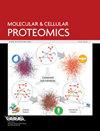
Protein secretion is a fundamental mechanism for cellular coordination and signaling, with its dysregulation leading to widespread physiological dysfunction and disease. Immunoassay formats that utilize secondary antibody readouts are the current gold standard for measuring secreted proteins, offering high specificity and sensitivity, but relying on predefined protein panels that constrain the discovery of novel biology. We present a scalable mass spectrometry-based workflow that combines data-independent acquisition with ion mobility and parallel fragmentation to deliver rapid, global profiling of the secretome. Using a translationally relevant human iPSC-derived macrophage model, our approach robustly identified over 900 protein groups in under 15 min of acquisition time, delivering exceptional reproducibility across a large sample set. We applied this approach to profile proinflammatory phenotypes, confirming robust identification of key cytokines and chemokines whilst revealing non-canonical immune responses absent from both targeted panels and the intracellular proteome. In particular, we identified a unique cholesterol efflux signature, marked by the secretion of APOA1 and PON1, in response to Mycobacterium tuberculosis, consistent with the metabolic reprogramming that takes place during infection. Furthermore, temporal profiling of macrophage responses to lipopolysaccharide over 24 h resolved dynamic secretion trajectories that distinguish between acute and chronic inflammatory states. The extended time period facilitated the observation of distinct cytokine-dependent secretion phenotypes, with early secretion of TNF and IL-6 initiating downstream signaling cascades that resulted in the delayed secretion of chemokines such as CXCL10 and CCL8. Collectively, these findings establish a robust, scalable platform for global characterization of secretory networks. Beyond macrophage biology, this workflow offers broad utility for biomarker discovery, mechanistic studies of disease progression and evaluation of new therapeutic interventions, providing a powerful tool for advancing precision medicine.
期刊介绍:
The mission of MCP is to foster the development and applications of proteomics in both basic and translational research. MCP will publish manuscripts that report significant new biological or clinical discoveries underpinned by proteomic observations across all kingdoms of life. Manuscripts must define the biological roles played by the proteins investigated or their mechanisms of action.
The journal also emphasizes articles that describe innovative new computational methods and technological advancements that will enable future discoveries. Manuscripts describing such approaches do not have to include a solution to a biological problem, but must demonstrate that the technology works as described, is reproducible and is appropriate to uncover yet unknown protein/proteome function or properties using relevant model systems or publicly available data.
Scope:
-Fundamental studies in biology, including integrative "omics" studies, that provide mechanistic insights
-Novel experimental and computational technologies
-Proteogenomic data integration and analysis that enable greater understanding of physiology and disease processes
-Pathway and network analyses of signaling that focus on the roles of post-translational modifications
-Studies of proteome dynamics and quality controls, and their roles in disease
-Studies of evolutionary processes effecting proteome dynamics, quality and regulation
-Chemical proteomics, including mechanisms of drug action
-Proteomics of the immune system and antigen presentation/recognition
-Microbiome proteomics, host-microbe and host-pathogen interactions, and their roles in health and disease
-Clinical and translational studies of human diseases
-Metabolomics to understand functional connections between genes, proteins and phenotypes

 求助内容:
 应助结果提醒方式:


 京公网安备 11010802042870号


