
Assessing Extracellular Vesicle Proteins as Predictive Biomarkers for Developing Type 1 Diabetes

IF 4.1 4区 生物学 Q2 BIOCHEMICAL RESEARCH METHODS
Proteomics Pub Date : 2026-09-26 Epub Date: 2026-05-20 DOI:10.1002/pmic.70148
Panshak P. Dakup, Lisa M. Bramer, Athena Schepmoes, Ivo Diaz Ludovico, Javier Flores, Raghavendra G. Mirmira, Bobbie-Jo M. Webb-Robertson, Thomas O. Metz, Emily K. Sims, Ernesto S. Nakayasu
{"title":"Assessing Extracellular Vesicle Proteins as Predictive Biomarkers for Developing Type 1 Diabetes","authors":"Panshak P. Dakup,&nbsp;Lisa M. Bramer,&nbsp;Athena Schepmoes,&nbsp;Ivo Diaz Ludovico,&nbsp;Javier Flores,&nbsp;Raghavendra G. Mirmira,&nbsp;Bobbie-Jo M. Webb-Robertson,&nbsp;Thomas O. Metz,&nbsp;Emily K. Sims,&nbsp;Ernesto S. Nakayasu","doi":"10.1002/pmic.70148","DOIUrl":null,"url":null,"abstract":"<div>\n \n \n <section>\n \n <p>Plasma extracellular vesicles (EVs) are considered excellent sources for biomarker discovery since they carry signatures of their cellular origin and disease processes. In this paper, we evaluate the potential of plasma EV proteomics analysis for identifying predictive biomarkers of developing type 1 diabetes (T1D), which results from autoimmune destruction of insulin-producing β cells in the islet. We used strong anion exchange beads (Mag-Net) to capture plasma EVs from 19 donors with islet autoimmunity (diagnosed by circulating autoantibodies against islet proteins—AAB+) versus 17 control individuals and analyzed their protein cargo by mass spectrometry. The analysis identified and quantified 5,480 proteins, a 3.2-fold increase in proteome coverage compared to our previous T1D biomarker proteomics study that used whole plasma depleted of the 14 most abundant proteins. The Mag-Net approach also detected 1306 out of the 1717 proteins (76%) that we previously verified as EV proteins. Statistical tests revealed 448 proteins to be differentially abundant in AAB+ versus control volunteers, including 69 previously verified EV proteins. A functional-enrichment analysis resulted in overrepresentation of 25 pathways among the differentially abundant proteins, including pathways related to autoimmune response and lipid metabolism. The capacity of this data to predict AAB+ was tested with a machine learning analysis using a random forest model, resulting in a receiver operating characteristic-area under the curve of 0.81. Overall, our study indicates that plasma EV proteomics analysis can be an exciting approach for studying biomarkers for developing T1D.</p>\n </section>\n \n <section>\n \n <h3> Significance of the Study</h3>\n \n <p>Type 1 diabetes (T1D) is a disease characterized by the body's inability to produce insulin and consequently, to control blood glucose levels. Despite the initial trigger being unclear, the disease development process involves an autoimmune response to the islets of Langerhans, resulting in the death of insulin-producing β cells. There is no cure for the disease, and treatment relies on exogenous administration of insulin. Therefore, preventive therapies that block the autoimmune process are attractive for treating T1D. In fact, anti-CD3 antibody (Teplizumab) delays the onset of T1D by 2 years by targeting T cells. Predictive biomarkers for developing T1D are needed to aid the development and implementation of new therapies and to identify the initial trigger and mechanisms of the islet autoimmune process. In this paper, we assess the potential of plasma extracellular vesicle (EV) proteomics analysis for identifying predictive biomarkers of T1D. Our results show excellent potential of the approach, opening opportunities to perform broader studies to identify biomarkers for developing T1D.</p>\n </section>\n </div>","PeriodicalId":224,"journal":{"name":"Proteomics","volume":"26 10","pages":"24-30"},"PeriodicalIF":4.1000,"publicationDate":"2026-09-26","publicationTypes":"Journal Article","fieldsOfStudy":null,"isOpenAccess":false,"openAccessPdf":"https://onlinelibrary.wiley.com/doi/epdf/10.1002/pmic.70148","citationCount":"0","resultStr":null,"platform":"Semanticscholar","paperid":null,"PeriodicalName":"Proteomics","FirstCategoryId":"99","ListUrlMain":"https://onlinelibrary.wiley.com/doi/10.1002/pmic.70148","RegionNum":4,"RegionCategory":"生物学","ArticlePicture":[],"TitleCN":null,"AbstractTextCN":null,"PMCID":null,"EPubDate":"2026/5/20 0:00:00","PubModel":"Epub","JCR":"Q2","JCRName":"BIOCHEMICAL RESEARCH METHODS","Score":null,"Total":0}
引用次数: 0

Abstract

Plasma extracellular vesicles (EVs) are considered excellent sources for biomarker discovery since they carry signatures of their cellular origin and disease processes. In this paper, we evaluate the potential of plasma EV proteomics analysis for identifying predictive biomarkers of developing type 1 diabetes (T1D), which results from autoimmune destruction of insulin-producing β cells in the islet. We used strong anion exchange beads (Mag-Net) to capture plasma EVs from 19 donors with islet autoimmunity (diagnosed by circulating autoantibodies against islet proteins—AAB+) versus 17 control individuals and analyzed their protein cargo by mass spectrometry. The analysis identified and quantified 5,480 proteins, a 3.2-fold increase in proteome coverage compared to our previous T1D biomarker proteomics study that used whole plasma depleted of the 14 most abundant proteins. The Mag-Net approach also detected 1306 out of the 1717 proteins (76%) that we previously verified as EV proteins. Statistical tests revealed 448 proteins to be differentially abundant in AAB+ versus control volunteers, including 69 previously verified EV proteins. A functional-enrichment analysis resulted in overrepresentation of 25 pathways among the differentially abundant proteins, including pathways related to autoimmune response and lipid metabolism. The capacity of this data to predict AAB+ was tested with a machine learning analysis using a random forest model, resulting in a receiver operating characteristic-area under the curve of 0.81. Overall, our study indicates that plasma EV proteomics analysis can be an exciting approach for studying biomarkers for developing T1D.

Significance of the Study

Type 1 diabetes (T1D) is a disease characterized by the body's inability to produce insulin and consequently, to control blood glucose levels. Despite the initial trigger being unclear, the disease development process involves an autoimmune response to the islets of Langerhans, resulting in the death of insulin-producing β cells. There is no cure for the disease, and treatment relies on exogenous administration of insulin. Therefore, preventive therapies that block the autoimmune process are attractive for treating T1D. In fact, anti-CD3 antibody (Teplizumab) delays the onset of T1D by 2 years by targeting T cells. Predictive biomarkers for developing T1D are needed to aid the development and implementation of new therapies and to identify the initial trigger and mechanisms of the islet autoimmune process. In this paper, we assess the potential of plasma extracellular vesicle (EV) proteomics analysis for identifying predictive biomarkers of T1D. Our results show excellent potential of the approach, opening opportunities to perform broader studies to identify biomarkers for developing T1D.
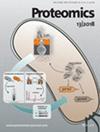

评估细胞外囊泡蛋白作为1型糖尿病发展的预测性生物标志物。
血浆细胞外囊泡(EVs)被认为是发现生物标志物的极好来源,因为它们携带细胞起源和疾病过程的特征。在本文中,我们评估了血浆EV蛋白质组学分析在鉴定发展中的1型糖尿病(T1D)的预测性生物标志物方面的潜力,T1D是由胰岛中产生胰岛素的β细胞的自身免疫破坏引起的。我们使用强阴离子交换珠(magnet)捕获19名胰岛自身免疫供体(通过循环针对胰岛蛋白- aab +的自身抗体诊断)和17名对照个体的血浆ev,并通过质谱分析其蛋白质含量。该分析鉴定并量化了5480种蛋白质,与我们之前的T1D生物标志物蛋白质组学研究相比,蛋白质组学覆盖范围增加了3.2倍,该研究使用了全血浆中14种最丰富的蛋白质。Mag-Net方法还检测到1717个蛋白中的1306个(76%),我们之前证实是EV蛋白。统计测试显示,448种蛋白质在AAB+与对照组志愿者中差异丰富,其中包括69种先前验证的EV蛋白。功能富集分析结果显示,在差异丰富的蛋白质中,有25条通路存在过度表达,包括与自身免疫反应和脂质代谢相关的通路。该数据预测AAB+的能力通过使用随机森林模型的机器学习分析进行了测试,得到曲线下的接收者工作特征面积为0.81。总之,我们的研究表明血浆EV蛋白质组学分析可以成为研究T1D生物标志物的一种令人兴奋的方法。研究意义:1型糖尿病(T1D)是一种以身体无法产生胰岛素为特征的疾病,因此无法控制血糖水平。尽管最初的触发因素尚不清楚,但该疾病的发展过程涉及对朗格汉斯胰岛的自身免疫反应,导致产生胰岛素的β细胞死亡。这种疾病无法治愈,治疗依赖于外源性胰岛素。因此,阻断自身免疫过程的预防性疗法对治疗T1D很有吸引力。事实上,抗cd3抗体(Teplizumab)通过靶向T细胞将T1D的发病延迟2年。发展T1D需要预测性生物标志物,以帮助开发和实施新疗法,并确定胰岛自身免疫过程的初始触发和机制。在本文中,我们评估了血浆细胞外囊泡(EV)蛋白质组学分析在识别T1D预测生物标志物方面的潜力。我们的研究结果显示了该方法的巨大潜力,为开展更广泛的研究以确定T1D的生物标志物提供了机会。
本文章由计算机程序翻译,如有差异,请以英文原文为准。
求助全文
约1分钟内获得全文 求助全文
来源期刊
Proteomics
Proteomics 生物-生化研究方法
CiteScore
6.30
自引率
5.90%
发文量
193
审稿时长
3 months
期刊介绍: PROTEOMICS is the premier international source for information on all aspects of applications and technologies, including software, in proteomics and other "omics". The journal includes but is not limited to proteomics, genomics, transcriptomics, metabolomics and lipidomics, and systems biology approaches. Papers describing novel applications of proteomics and integration of multi-omics data and approaches are especially welcome.
×
引用
GB/T 7714-2015
复制
MLA
复制
APA
复制
导出至
BibTeX EndNote RefMan NoteFirst NoteExpress
×
提示
您的信息不完整,为了账户安全,请先补充。
现在去补充
×
提示
您因"违规操作"
具体请查看互助需知
我知道了
×
提示
确定
请完成安全验证×
copy
已复制链接
快去分享给好友吧!
我知道了
右上角分享
点击右上角分享
0
联系我们:info@booksci.cn Book学术提供免费学术资源搜索服务,方便国内外学者检索中英文文献。致力于提供最便捷和优质的服务体验。 Copyright © 2023 布克学术 All rights reserved.
京ICP备2023020795号-1
ghs 京公网安备 11010802042870号
Book学术文献互助
Book学术文献互助群
群 号:604180095
Book学术官方微信
小红书


