A comparative study of drying methods on tomato peel residues: physicochemical and antioxidant properties

IF 4.1 2区 农林科学 Q2 FOOD SCIENCE & TECHNOLOGY
Nina Yan, Yu Zhou, Jing Xiao, Cheng-jian Xu, Y. Liu, Chen-Qiang Wang, Xue-Ming Wang, Shuangli Xiong, Zhongyan Zhu, Xiao Yang, Hang Xiao
{"title":"A comparative study of drying methods on tomato peel residues: physicochemical and antioxidant properties","authors":"Nina Yan, Yu Zhou, Jing Xiao, Cheng-jian Xu, Y. Liu, Chen-Qiang Wang, Xue-Ming Wang, Shuangli Xiong, Zhongyan Zhu, Xiao Yang, Hang Xiao","doi":"10.3389/fsufs.2025.1737421","DOIUrl":null,"url":null,"abstract":"This study aimed to systematically evaluate the effects of vacuum freeze drying (VFD), vacuum drying (VD), natural drying (ND), vacuum microwave drying (VMD), hot air drying (HAD) and microwave drying (MD) on the physicochemical properties, microstructure, and antioxidant capacity of tomato peel residues (TPs). Focusing on identifying the optimal approach that strikes a balance between product quality and industrial feasibility. The results indicated that VFD effectively retained the appearance color, microstructure, lycopene content (12.35 mg/100 g), reducing sugar content (4,024 mg/100 g), hydration capacity, and antioxidant capacity of TPs. VMD exhibited the highest vitamin C content (20.45 mg/100 g) and quality comparable to VFD, along with short drying time and low energy consumption. HAD resulted in the highest levels of total phenolic content (48.66 mg/100 g) and total flavonoid content (72.85 mg/100 g). VMD proved to be the most promising technology for achieving large-scale, high-value industrial drying of TPs due to its exceptional drying efficiency and excellent overall quality retention capabilities. This study provides key theoretical foundations and technical pathways for the value-added utilization of tomatoes processing by-products, holding significant importance for advancing the green, circular, and sustainable development of the food industry.","PeriodicalId":36666,"journal":{"name":"Frontiers in Sustainable Food Systems","volume":"9 1","pages":""},"PeriodicalIF":4.1000,"publicationDate":"2026-01-12","publicationTypes":"Journal Article","fieldsOfStudy":null,"isOpenAccess":false,"openAccessPdf":"https://public-pages-files-2025.frontiersin.org/journals/sustainable-food-systems/articles/10.3389/fsufs.2025.1737421/pdf","citationCount":"1","resultStr":null,"platform":"Semanticscholar","paperid":null,"PeriodicalName":"Frontiers in Sustainable Food Systems","FirstCategoryId":"0","ListUrlMain":"https://doi.org/10.3389/fsufs.2025.1737421","RegionNum":2,"RegionCategory":"农林科学","ArticlePicture":[],"TitleCN":null,"AbstractTextCN":null,"PMCID":null,"EPubDate":"","PubModel":"","JCR":"Q2","JCRName":"FOOD SCIENCE & TECHNOLOGY","Score":null,"Total":0}
引用次数: 1

Abstract

This study aimed to systematically evaluate the effects of vacuum freeze drying (VFD), vacuum drying (VD), natural drying (ND), vacuum microwave drying (VMD), hot air drying (HAD) and microwave drying (MD) on the physicochemical properties, microstructure, and antioxidant capacity of tomato peel residues (TPs). Focusing on identifying the optimal approach that strikes a balance between product quality and industrial feasibility. The results indicated that VFD effectively retained the appearance color, microstructure, lycopene content (12.35 mg/100 g), reducing sugar content (4,024 mg/100 g), hydration capacity, and antioxidant capacity of TPs. VMD exhibited the highest vitamin C content (20.45 mg/100 g) and quality comparable to VFD, along with short drying time and low energy consumption. HAD resulted in the highest levels of total phenolic content (48.66 mg/100 g) and total flavonoid content (72.85 mg/100 g). VMD proved to be the most promising technology for achieving large-scale, high-value industrial drying of TPs due to its exceptional drying efficiency and excellent overall quality retention capabilities. This study provides key theoretical foundations and technical pathways for the value-added utilization of tomatoes processing by-products, holding significant importance for advancing the green, circular, and sustainable development of the food industry.
番茄皮渣干燥方法的理化及抗氧化性能比较研究
本研究旨在系统评价真空冷冻干燥(VFD)、真空干燥(VD)、自然干燥(ND)、真空微波干燥(VMD)、热风干燥(HAD)和微波干燥(MD)对番茄皮渣(TPs)理化性质、微观结构和抗氧化能力的影响。专注于确定在产品质量和工业可行性之间取得平衡的最佳方法。结果表明,VFD有效地保留了TPs的外观颜色、微观结构、番茄红素含量(12.35 mg/100 g)、还原糖含量(4024 mg/100 g)、水合能力和抗氧化能力。VMD干燥时间短,能耗低,维生素C含量最高(20.45 mg/100 g),品质与VFD相当。HAD导致总酚含量最高(48.66 mg/100 g),总黄酮含量最高(72.85 mg/100 g)。由于其卓越的干燥效率和出色的整体质量保持能力,VMD被证明是实现大规模、高价值工业干燥TPs的最有前途的技术。本研究为番茄加工副产物的增值利用提供了关键的理论基础和技术途径,对促进食品工业的绿色、循环、可持续发展具有重要意义。
本文章由计算机程序翻译,如有差异,请以英文原文为准。
求助全文
约1分钟内获得全文 求助全文
来源期刊
Frontiers in Sustainable Food Systems
Frontiers in Sustainable Food Systems Agricultural and Biological Sciences-Horticulture
CiteScore
5.60
自引率
6.40%
发文量
575
审稿时长
14 weeks
文献相关原料
原料信息
原料厂家
1
DZF-6050A
3
P70J17L-V1
4
FlexSEM 1000 II
5
HN101-3
7
2,4,6-tris(2-pyridyl)-1,3,5-triazine
8
Folin–Ciocalteu
10
TS7820
11
IBM SPSS Statistics
12
Thermo Nicolet IS5
13
FD-1000
14
Chinese Vegetable 3311
15
22
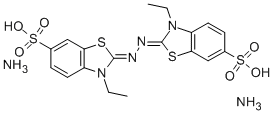
ABTS
30931-67-0
¥30.00-¥14741.00
16
22
lycopene
502-65-8
¥22.00-¥21880.00
17
22
Trolox
53188-07-1
¥20.00-¥17096.00
18
22
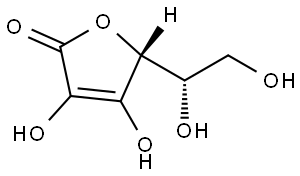
vitamin C
50-81-7
¥12.00-¥35639.90
19
22
rutin
153-18-4
¥22.00-¥10304.00
20
22
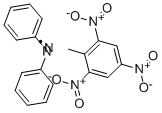
DPPH
1898-66-4
¥70.00-¥28800.00
×
引用
GB/T 7714-2015
复制
MLA
复制
APA
复制
导出至
BibTeX EndNote RefMan NoteFirst NoteExpress
×
提示
您的信息不完整,为了账户安全,请先补充。
现在去补充
×
提示
您因"违规操作"
具体请查看互助需知
我知道了
×
提示
确定
请完成安全验证×
copy
已复制链接
快去分享给好友吧!
我知道了
右上角分享
点击右上角分享
0
联系我们:info@booksci.cn Book学术提供免费学术资源搜索服务,方便国内外学者检索中英文文献。致力于提供最便捷和优质的服务体验。 Copyright © 2023 布克学术 All rights reserved.
京ICP备2023020795号-1
ghs 京公网安备 11010802042870号
Book学术文献互助
Book学术文献互助群
群 号:604180095
Book学术官方微信
小红书