Analytical and dynamical investigation of a modified equal-width equation: diverse W-M shaped solitary wave solutions, bifurcation analysis and chaotic dynamics
{"title":"Analytical and dynamical investigation of a modified equal-width equation: diverse W-M shaped solitary wave solutions, bifurcation analysis and chaotic dynamics","authors":"Sonia Akram, Mati ur Rahman, Laila A AL-Essa","doi":"10.1007/s12043-025-03087-z","DOIUrl":null,"url":null,"abstract":"<p>This study focusses on the in-depth analysis of a modified equal-width (MEW) equation, which serves as a pivotal mathematical model for characterising wave transmission in nonlinear media affected by dispersive processes. The MEW equation captures the significant balance between dispersion and nonlinearity, making it highly relevant for simulating a variety of physical phenomena in optical fibres, plasma physics and fluid dynamics. To obtain exact analytical solutions, we utilise two effective and reliable techniques: the extended modified tanh-function method (eMETFM) and the extended Sardar sub-equation method (eSSEM). By using these methods, we successfully extract a wide range of explicit soliton solutions, including dark, bright, periodic, singular, W-shaped, M-shaped, and composite wave patterns. These solutions not only validate the suitability of the selected techniques but also reveal intricate solitary wave behaviours pertinent to nonlinear wave propagation. Beyond investigating soliton solutions, we also conduct a qualitative analysis of the perturbed system by examining its bifurcation structure. This analysis demonstrates crucial insights into the transition dynamics of the model under changing system parameters. To exhibit the onset and nature of chaotic behaviour, we establish a suite of advanced chaos detection tools, including power spectrum analysis, return map analysis, multistability analysis, bifurcation diagrams, strange attractor plots and Lyapunov exponent evaluation. These tools enable the detailed identification of periodic, quasi-periodic and chaotic regimes within the system, thereby enhancing our understanding of its nonlinear dynamics. The obtained results significantly contribute to the theoretical simulation of wave phenomena in nonlinear dispersive media, paving the way for future advancements in soliton theory and chaos control in engineering systems and applied physics.</p>","PeriodicalId":743,"journal":{"name":"Pramana","volume":"100 2","pages":""},"PeriodicalIF":2.1000,"publicationDate":"2026-05-04","publicationTypes":"Journal Article","fieldsOfStudy":null,"isOpenAccess":false,"openAccessPdf":"","citationCount":"0","resultStr":null,"platform":"Semanticscholar","paperid":null,"PeriodicalName":"Pramana","FirstCategoryId":"4","ListUrlMain":"https://link.springer.com/article/10.1007/s12043-025-03087-z","RegionNum":4,"RegionCategory":"物理与天体物理","ArticlePicture":[],"TitleCN":null,"AbstractTextCN":null,"PMCID":null,"EPubDate":"","PubModel":"","JCR":"Q2","JCRName":"PHYSICS, MULTIDISCIPLINARY","Score":null,"Total":0}
引用次数: 0
Abstract
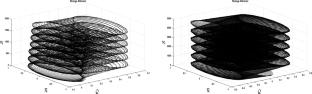
This study focusses on the in-depth analysis of a modified equal-width (MEW) equation, which serves as a pivotal mathematical model for characterising wave transmission in nonlinear media affected by dispersive processes. The MEW equation captures the significant balance between dispersion and nonlinearity, making it highly relevant for simulating a variety of physical phenomena in optical fibres, plasma physics and fluid dynamics. To obtain exact analytical solutions, we utilise two effective and reliable techniques: the extended modified tanh-function method (eMETFM) and the extended Sardar sub-equation method (eSSEM). By using these methods, we successfully extract a wide range of explicit soliton solutions, including dark, bright, periodic, singular, W-shaped, M-shaped, and composite wave patterns. These solutions not only validate the suitability of the selected techniques but also reveal intricate solitary wave behaviours pertinent to nonlinear wave propagation. Beyond investigating soliton solutions, we also conduct a qualitative analysis of the perturbed system by examining its bifurcation structure. This analysis demonstrates crucial insights into the transition dynamics of the model under changing system parameters. To exhibit the onset and nature of chaotic behaviour, we establish a suite of advanced chaos detection tools, including power spectrum analysis, return map analysis, multistability analysis, bifurcation diagrams, strange attractor plots and Lyapunov exponent evaluation. These tools enable the detailed identification of periodic, quasi-periodic and chaotic regimes within the system, thereby enhancing our understanding of its nonlinear dynamics. The obtained results significantly contribute to the theoretical simulation of wave phenomena in nonlinear dispersive media, paving the way for future advancements in soliton theory and chaos control in engineering systems and applied physics.
期刊介绍:
Pramana - Journal of Physics is a monthly research journal in English published by the Indian Academy of Sciences in collaboration with Indian National Science Academy and Indian Physics Association. The journal publishes refereed papers covering current research in Physics, both original contributions - research papers, brief reports or rapid communications - and invited reviews. Pramana also publishes special issues devoted to advances in specific areas of Physics and proceedings of select high quality conferences.


 求助内容:
求助内容: 应助结果提醒方式:

 京公网安备 11010802042870号


