
Targeting regulatory T cells for cancer immunotherapy: promises and pitfalls
IF 80.4
1区 医学
Q1 ONCOLOGY
引用次数: 0
Abstract
Background
Regulatory T cells (Tregs) form a distinct subset of CD4+ T cells essential for maintaining immune balance and preventing autoimmunity by expressing CD25 and CTLA-4. Tregs, which are defined by the expression of the transcription factor FOXP3 in mice, restrain excessive immune activation through mechanisms such as interleukin 10 (IL-10) expression, transforming growth factor-β expression, metabolic regulation, acting as an IL-2 cytokine sink, and cell-to-cell interaction through co-inhibitory receptors. Although they are indispensable for immune tolerance, Tregs can be co-opted by tumors, where their suppressive activity promotes immune escape. High Treg infiltration within the tumor microenvironment has been linked to variable prognosis depending on the tumor type, highlighting Tregs’ contradictory roles as both guardians of tolerance and enablers of tumor progression.
Design
In this review, we summarized Treg biology, Tregs’ contribution to cancer immunity, and emerging therapeutic strategies designed to modulate or deplete Tregs. We conducted a targeted literature review using PubMed/MEDLINE, Web of Science, ClinicalTrials.gov, and American Society of Clinical Oncology/European Society of Medical Oncology meeting libraries, complemented by manual reference screening. We also discussed the limitations of existing therapeutic approaches and outlined future directions.
Results
Efforts to therapeutically modulate Tregs have focused on three main strategies: depletion (e.g. anti-CD25, anti-CCR4, or anti-CCR8 antibodies), functional blockade (e.g. targeting CTLA-4 or TIGIT), and disruption of metabolic pathways (e.g. adenosine or PI3K signaling) that support Tregs’ biological functions. Although preclinical studies have shown that targeting Tregs has antitumor effects, clinical trials have demonstrated variable efficacy and toxicity , reflecting the fine balance between immune activation and tolerance. Newer approaches aim to selectively impair intratumoral Tregs while preserving peripheral immune control, guided by T-cell subsets such as FOXP3+Helios+CCR8+ cells, which may help predict therapeutic response.
Conclusion
A deeper understanding of Treg regulation is needed to unlock their therapeutic potential without compromising immune equilibrium.
靶向调节性T细胞用于癌症免疫治疗:希望和缺陷。
背景:调节性T细胞(Tregs)是CD4+ T细胞中一个独特的亚群,通过表达CD25和CTLA-4来维持免疫平衡和预防自身免疫。Tregs是由小鼠转录因子FOXP3的表达定义的,通过IL-10表达、TGF-β表达、代谢调节、作为IL-2细胞因子汇以及通过共抑制受体的细胞间相互作用等机制抑制过度的免疫激活。尽管Tregs对免疫耐受是不可或缺的,但它们也可以被肿瘤所利用,在肿瘤中它们的抑制活性促进免疫逃逸。肿瘤微环境中的高Treg浸润与肿瘤类型不同的预后有关,这突出了Treg作为耐受性守护者和肿瘤进展推动者的矛盾作用。设计:在这篇综述中,我们总结了Treg生物学,Treg对癌症免疫的贡献,以及旨在调节或消耗Treg的新兴治疗策略。我们使用PubMed/MEDLINE、Web of Science、ClinicalTrials.gov和ASCO/ESMO会议库进行了有针对性的文献综述,并辅以人工参考文献筛选。我们还讨论了现有治疗方法的局限性,并概述了未来的发展方向。结果:治疗性调节Tregs的努力主要集中在三种主要策略上:耗竭(例如,抗cd25、抗ccr4或抗ccr8抗体)、功能阻断(例如,靶向CTLA-4或TIGIT)和破坏支持Tregs生物学功能的代谢途径(例如,腺苷或PI3K信号传导)。虽然临床前研究表明靶向Tregs具有抗肿瘤作用,但临床试验显示出不同的疗效和毒性作用,反映了免疫激活和耐受性之间的微妙平衡。较新的方法旨在选择性地损害肿瘤内treg,同时保持外周免疫控制,由t细胞亚群如FOXP3+Helios+CCR8+细胞引导,这可能有助于预测治疗反应。结论:需要更深入地了解Treg调控,以在不损害免疫平衡的情况下释放其治疗潜力。
本文章由计算机程序翻译,如有差异,请以英文原文为准。
求助全文
约1分钟内获得全文
求助全文
来源期刊
Annals of Oncology
医学-肿瘤学
CiteScore
63.90
自引率
1.00%
发文量
3712
审稿时长
2-3 weeks
期刊介绍:
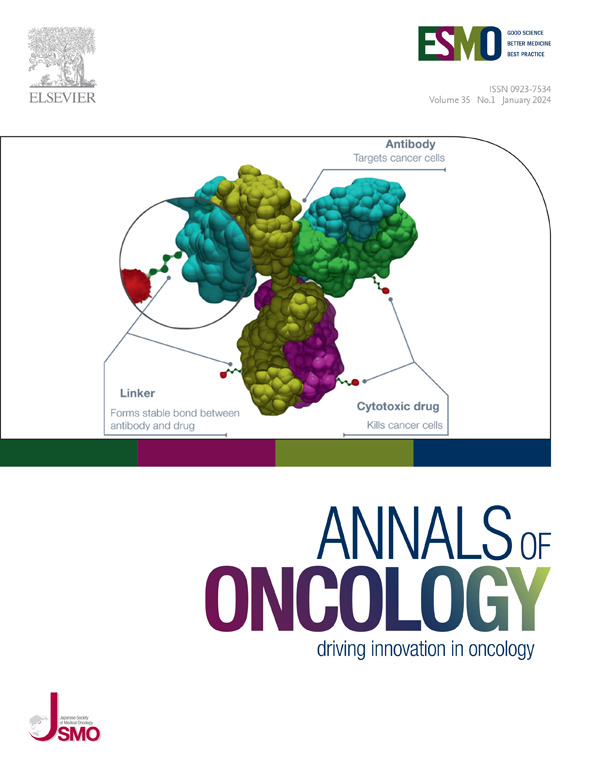
Annals of Oncology, the official journal of the European Society for Medical Oncology and the Japanese Society of Medical Oncology, offers rapid and efficient peer-reviewed publications on innovative cancer treatments and translational research in oncology and precision medicine.
The journal primarily focuses on areas such as systemic anticancer therapy, with a specific emphasis on molecular targeted agents and new immune therapies. We also welcome randomized trials, including negative results, as well as top-level guidelines. Additionally, we encourage submissions in emerging fields that are crucial to personalized medicine, such as molecular pathology, bioinformatics, modern statistics, and biotechnologies. Manuscripts related to radiotherapy, surgery, and pediatrics will be considered if they demonstrate a clear interaction with any of the aforementioned fields or if they present groundbreaking findings.
Our international editorial board comprises renowned experts who are leaders in their respective fields. Through Annals of Oncology, we strive to provide the most effective communication on the dynamic and ever-evolving global oncology landscape.
 求助内容:
 应助结果提醒方式:


 京公网安备 11010802042870号


