{"title":"Re-Evaluating Antibody-Drug Conjugate Linker Stability: Assessment, Interpretation, and Clinical Translation.","authors":"R Colombo, S Seredick, S D Barnscher, J R Rich","doi":"10.1016/j.annonc.2026.04.008","DOIUrl":null,"url":null,"abstract":"<p><p>Antibody-drug conjugates (ADCs) have emerged as an important class of anticancer therapeutics. Their highly modular design offers multiple opportunities to refine their properties and improve clinical performance by tuning individual components, including the antibody, linker, and payload. Recent ADC optimization efforts have focused on more stable linker designs, apparently based on the assumption that premature payload release, rather than ADC uptake and intracellular catabolism, is the primary driver of off-target toxicity and limited antitumor activity. However, clinical data highlight a more complex picture. Several clinically successful ADCs employ relatively unstable linkers, including some with short systemic half-lives. In contrast, ADCs with increased linker stability have not consistently demonstrated improved clinical outcomes and, in many cases, have been associated with unexpected toxicities. In this article, we examine common assumptions regarding ADC linker stability, highlight limitations of preclinical models in predicting human payload exposure, address appropriate methods to assess ADC stability, and discuss the clinical implications of altering ADC linker stability. By re-evaluating the role of linker stability in ADC design, this work aims to inform more rational strategies for the development of next-generation ADCs.</p>","PeriodicalId":8000,"journal":{"name":"Annals of Oncology","volume":" ","pages":""},"PeriodicalIF":65.4000,"publicationDate":"2026-04-21","publicationTypes":"Journal Article","fieldsOfStudy":null,"isOpenAccess":false,"openAccessPdf":"","citationCount":"0","resultStr":null,"platform":"Semanticscholar","paperid":null,"PeriodicalName":"Annals of Oncology","FirstCategoryId":"3","ListUrlMain":"https://doi.org/10.1016/j.annonc.2026.04.008","RegionNum":1,"RegionCategory":"医学","ArticlePicture":[],"TitleCN":null,"AbstractTextCN":null,"PMCID":null,"EPubDate":"","PubModel":"","JCR":"Q1","JCRName":"ONCOLOGY","Score":null,"Total":0}
引用次数: 0
Abstract
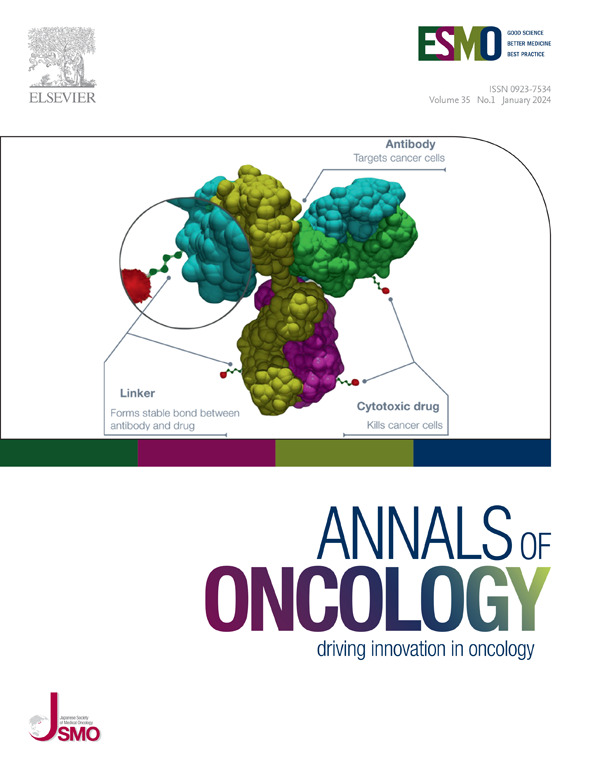
Antibody-drug conjugates (ADCs) have emerged as an important class of anticancer therapeutics. Their highly modular design offers multiple opportunities to refine their properties and improve clinical performance by tuning individual components, including the antibody, linker, and payload. Recent ADC optimization efforts have focused on more stable linker designs, apparently based on the assumption that premature payload release, rather than ADC uptake and intracellular catabolism, is the primary driver of off-target toxicity and limited antitumor activity. However, clinical data highlight a more complex picture. Several clinically successful ADCs employ relatively unstable linkers, including some with short systemic half-lives. In contrast, ADCs with increased linker stability have not consistently demonstrated improved clinical outcomes and, in many cases, have been associated with unexpected toxicities. In this article, we examine common assumptions regarding ADC linker stability, highlight limitations of preclinical models in predicting human payload exposure, address appropriate methods to assess ADC stability, and discuss the clinical implications of altering ADC linker stability. By re-evaluating the role of linker stability in ADC design, this work aims to inform more rational strategies for the development of next-generation ADCs.
期刊介绍:
Annals of Oncology, the official journal of the European Society for Medical Oncology and the Japanese Society of Medical Oncology, offers rapid and efficient peer-reviewed publications on innovative cancer treatments and translational research in oncology and precision medicine.
The journal primarily focuses on areas such as systemic anticancer therapy, with a specific emphasis on molecular targeted agents and new immune therapies. We also welcome randomized trials, including negative results, as well as top-level guidelines. Additionally, we encourage submissions in emerging fields that are crucial to personalized medicine, such as molecular pathology, bioinformatics, modern statistics, and biotechnologies. Manuscripts related to radiotherapy, surgery, and pediatrics will be considered if they demonstrate a clear interaction with any of the aforementioned fields or if they present groundbreaking findings.
Our international editorial board comprises renowned experts who are leaders in their respective fields. Through Annals of Oncology, we strive to provide the most effective communication on the dynamic and ever-evolving global oncology landscape.

 求助内容:
求助内容: 应助结果提醒方式:

 京公网安备 11010802042870号


