Eleni Hughes, Keely Barton, Daliya Rizvi, Katelyn Dial, Xiaoxin X. Wang, Komuraiah Myakala, Brent T. Harris, G. William Rebeck, Moshe Levi
{"title":"Nicotinamide Riboside (NR) Supplementation Exerts Neuroprotective Effects in db/db Mouse Model of Type 2 Diabetes","authors":"Eleni Hughes, Keely Barton, Daliya Rizvi, Katelyn Dial, Xiaoxin X. Wang, Komuraiah Myakala, Brent T. Harris, G. William Rebeck, Moshe Levi","doi":"10.1007/s12031-026-02499-9","DOIUrl":null,"url":null,"abstract":"<div><p>Type 2 diabetes is linked to neuropsychiatric complications such as anxiety-like behaviors, disrupted brain metabolism, neuroinflammation, and impaired mitochondrial function. Nicotinamide riboside (NR) has emerged as a potential therapeutic agent for these complications due to its role in NAD + biosynthesis and neuroprotective properties. In this study, we assessed whether NR supplementation can ameliorate anxiety-like behavior in a mouse model of type 2 diabetes by modulating the hippocampal inflammatory response. 8-week-old db/db mice on the BKS background were used as a model of type 2 diabetes, and db/m mice were used as non-diabetic controls. Four groups, consisting of non-diabetic and diabetic mice, were fed with a control diet or a diet supplemented with NR at 500 mg/kg dosage for 20 weeks. The open field test and nesting behavioral assessments were conducted to evaluate anxiety-related behaviors and overall well-being. After animals were euthanized, biochemical analyses were performed on hippocampal samples using RT-qPCR, Western blotting, and immunohistochemistry. Behavioral assessments revealed increased anxiety and reduced nest-building motivation in db/db mice compared with control mice. These effects were ameliorated by NR treatment. Biochemical analyses revealed that NR attenuated markers of inflammation, including astrocytosis and microglial activation, activation of inflammatory signaling via STING and NF-kB, and pro-inflammatory cytokines. Our findings show that NR supplementation reduces anxiety-like symptoms and neuroinflammation in diabetic mice, highlighting the potential therapeutic relevance of NR in mitigating neuropsychiatric complications associated with diabetes mellitus.</p></div>","PeriodicalId":652,"journal":{"name":"Journal of Molecular Neuroscience","volume":"76 2","pages":""},"PeriodicalIF":2.7000,"publicationDate":"2026-04-27","publicationTypes":"Journal Article","fieldsOfStudy":null,"isOpenAccess":false,"openAccessPdf":"","citationCount":"0","resultStr":null,"platform":"Semanticscholar","paperid":null,"PeriodicalName":"Journal of Molecular Neuroscience","FirstCategoryId":"3","ListUrlMain":"https://link.springer.com/article/10.1007/s12031-026-02499-9","RegionNum":4,"RegionCategory":"医学","ArticlePicture":[],"TitleCN":null,"AbstractTextCN":null,"PMCID":null,"EPubDate":"","PubModel":"","JCR":"Q3","JCRName":"BIOCHEMISTRY & MOLECULAR BIOLOGY","Score":null,"Total":0}
引用次数: 0
Abstract
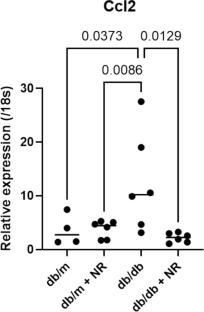
Type 2 diabetes is linked to neuropsychiatric complications such as anxiety-like behaviors, disrupted brain metabolism, neuroinflammation, and impaired mitochondrial function. Nicotinamide riboside (NR) has emerged as a potential therapeutic agent for these complications due to its role in NAD + biosynthesis and neuroprotective properties. In this study, we assessed whether NR supplementation can ameliorate anxiety-like behavior in a mouse model of type 2 diabetes by modulating the hippocampal inflammatory response. 8-week-old db/db mice on the BKS background were used as a model of type 2 diabetes, and db/m mice were used as non-diabetic controls. Four groups, consisting of non-diabetic and diabetic mice, were fed with a control diet or a diet supplemented with NR at 500 mg/kg dosage for 20 weeks. The open field test and nesting behavioral assessments were conducted to evaluate anxiety-related behaviors and overall well-being. After animals were euthanized, biochemical analyses were performed on hippocampal samples using RT-qPCR, Western blotting, and immunohistochemistry. Behavioral assessments revealed increased anxiety and reduced nest-building motivation in db/db mice compared with control mice. These effects were ameliorated by NR treatment. Biochemical analyses revealed that NR attenuated markers of inflammation, including astrocytosis and microglial activation, activation of inflammatory signaling via STING and NF-kB, and pro-inflammatory cytokines. Our findings show that NR supplementation reduces anxiety-like symptoms and neuroinflammation in diabetic mice, highlighting the potential therapeutic relevance of NR in mitigating neuropsychiatric complications associated with diabetes mellitus.
期刊介绍:
The Journal of Molecular Neuroscience is committed to the rapid publication of original findings that increase our understanding of the molecular structure, function, and development of the nervous system. The criteria for acceptance of manuscripts will be scientific excellence, originality, and relevance to the field of molecular neuroscience. Manuscripts with clinical relevance are especially encouraged since the journal seeks to provide a means for accelerating the progression of basic research findings toward clinical utilization. All experiments described in the Journal of Molecular Neuroscience that involve the use of animal or human subjects must have been approved by the appropriate institutional review committee and conform to accepted ethical standards.

 求助内容:
求助内容: 应助结果提醒方式:

 京公网安备 11010802042870号


