Katheryn R. Cruz, , , Eric J. Cyganowski, , , Abhishek Rawat, , , Alberto Carta, , , Abhishek Kumar Adak, , , Chuzhong Zhang, , , Stanley Alessandro Chavez Portillo, , , Efstathios I. Meletis, , and , Krishnan Rajeshwar*,
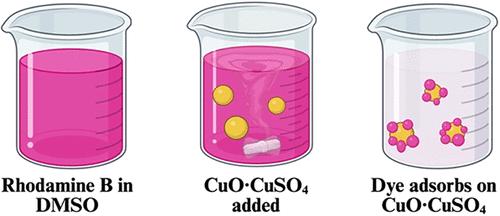
{"title":"Semiconducting Copper(II) Oxide Sulfate: Synthesis, Solid-State Chemistry, and Electronic Structure","authors":"Katheryn R. Cruz, , , Eric J. Cyganowski, , , Abhishek Rawat, , , Alberto Carta, , , Abhishek Kumar Adak, , , Chuzhong Zhang, , , Stanley Alessandro Chavez Portillo, , , Efstathios I. Meletis, , and , Krishnan Rajeshwar*, ","doi":"10.1021/acs.jpcc.5c07953","DOIUrl":null,"url":null,"abstract":"<p >An integrated experimental and theoretical approach was used in this study on an intriguing compound variously described in the literature as copper(II) oxide sulfate, CuO·CuSO<sub>4,</sub> or by its mineral name, dolerophanite. Specifically, contrasting with the magnetic and structural aspects previously studied by other authors, the synthesis, solid-state chemistry, and electronic structure are described below with particular emphasis on the thermal, surface, and optoelectronic (semiconductor) properties of this compound. We performed density functional theory (DFT) calculations to simulate the electronic structure of this material. Because standard semilocal DFT is insufficient to capture the strong electron correlations in CuO·CuSO<sub>4</sub>, we refined our approach using two advanced methods: hybrid functionals and dynamical mean-field theory (DMFT) (see below). The results of these calculations are in good agreement with our experimental findings on bandgap energy values from diffuse reflectance spectroscopy. The thermal aspects of the synthesis and decomposition pathways were probed by thermogravimetric analysis; these data were complemented by powder X-ray diffraction, selected area electron diffraction, and Raman spectroscopy. The CuO·CuSO<sub>4</sub> surface showed very high proclivity to bind an organic dye molecule such as rhodamine B. The adsorptive removal of the dye was studied via cyclic voltammetry and UV–visible spectrophotometry and the applicability of models to describe the adsorption process is finally presented.</p>","PeriodicalId":61,"journal":{"name":"The Journal of Physical Chemistry C","volume":"130 18","pages":"6461–6473"},"PeriodicalIF":3.2000,"publicationDate":"2026-05-07","publicationTypes":"Journal Article","fieldsOfStudy":null,"isOpenAccess":false,"openAccessPdf":"","citationCount":"0","resultStr":null,"platform":"Semanticscholar","paperid":null,"PeriodicalName":"The Journal of Physical Chemistry C","FirstCategoryId":"1","ListUrlMain":"https://pubs.acs.org/doi/10.1021/acs.jpcc.5c07953","RegionNum":3,"RegionCategory":"化学","ArticlePicture":[],"TitleCN":null,"AbstractTextCN":null,"PMCID":null,"EPubDate":"2026/4/27 0:00:00","PubModel":"Epub","JCR":"Q2","JCRName":"CHEMISTRY, PHYSICAL","Score":null,"Total":0}
引用次数: 0
Abstract
An integrated experimental and theoretical approach was used in this study on an intriguing compound variously described in the literature as copper(II) oxide sulfate, CuO·CuSO4, or by its mineral name, dolerophanite. Specifically, contrasting with the magnetic and structural aspects previously studied by other authors, the synthesis, solid-state chemistry, and electronic structure are described below with particular emphasis on the thermal, surface, and optoelectronic (semiconductor) properties of this compound. We performed density functional theory (DFT) calculations to simulate the electronic structure of this material. Because standard semilocal DFT is insufficient to capture the strong electron correlations in CuO·CuSO4, we refined our approach using two advanced methods: hybrid functionals and dynamical mean-field theory (DMFT) (see below). The results of these calculations are in good agreement with our experimental findings on bandgap energy values from diffuse reflectance spectroscopy. The thermal aspects of the synthesis and decomposition pathways were probed by thermogravimetric analysis; these data were complemented by powder X-ray diffraction, selected area electron diffraction, and Raman spectroscopy. The CuO·CuSO4 surface showed very high proclivity to bind an organic dye molecule such as rhodamine B. The adsorptive removal of the dye was studied via cyclic voltammetry and UV–visible spectrophotometry and the applicability of models to describe the adsorption process is finally presented.
期刊介绍:
The Journal of Physical Chemistry A/B/C is devoted to reporting new and original experimental and theoretical basic research of interest to physical chemists, biophysical chemists, and chemical physicists.


 求助内容:
求助内容: 应助结果提醒方式:

 京公网安备 11010802042870号


