
Lipid-based nanosystems for atherosclerosis treatment: Evolving approaches and novel therapeutic strategies
IF 14.6
1区 医学
Q1 PHARMACOLOGY & PHARMACY
Acta Pharmaceutica Sinica. B
Pub Date : 2026-04-01
Epub Date: 2025-11-05
DOI:10.1016/j.apsb.2025.11.001
引用次数: 0
Abstract
Atherosclerosis, the leading cause of cardiovascular diseases, has become increasingly prevalent worldwide, driving the need for innovative therapeutic strategies to improve clinical outcomes. Lipid-based nanosystems have emerged as promising drug delivery platforms due to their biocompatibility, versatility, and proven clinical track records. Among them, traditional systems such as liposomes have been extensively applied in atherosclerosis therapy, primarily for their well-established safety profile and their capacity to deliver both hydrophilic and hydrophobic agents. However, emerging research has expanded the scope of lipid-based nanosystems to include lipid nanoparticles, lipoprotein-based nanosystems, cell membrane-coated nanosystems, and so on. These systems have demonstrated great promise in addressing the complex and heterogeneous nature of the disease. This review aims to provide a comprehensive overview of lipid-based nanosystems, from traditional formulations to cutting-edge innovations, and their evolving applications in the treatment of atherosclerosis. We also discuss the challenges associated with the clinical translation of these systems, as well as future prospects for developing more effective and personalized therapeutic strategies. In conclusion, lipid-based nanosystems provide a promising option for atherosclerosis treatment, potentially driving the progress of novel therapeutic strategies.
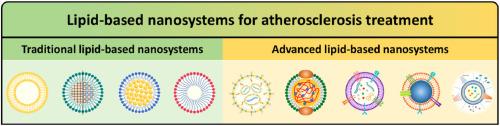
基于脂质的纳米系统用于动脉粥样硬化治疗:不断发展的方法和新的治疗策略
动脉粥样硬化是心血管疾病的主要原因,在世界范围内变得越来越普遍,需要创新的治疗策略来改善临床结果。基于脂质的纳米系统由于其生物相容性、多功能性和成熟的临床记录而成为有前途的药物输送平台。其中,脂质体等传统系统已广泛应用于动脉粥样硬化治疗,主要是因为它们具有良好的安全性,并且能够同时输送亲疏水剂。然而,新兴的研究已经扩大了基于脂质纳米系统的范围,包括脂质纳米颗粒、脂蛋白纳米系统、细胞膜包被纳米系统等。这些系统在解决该疾病的复杂性和异质性方面显示出巨大的希望。本综述旨在提供基于脂质纳米系统的全面概述,从传统配方到前沿创新,以及它们在动脉粥样硬化治疗中的应用。我们还讨论了与这些系统的临床翻译相关的挑战,以及开发更有效和个性化治疗策略的未来前景。总之,基于脂质的纳米系统为动脉粥样硬化治疗提供了一个有希望的选择,可能推动新的治疗策略的进展。
本文章由计算机程序翻译,如有差异,请以英文原文为准。
求助全文
约1分钟内获得全文
求助全文
来源期刊
Acta Pharmaceutica Sinica. B
Pharmacology, Toxicology and Pharmaceutics-General Pharmacology, Toxicology and Pharmaceutics
CiteScore
22.40
自引率
5.50%
发文量
1051
审稿时长
19 weeks
期刊介绍:
The Journal of the Institute of Materia Medica, Chinese Academy of Medical Sciences, and the Chinese Pharmaceutical Association oversees the peer review process for Acta Pharmaceutica Sinica. B (APSB).
Published monthly in English, APSB is dedicated to disseminating significant original research articles, rapid communications, and high-quality reviews that highlight recent advances across various pharmaceutical sciences domains. These encompass pharmacology, pharmaceutics, medicinal chemistry, natural products, pharmacognosy, pharmaceutical analysis, and pharmacokinetics.
A part of the Acta Pharmaceutica Sinica series, established in 1953 and indexed in prominent databases like Chemical Abstracts, Index Medicus, SciFinder Scholar, Biological Abstracts, International Pharmaceutical Abstracts, Cambridge Scientific Abstracts, and Current Bibliography on Science and Technology, APSB is sponsored by the Institute of Materia Medica, Chinese Academy of Medical Sciences, and the Chinese Pharmaceutical Association. Its production and hosting are facilitated by Elsevier B.V. This collaborative effort ensures APSB's commitment to delivering valuable contributions to the pharmaceutical sciences community.
 求助内容:
求助内容: 应助结果提醒方式:

 京公网安备 11010802042870号


