Julien Soulé, Jean-Paul Jamont, Michel Occello, Louis-Marie Traonouez, Paul Théron
{"title":"Assisting multi-agent systems design with \\(\\mathcal {M}OISE^+\\) and MARL: The MAMAD method","authors":"Julien Soulé, Jean-Paul Jamont, Michel Occello, Louis-Marie Traonouez, Paul Théron","doi":"10.1007/s10458-026-09740-0","DOIUrl":null,"url":null,"abstract":"<div>\n \n <p>Traditional Agent-Oriented Software Engineering (AOSE) methods rely on explicit and expert-driven design for Multi-Agent Systems (MAS), but often lack automation. In contrast, Multi-Agent RL (MARL) and related fields offer automated ways to model environments and learn suitable agent policies. However, integrating these techniques into AOSE remains underexplored partly due to the lack of control, explainability, and unifying frameworks. We propose <b>MOISE+MARL Assisted MAS Design (MAMAD)</b>, a four-activity method framing MAS design as a constrained optimization problem: learning joint policies that maximize rewards while respecting <span>\\(\\mathcal {M}OISE^+\\)</span> roles and goals. The activities include: 1) <b>Modeling</b> the environment, 2) <b>Training</b> under organizational constraints, 3) <b>Analyzing</b> emergent behaviors, 4) <b>Transferring</b> to real-world deployment. We evaluate MAMAD on various environments, showing that the generated MAS exhibit expected performance, compliance with design requirements and are explainable, while reducing manual design overhead.</p>\n </div>","PeriodicalId":55586,"journal":{"name":"Autonomous Agents and Multi-Agent Systems","volume":"40 1","pages":""},"PeriodicalIF":2.6000,"publicationDate":"2026-04-11","publicationTypes":"Journal Article","fieldsOfStudy":null,"isOpenAccess":false,"openAccessPdf":"","citationCount":"0","resultStr":null,"platform":"Semanticscholar","paperid":null,"PeriodicalName":"Autonomous Agents and Multi-Agent Systems","FirstCategoryId":"94","ListUrlMain":"https://link.springer.com/article/10.1007/s10458-026-09740-0","RegionNum":3,"RegionCategory":"计算机科学","ArticlePicture":[],"TitleCN":null,"AbstractTextCN":null,"PMCID":null,"EPubDate":"","PubModel":"","JCR":"Q3","JCRName":"AUTOMATION & CONTROL SYSTEMS","Score":null,"Total":0}
引用次数: 0
Abstract
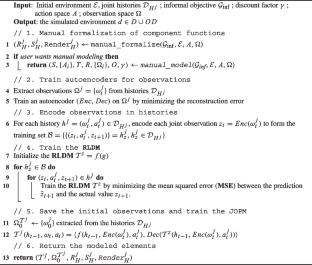
Traditional Agent-Oriented Software Engineering (AOSE) methods rely on explicit and expert-driven design for Multi-Agent Systems (MAS), but often lack automation. In contrast, Multi-Agent RL (MARL) and related fields offer automated ways to model environments and learn suitable agent policies. However, integrating these techniques into AOSE remains underexplored partly due to the lack of control, explainability, and unifying frameworks. We propose MOISE+MARL Assisted MAS Design (MAMAD), a four-activity method framing MAS design as a constrained optimization problem: learning joint policies that maximize rewards while respecting \(\mathcal {M}OISE^+\) roles and goals. The activities include: 1) Modeling the environment, 2) Training under organizational constraints, 3) Analyzing emergent behaviors, 4) Transferring to real-world deployment. We evaluate MAMAD on various environments, showing that the generated MAS exhibit expected performance, compliance with design requirements and are explainable, while reducing manual design overhead.
期刊介绍:
This is the official journal of the International Foundation for Autonomous Agents and Multi-Agent Systems. It provides a leading forum for disseminating significant original research results in the foundations, theory, development, analysis, and applications of autonomous agents and multi-agent systems. Coverage in Autonomous Agents and Multi-Agent Systems includes, but is not limited to:
Agent decision-making architectures and their evaluation, including: cognitive models; knowledge representation; logics for agency; ontological reasoning; planning (single and multi-agent); reasoning (single and multi-agent)
Cooperation and teamwork, including: distributed problem solving; human-robot/agent interaction; multi-user/multi-virtual-agent interaction; coalition formation; coordination
Agent communication languages, including: their semantics, pragmatics, and implementation; agent communication protocols and conversations; agent commitments; speech act theory
Ontologies for agent systems, agents and the semantic web, agents and semantic web services, Grid-based systems, and service-oriented computing
Agent societies and societal issues, including: artificial social systems; environments, organizations and institutions; ethical and legal issues; privacy, safety and security; trust, reliability and reputation
Agent-based system development, including: agent development techniques, tools and environments; agent programming languages; agent specification or validation languages
Agent-based simulation, including: emergent behavior; participatory simulation; simulation techniques, tools and environments; social simulation
Agreement technologies, including: argumentation; collective decision making; judgment aggregation and belief merging; negotiation; norms
Economic paradigms, including: auction and mechanism design; bargaining and negotiation; economically-motivated agents; game theory (cooperative and non-cooperative); social choice and voting
Learning agents, including: computational architectures for learning agents; evolution, adaptation; multi-agent learning.
Robotic agents, including: integrated perception, cognition, and action; cognitive robotics; robot planning (including action and motion planning); multi-robot systems.
Virtual agents, including: agents in games and virtual environments; companion and coaching agents; modeling personality, emotions; multimodal interaction; verbal and non-verbal expressiveness
Significant, novel applications of agent technology
Comprehensive reviews and authoritative tutorials of research and practice in agent systems
Comprehensive and authoritative reviews of books dealing with agents and multi-agent systems.

 求助内容:
求助内容: 应助结果提醒方式:

 京公网安备 11010802042870号


