{"title":"[The Yao Wang Temple in the local chronicles of Shanxi].","authors":"J He, X C Liu","doi":"10.3760/cma.j.cn112155-20251111-00199","DOIUrl":null,"url":null,"abstract":"<p><p>The Temple of the Yao Wang (the Kings of Medicine) in Shanxi () means a cultural relic which is significant and immovable in the field of medicine and health, as a crucial medium for the dissemination and preservation of traditional Chinese medicine culture. This paper examined 378 local gazetteers in Shanxi, catalogued in the <i>China Gazetteer Database</i> in the Ming and Qing Dynasties and the period of the Republic of China. It was found that these temples have been extensively distributed throughout Shanxi Province in the Ming and Qing and the republican period, particularly, in Yuncheng and Linfen in the southern region and Jinzhong in the central area of Shanxi. This showed a pronounced linear distribution from the southwest to the central-northern of Shanxi. The principal deities (as the King of Medicine) in the temples were enshrined and venerated as the Yao Wang, including Bian Que, Sun Simiao and Wei Cizang. The temples were taken as the sites for public worships, medical consultations and spiritual solace. They evolved into a triad of ritual patterns - folk entertainment, medicinal commerce, and the implementation of an integrated 'temple-school' model. With the rapid development of the pharmaceutical industry, the veneration of the Medical Kings as Yao Wang, has further transformed into a distinctive form of industrial deity worship, fulfilling its unique historical function.</p>","PeriodicalId":35995,"journal":{"name":"中华医史杂志","volume":"56 1","pages":"56-62"},"PeriodicalIF":0.0000,"publicationDate":"2026-01-28","publicationTypes":"Journal Article","fieldsOfStudy":null,"isOpenAccess":false,"openAccessPdf":"","citationCount":"0","resultStr":null,"platform":"Semanticscholar","paperid":null,"PeriodicalName":"中华医史杂志","FirstCategoryId":"1090","ListUrlMain":"https://doi.org/10.3760/cma.j.cn112155-20251111-00199","RegionNum":0,"RegionCategory":null,"ArticlePicture":[],"TitleCN":null,"AbstractTextCN":null,"PMCID":null,"EPubDate":"","PubModel":"","JCR":"Q4","JCRName":"Medicine","Score":null,"Total":0}
引用次数: 0
Abstract
The Temple of the Yao Wang (the Kings of Medicine) in Shanxi () means a cultural relic which is significant and immovable in the field of medicine and health, as a crucial medium for the dissemination and preservation of traditional Chinese medicine culture. This paper examined 378 local gazetteers in Shanxi, catalogued in the China Gazetteer Database in the Ming and Qing Dynasties and the period of the Republic of China. It was found that these temples have been extensively distributed throughout Shanxi Province in the Ming and Qing and the republican period, particularly, in Yuncheng and Linfen in the southern region and Jinzhong in the central area of Shanxi. This showed a pronounced linear distribution from the southwest to the central-northern of Shanxi. The principal deities (as the King of Medicine) in the temples were enshrined and venerated as the Yao Wang, including Bian Que, Sun Simiao and Wei Cizang. The temples were taken as the sites for public worships, medical consultations and spiritual solace. They evolved into a triad of ritual patterns - folk entertainment, medicinal commerce, and the implementation of an integrated 'temple-school' model. With the rapid development of the pharmaceutical industry, the veneration of the Medical Kings as Yao Wang, has further transformed into a distinctive form of industrial deity worship, fulfilling its unique historical function.
期刊介绍:
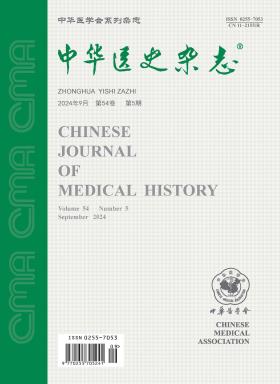
The Chinese Journal of Medical History is the only professional academic journal on medical history in the country. The first publication was named "Journal of Medical History" and was designated as a quarterly publication. In 2009, it was changed from quarterly to bimonthly.
The Chinese Journal of Medical History has columns such as special articles, reviews, expert talks, medical history treatises, literature research, forums and debates, historical accounts, figures, short essays, graduate forums, lectures, historical materials, medical history, and book reviews.
Chinese Journal of Medical History has been included in the US Medline online database.

 求助内容:
求助内容: 应助结果提醒方式:

 京公网安备 11010802042870号


