Acute kidney injury in immunocompromised patients with acute respiratory failure: insights from the HIGH clinical trial and relation with mechanical ventilation.
Adrien Joseph, Michael Darmon, Laurent Argaud, Kada Klouche, François Barbier, Emmanuel Canet, Guillaume Louis, Alexandre Demoule, Christophe Girault, Samir Jaber, Christine Lebert, Frédéric Pène, Virginie Lemiale, Elie Azoulay
{"title":"Acute kidney injury in immunocompromised patients with acute respiratory failure: insights from the HIGH clinical trial and relation with mechanical ventilation.","authors":"Adrien Joseph, Michael Darmon, Laurent Argaud, Kada Klouche, François Barbier, Emmanuel Canet, Guillaume Louis, Alexandre Demoule, Christophe Girault, Samir Jaber, Christine Lebert, Frédéric Pène, Virginie Lemiale, Elie Azoulay","doi":"10.1016/j.aicoj.2026.100048","DOIUrl":null,"url":null,"abstract":"<p><strong>Background: </strong>Critically ill immunocompromised patients are particularly susceptible to acute kidney injury (AKI) due to various underlying mechanisms. Although invasive mechanical ventilation has been associated with an increased risk of AKI, its specific impact on immunocompromised patients with acute respiratory failure has not been explored. This study aims to describe the prevalence of AKI in this patient population and evaluate the potential risk associated with invasive mechanical ventilation, using causal inference models adjusted for the likelihood of requiring ventilation.</p><p><strong>Results: </strong>We conducted a post-hoc analysis of 734 immunocompromised patients from the HIGH clinical trial. Of these, 302 (41%) required invasive mechanical ventilation, and 542 (74%) developed AKI. Notably, AKI frequently occurred before the initiation of invasive mechanical ventilation, with the median day of peak KDIGO stage being 2 days (IQR 1-4 days), compared to 3 days (IQR 2-4 days) for initiation of mechanical ventilation. While univariate analysis showed a significant association between invasive mechanical ventilation and AKI (OR = 1.08, 95% CI = 1.02-1.16, p = 0.014), this association was not significant in the multivariate model (OR = 1.05, 95% CI = 0.98-1.13, p = 0.185). Similar findings were observed after adjusting for the risk of invasive mechanical ventilation using overlap weighting and in a competing risk model. Among patients who received mechanical ventilation, 59 (19%) developed AKI after initiation of mechanical ventilation.</p><p><strong>Conclusion: </strong>Immunocompromised patients with acute respiratory failure face a significant risk of developing AKI, driven by a combination of factors such as their underlying conditions and disease severity. In contrast, the direct impact of invasive mechanical ventilation appears to be limited, suggesting that mechanical ventilation may not be a primary driver of AKI in this vulnerable patient population.</p>","PeriodicalId":7966,"journal":{"name":"Annals of Intensive Care","volume":"16 ","pages":"100048"},"PeriodicalIF":5.5000,"publicationDate":"2026-03-12","publicationTypes":"Journal Article","fieldsOfStudy":null,"isOpenAccess":false,"openAccessPdf":"https://www.ncbi.nlm.nih.gov/pmc/articles/PMC12997334/pdf/","citationCount":"0","resultStr":null,"platform":"Semanticscholar","paperid":null,"PeriodicalName":"Annals of Intensive Care","FirstCategoryId":"3","ListUrlMain":"https://doi.org/10.1016/j.aicoj.2026.100048","RegionNum":1,"RegionCategory":"医学","ArticlePicture":[],"TitleCN":null,"AbstractTextCN":null,"PMCID":null,"EPubDate":"2026/1/1 0:00:00","PubModel":"eCollection","JCR":"Q1","JCRName":"CRITICAL CARE MEDICINE","Score":null,"Total":0}
引用次数: 0
Abstract
Background: Critically ill immunocompromised patients are particularly susceptible to acute kidney injury (AKI) due to various underlying mechanisms. Although invasive mechanical ventilation has been associated with an increased risk of AKI, its specific impact on immunocompromised patients with acute respiratory failure has not been explored. This study aims to describe the prevalence of AKI in this patient population and evaluate the potential risk associated with invasive mechanical ventilation, using causal inference models adjusted for the likelihood of requiring ventilation.
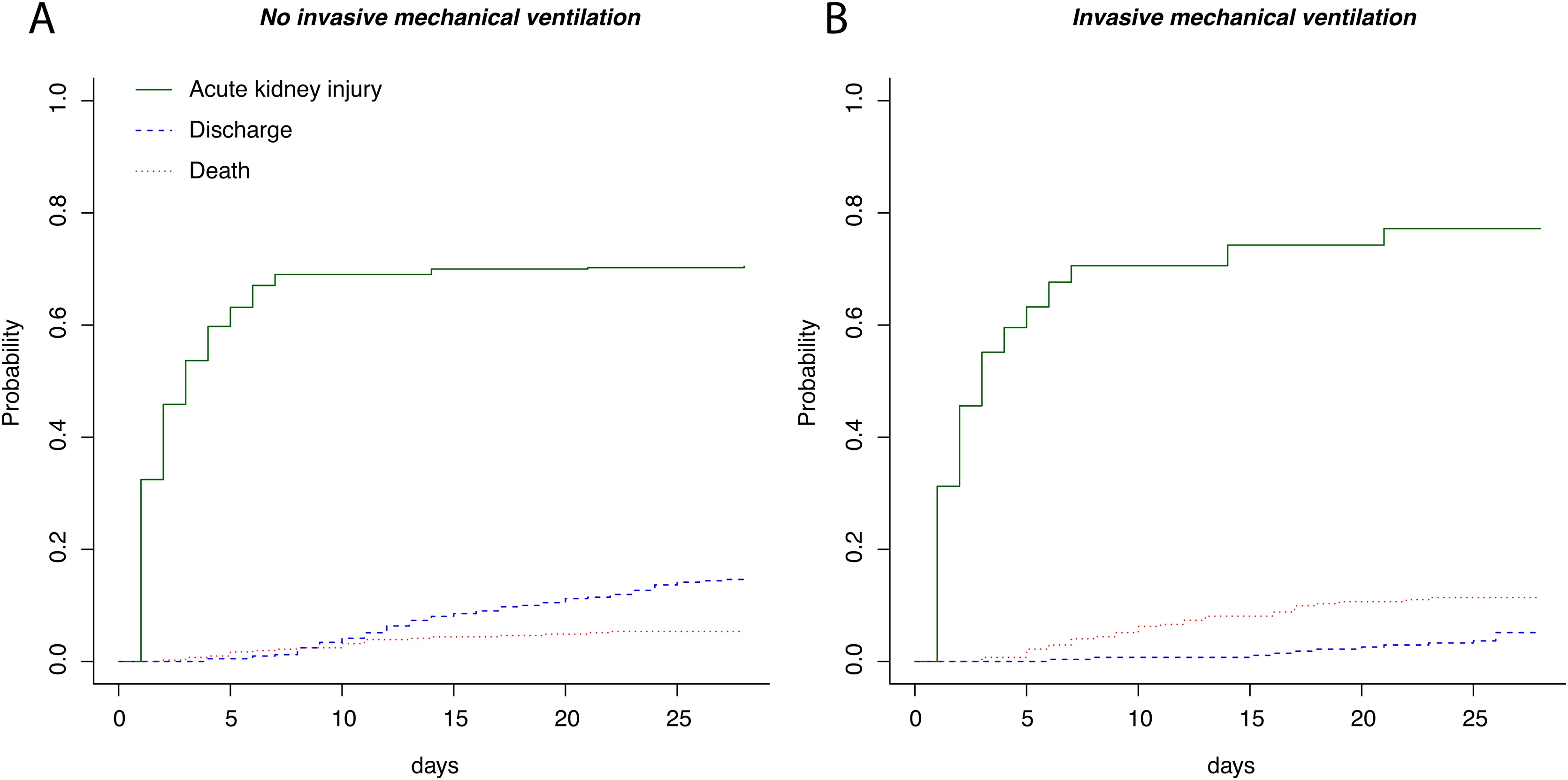
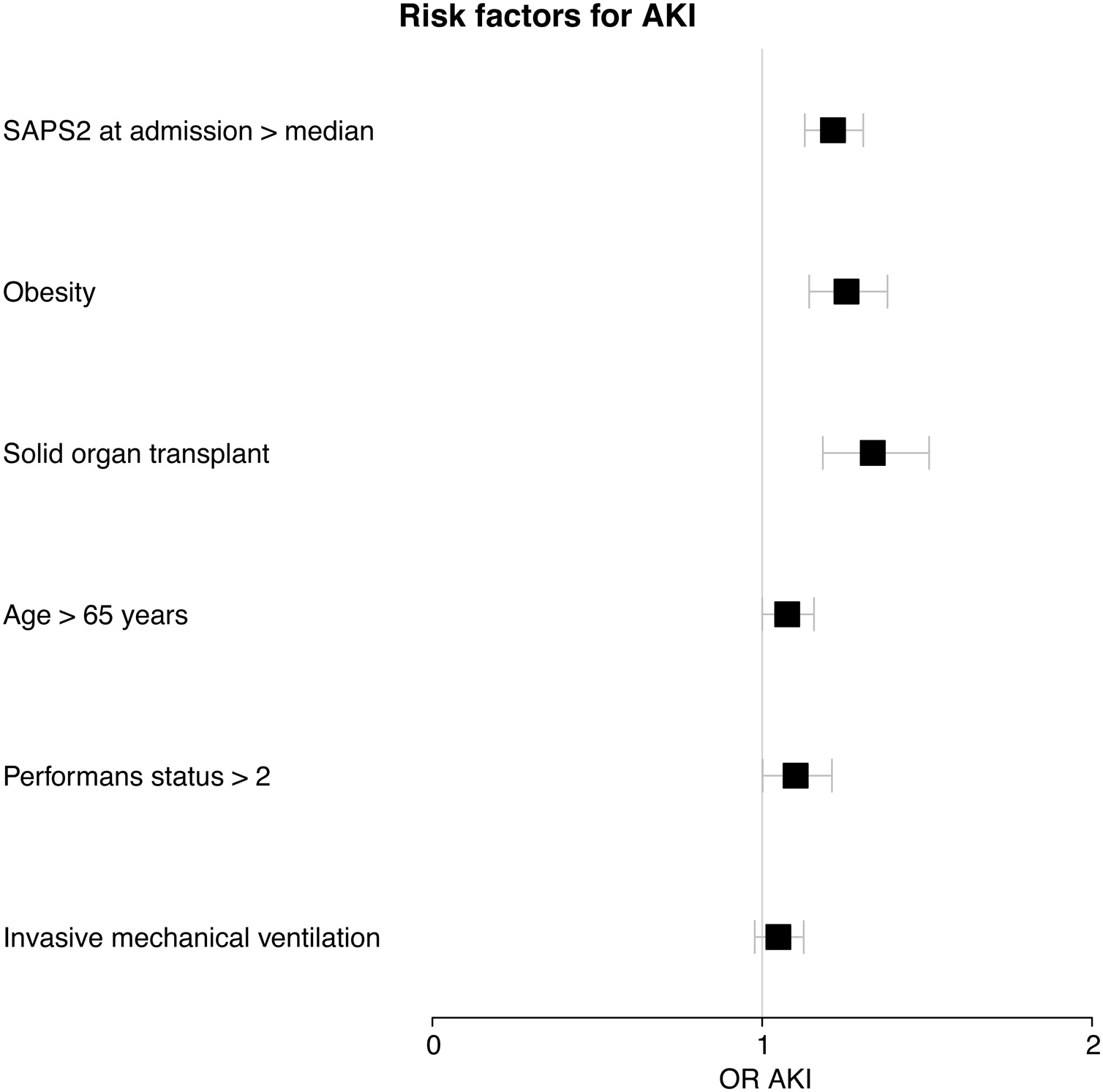
Results: We conducted a post-hoc analysis of 734 immunocompromised patients from the HIGH clinical trial. Of these, 302 (41%) required invasive mechanical ventilation, and 542 (74%) developed AKI. Notably, AKI frequently occurred before the initiation of invasive mechanical ventilation, with the median day of peak KDIGO stage being 2 days (IQR 1-4 days), compared to 3 days (IQR 2-4 days) for initiation of mechanical ventilation. While univariate analysis showed a significant association between invasive mechanical ventilation and AKI (OR = 1.08, 95% CI = 1.02-1.16, p = 0.014), this association was not significant in the multivariate model (OR = 1.05, 95% CI = 0.98-1.13, p = 0.185). Similar findings were observed after adjusting for the risk of invasive mechanical ventilation using overlap weighting and in a competing risk model. Among patients who received mechanical ventilation, 59 (19%) developed AKI after initiation of mechanical ventilation.
Conclusion: Immunocompromised patients with acute respiratory failure face a significant risk of developing AKI, driven by a combination of factors such as their underlying conditions and disease severity. In contrast, the direct impact of invasive mechanical ventilation appears to be limited, suggesting that mechanical ventilation may not be a primary driver of AKI in this vulnerable patient population.
期刊介绍:
Annals of Intensive Care is an online peer-reviewed journal that publishes high-quality review articles and original research papers in the field of intensive care medicine. It targets critical care providers including attending physicians, fellows, residents, nurses, and physiotherapists, who aim to enhance their knowledge and provide optimal care for their patients. The journal's articles are included in various prestigious databases such as CAS, Current contents, DOAJ, Embase, Journal Citation Reports/Science Edition, OCLC, PubMed, PubMed Central, Science Citation Index Expanded, SCOPUS, and Summon by Serial Solutions.


 求助内容:
求助内容: 应助结果提醒方式:

 京公网安备 11010802042870号


