Hoda Gad, María Cristina Moreno, Angel Pluas, María Belen Tello, Maribel Burgos, Karla Diaz, Estefanía Icaza, Mabel Sanchez, Mariella Vecchionacce, Rayaz A Malik, Carlos Solis
{"title":"A New Simple SCreening Tool for Painful Diabetic Neuropathy (ACT) in Ecuador.","authors":"Hoda Gad, María Cristina Moreno, Angel Pluas, María Belen Tello, Maribel Burgos, Karla Diaz, Estefanía Icaza, Mabel Sanchez, Mariella Vecchionacce, Rayaz A Malik, Carlos Solis","doi":"10.1111/jns.70118","DOIUrl":null,"url":null,"abstract":"<p><strong>Background: </strong>Diabetic painful neuropathy is a cause of significant disability and sleep disturbance but may be undiagnosed in up to 80% of patients with diabetes. Various neuropathic pain (NP) questionnaires have good diagnostic utility but are impractical in resource-constrained and busy clinical settings. A simple sCreening Tool (ACT) was developed as a concise, patient-led tool to rapidly detect NP. This study evaluates the screening validity and psychometric properties of ACT compared with the DN4 questionnaire (reference standard).</p><p><strong>Methods: </strong>We conducted an observational study employing clinic-based recruitment of patients with diabetes at a tertiary outpatient clinic in Guayaquil, Ecuador. All enrolled participants completed the ACT, DN4, and MNSI questionnaires during the study visit. MNSI was administered as part of the study to confirm the diagnosis of DPN using predefined cut-offs (MNSI-q ≥ 4 and MNSI-e ≥ 2.5). Time to completion, inter-item consistency, sensitivity, specificity, Youden's index, and the area under the receiver operating characteristic (ROC) curve were calculated for ACT using DN4 ≥ 4 as the criterion for NP.</p><p><strong>Results: </strong>Of the 300 participants (median age 63 years, diabetes duration 10 years), 65 (21.7%) had NP per DN4. Total ACTq+e (questionnaire+examination) yielded a cut-off score of ≥ 6 items as optimal, with area under the ROC curve 0.836, sensitivity 80.0% and specificity 75.7% for painful DPN. ACT demonstrated moderate internal consistency (Cronbach's alpha = 0.65) and was well received by patients and clinicians on face validity. The completion time for ACT was comparable to that of DN4.</p><p><strong>Conclusion: </strong>The ACT tool is a rapid screening tool for identifying neuropathic pain in the busy clinic, with acceptable sensitivity and specificity compared to DN4. The brevity and ease of patient self-administration of ACT make it promising for integration into busy outpatient workflows to improve the diagnosis of painful DPN.</p>","PeriodicalId":17451,"journal":{"name":"Journal of the Peripheral Nervous System","volume":"31 1","pages":"e70118"},"PeriodicalIF":3.2000,"publicationDate":"2026-03-01","publicationTypes":"Journal Article","fieldsOfStudy":null,"isOpenAccess":false,"openAccessPdf":"https://www.ncbi.nlm.nih.gov/pmc/articles/PMC12999269/pdf/","citationCount":"0","resultStr":null,"platform":"Semanticscholar","paperid":null,"PeriodicalName":"Journal of the Peripheral Nervous System","FirstCategoryId":"3","ListUrlMain":"https://doi.org/10.1111/jns.70118","RegionNum":3,"RegionCategory":"医学","ArticlePicture":[],"TitleCN":null,"AbstractTextCN":null,"PMCID":null,"EPubDate":"","PubModel":"","JCR":"Q1","JCRName":"CLINICAL NEUROLOGY","Score":null,"Total":0}
引用次数: 0
Abstract
Background: Diabetic painful neuropathy is a cause of significant disability and sleep disturbance but may be undiagnosed in up to 80% of patients with diabetes. Various neuropathic pain (NP) questionnaires have good diagnostic utility but are impractical in resource-constrained and busy clinical settings. A simple sCreening Tool (ACT) was developed as a concise, patient-led tool to rapidly detect NP. This study evaluates the screening validity and psychometric properties of ACT compared with the DN4 questionnaire (reference standard).
Methods: We conducted an observational study employing clinic-based recruitment of patients with diabetes at a tertiary outpatient clinic in Guayaquil, Ecuador. All enrolled participants completed the ACT, DN4, and MNSI questionnaires during the study visit. MNSI was administered as part of the study to confirm the diagnosis of DPN using predefined cut-offs (MNSI-q ≥ 4 and MNSI-e ≥ 2.5). Time to completion, inter-item consistency, sensitivity, specificity, Youden's index, and the area under the receiver operating characteristic (ROC) curve were calculated for ACT using DN4 ≥ 4 as the criterion for NP.
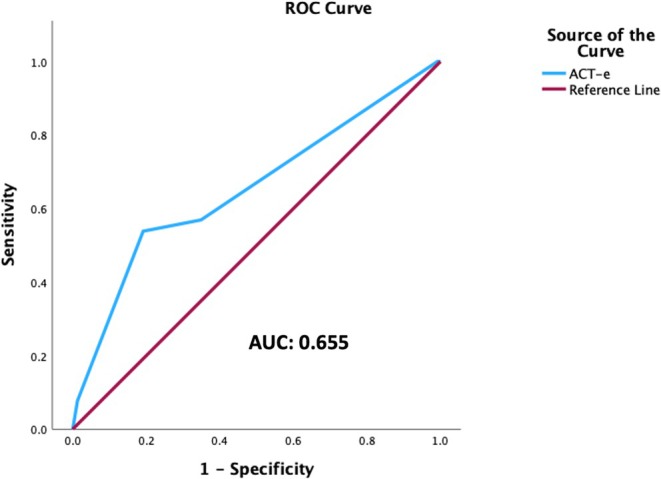
Results: Of the 300 participants (median age 63 years, diabetes duration 10 years), 65 (21.7%) had NP per DN4. Total ACTq+e (questionnaire+examination) yielded a cut-off score of ≥ 6 items as optimal, with area under the ROC curve 0.836, sensitivity 80.0% and specificity 75.7% for painful DPN. ACT demonstrated moderate internal consistency (Cronbach's alpha = 0.65) and was well received by patients and clinicians on face validity. The completion time for ACT was comparable to that of DN4.
Conclusion: The ACT tool is a rapid screening tool for identifying neuropathic pain in the busy clinic, with acceptable sensitivity and specificity compared to DN4. The brevity and ease of patient self-administration of ACT make it promising for integration into busy outpatient workflows to improve the diagnosis of painful DPN.
期刊介绍:
The Journal of the Peripheral Nervous System is the official journal of the Peripheral Nerve Society. Founded in 1996, it is the scientific journal of choice for clinicians, clinical scientists and basic neuroscientists interested in all aspects of biology and clinical research of peripheral nervous system disorders.
The Journal of the Peripheral Nervous System is a peer-reviewed journal that publishes high quality articles on cell and molecular biology, genomics, neuropathic pain, clinical research, trials, and unique case reports on inherited and acquired peripheral neuropathies.
Original articles are organized according to the topic in one of four specific areas: Mechanisms of Disease, Genetics, Clinical Research, and Clinical Trials.
The journal also publishes regular review papers on hot topics and Special Issues on basic, clinical, or assembled research in the field of peripheral nervous system disorders. Authors interested in contributing a review-type article or a Special Issue should contact the Editorial Office to discuss the scope of the proposed article with the Editor-in-Chief.



 求助内容:
求助内容: 应助结果提醒方式:

 京公网安备 11010802042870号


