Side Hop Test as a Predictor of Successful Return to Sports After Nonoperative Treatment or Modified Broström Operation in Patients With Chronic Ankle Instability: Based on the Ankle-GO Score.
Jin Hyuck Lee, Gyu Bin Lee, Sang Woo Pyun, Woo Yong Chung, Ki Hun Shin, Min Su Bae, Ji Hye Choi, Jangsun Hwang, Woo Young Jang
{"title":"Side Hop Test as a Predictor of Successful Return to Sports After Nonoperative Treatment or Modified Broström Operation in Patients With Chronic Ankle Instability: Based on the Ankle-GO Score.","authors":"Jin Hyuck Lee, Gyu Bin Lee, Sang Woo Pyun, Woo Yong Chung, Ki Hun Shin, Min Su Bae, Ji Hye Choi, Jangsun Hwang, Woo Young Jang","doi":"10.1177/23259671261419111","DOIUrl":null,"url":null,"abstract":"<p><strong>Background: </strong>The Ankle-GO score is an objective battery for return-to-sports (RTS) decision-making after nonoperative or surgical treatment in patients with chronic ankle instability (CAI). However, direct comparisons of Ankle-GO subscales between CAI patients with and without successful RTS are limited, and predictors of successful RTS remain unclear.</p><p><strong>Purpose: </strong>To directly compare the Ankle-GO subscales between CAI patients with and without successful RTS after nonoperative treatment and modified Broström operation (MBO) and to explore which Ankle-GO subscales are significantly associated with successful RTS.</p><p><strong>Study design: </strong>Case control study; Level of evidence, 3.</p><p><strong>Methods: </strong>A total of 100 patients (100 ankles) with CAI were enrolled. Of these, 52 ankles underwent nonoperative treatment (31 with successful RTS and 21 without) and 48 ankles underwent MBO (26 with successful RTS and 22 without). Successful RTS was defined as return to preinjury sport level with a Tegner activity score ≥6. The Ankle-GO, which consists of 6 subscales, was compared between patients with and without successful RTS: the single-leg stance test, modified star excursion balance test, side hop test (SHT), figure-of-8 test (F8T), Foot and Ankle Ability Measure, and Ankle Ligament Reconstruction-Return to Sport after Injury (ALR-RSI). Statistical analyses were performed using independent <i>t</i> tests and multivariable binary logistic regression analyses with receiver operating characteristic curve analysis.</p><p><strong>Results: </strong>In the nonoperative treatment group, CAI patients with successful RTS demonstrated superior Ankle-GO scores, SHT, and F8T compared with those without successful RTS (all <i>P</i> < .001). In the MBO group, CAI patients with successful RTS demonstrated superior Ankle-GO scores, SHT, F8T, and ALR-RSI scores compared with those without successful RTS (all <i>P</i> < .001). Furthermore, SHT was a significant predictor of RTS in both the nonoperative treatment group (odds ratio [OR], 18.03; 95% CI, 2.8-36.8) and MBO group (OR, 4.59; 95% CI, 2.0-10.7).</p><p><strong>Conclusion: </strong>Our study demonstrated that in both the nonoperative treatment and MBO groups, SHT and F8T were key factors distinguishing patients with CAI who had successful RTS from those who did not. In addition, SHT was the strongest independent predictor of RTS in both the nonoperative treatment and MBO groups. Clinicians and therapists should consider these findings when planning rehabilitation and RTS strategies.</p>","PeriodicalId":19646,"journal":{"name":"Orthopaedic Journal of Sports Medicine","volume":"14 3","pages":"23259671261419111"},"PeriodicalIF":2.5000,"publicationDate":"2026-03-10","publicationTypes":"Journal Article","fieldsOfStudy":null,"isOpenAccess":false,"openAccessPdf":"https://www.ncbi.nlm.nih.gov/pmc/articles/PMC12979875/pdf/","citationCount":"0","resultStr":null,"platform":"Semanticscholar","paperid":null,"PeriodicalName":"Orthopaedic Journal of Sports Medicine","FirstCategoryId":"3","ListUrlMain":"https://doi.org/10.1177/23259671261419111","RegionNum":3,"RegionCategory":"医学","ArticlePicture":[],"TitleCN":null,"AbstractTextCN":null,"PMCID":null,"EPubDate":"2026/3/1 0:00:00","PubModel":"eCollection","JCR":"Q2","JCRName":"ORTHOPEDICS","Score":null,"Total":0}
引用次数: 0
Abstract
Background: The Ankle-GO score is an objective battery for return-to-sports (RTS) decision-making after nonoperative or surgical treatment in patients with chronic ankle instability (CAI). However, direct comparisons of Ankle-GO subscales between CAI patients with and without successful RTS are limited, and predictors of successful RTS remain unclear.
Purpose: To directly compare the Ankle-GO subscales between CAI patients with and without successful RTS after nonoperative treatment and modified Broström operation (MBO) and to explore which Ankle-GO subscales are significantly associated with successful RTS.
Study design: Case control study; Level of evidence, 3.
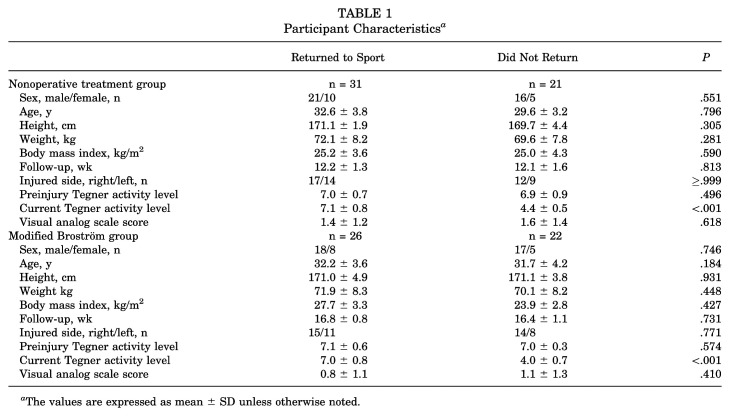
Methods: A total of 100 patients (100 ankles) with CAI were enrolled. Of these, 52 ankles underwent nonoperative treatment (31 with successful RTS and 21 without) and 48 ankles underwent MBO (26 with successful RTS and 22 without). Successful RTS was defined as return to preinjury sport level with a Tegner activity score ≥6. The Ankle-GO, which consists of 6 subscales, was compared between patients with and without successful RTS: the single-leg stance test, modified star excursion balance test, side hop test (SHT), figure-of-8 test (F8T), Foot and Ankle Ability Measure, and Ankle Ligament Reconstruction-Return to Sport after Injury (ALR-RSI). Statistical analyses were performed using independent t tests and multivariable binary logistic regression analyses with receiver operating characteristic curve analysis.
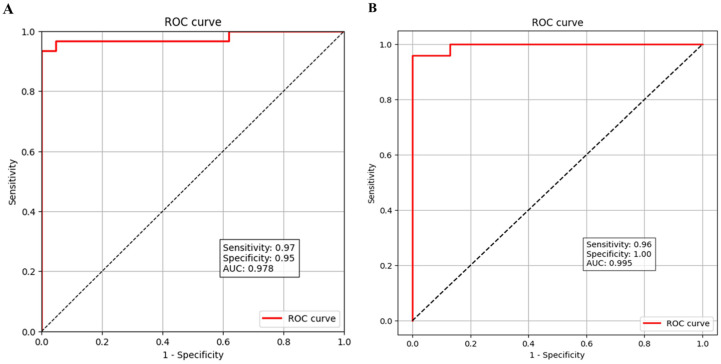
Results: In the nonoperative treatment group, CAI patients with successful RTS demonstrated superior Ankle-GO scores, SHT, and F8T compared with those without successful RTS (all P < .001). In the MBO group, CAI patients with successful RTS demonstrated superior Ankle-GO scores, SHT, F8T, and ALR-RSI scores compared with those without successful RTS (all P < .001). Furthermore, SHT was a significant predictor of RTS in both the nonoperative treatment group (odds ratio [OR], 18.03; 95% CI, 2.8-36.8) and MBO group (OR, 4.59; 95% CI, 2.0-10.7).
Conclusion: Our study demonstrated that in both the nonoperative treatment and MBO groups, SHT and F8T were key factors distinguishing patients with CAI who had successful RTS from those who did not. In addition, SHT was the strongest independent predictor of RTS in both the nonoperative treatment and MBO groups. Clinicians and therapists should consider these findings when planning rehabilitation and RTS strategies.
期刊介绍:
The Orthopaedic Journal of Sports Medicine (OJSM), developed by the American Orthopaedic Society for Sports Medicine (AOSSM), is a global, peer-reviewed, open access journal that combines the interests of researchers and clinical practitioners across orthopaedic sports medicine, arthroscopy, and knee arthroplasty.
Topics include original research in the areas of:
-Orthopaedic Sports Medicine, including surgical and nonsurgical treatment of orthopaedic sports injuries
-Arthroscopic Surgery (Shoulder/Elbow/Wrist/Hip/Knee/Ankle/Foot)
-Relevant translational research
-Sports traumatology/epidemiology
-Knee and shoulder arthroplasty
The OJSM also publishes relevant systematic reviews and meta-analyses.
This journal is a member of the Committee on Publication Ethics (COPE).



 求助内容:
求助内容: 应助结果提醒方式:

 京公网安备 11010802042870号


