Mariam Ghozzi, Marco Kai, Tanja Seifert, Sarra Melayah, Fatma Mechi, Sarra Romdhani, Zeineb Ben Chedly, Ibtissem Ghedira
{"title":"Prevalence of celiac disease in a Tunisian cohort.","authors":"Mariam Ghozzi, Marco Kai, Tanja Seifert, Sarra Melayah, Fatma Mechi, Sarra Romdhani, Zeineb Ben Chedly, Ibtissem Ghedira","doi":"10.3389/fgstr.2025.1619533","DOIUrl":null,"url":null,"abstract":"<p><strong>Background: </strong>Accurate and non-invasive diagnostics of celiac disease are essential for effective patient management. Although small intestine biopsy remains the diagnostic gold standard, serological assays offer a promising alternative. This study evaluated the performance and concordance of immunoblot, indirect immunofluorescence test (IIFT), and enzyme-linked immunosorbent assay (ELISA) in detecting celiac disease-specific autoantibodies in a Tunisian cohort, aiming to assess the potential of combining various assays to reduce reliance on invasive procedures.</p><p><strong>Methods: </strong>Serum samples from 80 celiac disease patients and appropriate controls were analyzed using three serological methods. IIFT was employed to detect IgA autoantibodies against endomysium using primate liver and human umbilical cord substrates. ELISA was used to quantify anti-tissue transglutaminase (tTG) IgA and deamidated gliadin peptide (DGP) autoantibodies. Immunoblots assessed additional autoantibodies (tTG, GAF-3X, and ASCA), along with further evaluation of IgG autoantibodies (intrinsic factor and parietal cell antibodies). Concordance among methods was evaluated.</p><p><strong>Results: </strong>IIFT detected anti-endomysium IgA autoantibodies in 100% (80/80) of celiac patients (in this cohort), with no positivity in controls. ELISA demonstrated that both tTG IgA and DGP autoantibodies were present in all celiac disease patients. All controls (n = 158) were ELISA-negative, indicating 100% specificity in both assays. Immunoblots revealed tTG IgA in 99% (79/80) of patients, while GAF-3X autoantibodies were detected in 94% (IgA) and 85% (IgG) of celiac patients. In addition, ASCA IgA autoantibodies were present in 31% of celiac disease patients, with minimal reactivity observed in controls. A Venn diagram illustrated high concordance among the assays for tTG autoantibody detection, reinforcing the reliability of this autoantibody marker.</p><p><strong>Conclusion: </strong>The robust and consistent detection of celiac disease-specific autoantibodies, particularly tTG IgA and DGP autoantibodies, across multiple serological platforms underscores their diagnostic utility. The high concordance among these markers supports the potential of combined autoantibody testing to serve as a non-invasive alternative to biopsy, thereby enhancing clinical management of celiac disease.</p>","PeriodicalId":73085,"journal":{"name":"Frontiers in gastroenterology (Lausanne, Switzerland)","volume":"4 ","pages":"1619533"},"PeriodicalIF":0.0000,"publicationDate":"2025-10-20","publicationTypes":"Journal Article","fieldsOfStudy":null,"isOpenAccess":false,"openAccessPdf":"https://www.ncbi.nlm.nih.gov/pmc/articles/PMC12952425/pdf/","citationCount":"0","resultStr":null,"platform":"Semanticscholar","paperid":null,"PeriodicalName":"Frontiers in gastroenterology (Lausanne, Switzerland)","FirstCategoryId":"1085","ListUrlMain":"https://doi.org/10.3389/fgstr.2025.1619533","RegionNum":0,"RegionCategory":null,"ArticlePicture":[],"TitleCN":null,"AbstractTextCN":null,"PMCID":null,"EPubDate":"2025/1/1 0:00:00","PubModel":"eCollection","JCR":"","JCRName":"","Score":null,"Total":0}
引用次数: 0
Abstract
Background: Accurate and non-invasive diagnostics of celiac disease are essential for effective patient management. Although small intestine biopsy remains the diagnostic gold standard, serological assays offer a promising alternative. This study evaluated the performance and concordance of immunoblot, indirect immunofluorescence test (IIFT), and enzyme-linked immunosorbent assay (ELISA) in detecting celiac disease-specific autoantibodies in a Tunisian cohort, aiming to assess the potential of combining various assays to reduce reliance on invasive procedures.
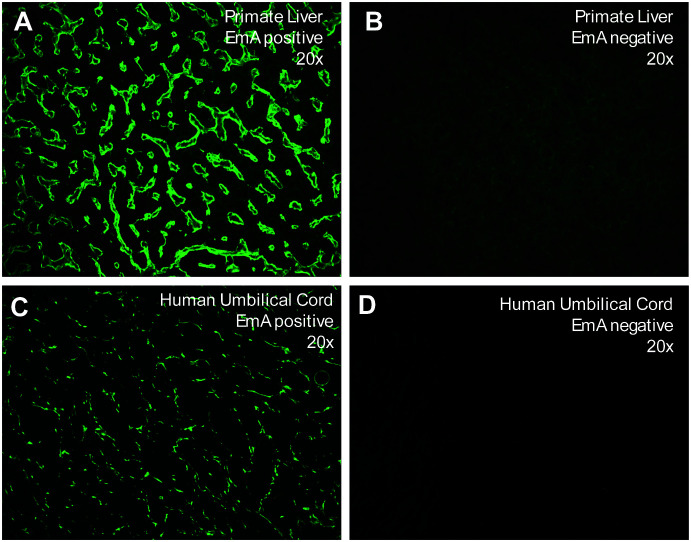
Methods: Serum samples from 80 celiac disease patients and appropriate controls were analyzed using three serological methods. IIFT was employed to detect IgA autoantibodies against endomysium using primate liver and human umbilical cord substrates. ELISA was used to quantify anti-tissue transglutaminase (tTG) IgA and deamidated gliadin peptide (DGP) autoantibodies. Immunoblots assessed additional autoantibodies (tTG, GAF-3X, and ASCA), along with further evaluation of IgG autoantibodies (intrinsic factor and parietal cell antibodies). Concordance among methods was evaluated.
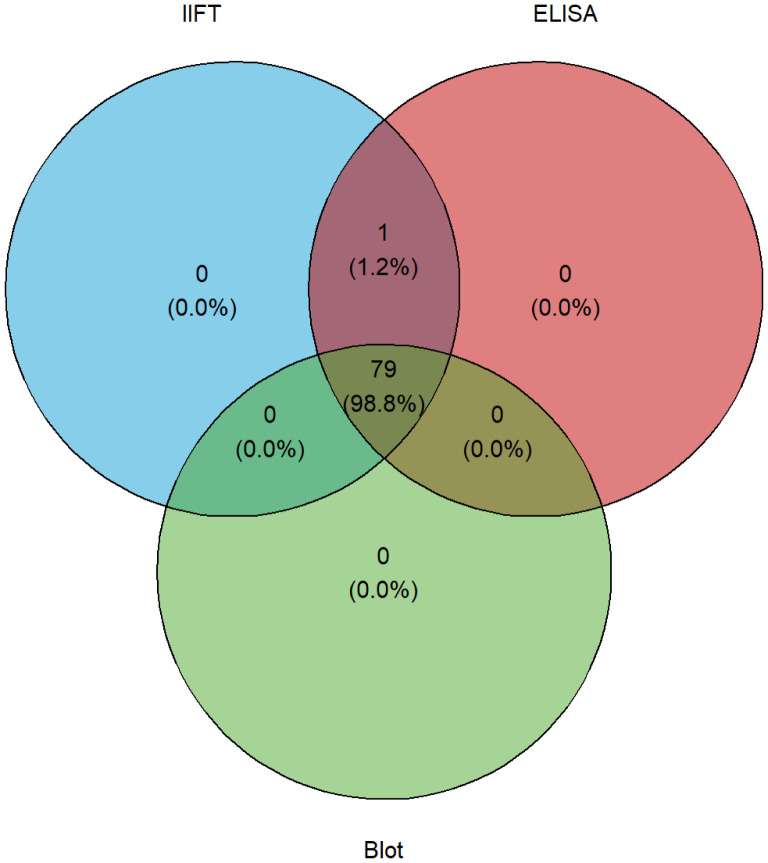
Results: IIFT detected anti-endomysium IgA autoantibodies in 100% (80/80) of celiac patients (in this cohort), with no positivity in controls. ELISA demonstrated that both tTG IgA and DGP autoantibodies were present in all celiac disease patients. All controls (n = 158) were ELISA-negative, indicating 100% specificity in both assays. Immunoblots revealed tTG IgA in 99% (79/80) of patients, while GAF-3X autoantibodies were detected in 94% (IgA) and 85% (IgG) of celiac patients. In addition, ASCA IgA autoantibodies were present in 31% of celiac disease patients, with minimal reactivity observed in controls. A Venn diagram illustrated high concordance among the assays for tTG autoantibody detection, reinforcing the reliability of this autoantibody marker.
Conclusion: The robust and consistent detection of celiac disease-specific autoantibodies, particularly tTG IgA and DGP autoantibodies, across multiple serological platforms underscores their diagnostic utility. The high concordance among these markers supports the potential of combined autoantibody testing to serve as a non-invasive alternative to biopsy, thereby enhancing clinical management of celiac disease.


 求助内容:
求助内容: 应助结果提醒方式:

 京公网安备 11010802042870号


