{"title":"The global landscape of lean metabolic dysfunction-associated steatotic liver disease: insight from Asia and the West.","authors":"Hery Djagat Purnomo, Randy Adiwinata, Cecilia Oktaria Permatadewi, Hesti Triwahyu Hutami, Didik Indiarso","doi":"10.3389/fgstr.2025.1699508","DOIUrl":null,"url":null,"abstract":"<p><p>Metabolic dysfunction-associated steatotic liver disease (MASLD) has emerged as a leading global cause of chronic liver disease, affecting 25-30% of the population. While MASLD is traditionally associated with obesity, lean MASLD-a subset characterized by hepatic steatosis and metabolic dysfunction in individuals with a normal body mass index (BMI)-is increasingly recognized as a distinct clinical entity. Lean MASLD accounts for approximately 5.1% of the global population and is more prevalent in Asia, where genetic predispositions such as <i>PNPLA3</i> and <i>TM6SF2</i> polymorphisms, visceral obesity, and high-carbohydrate dietary patterns are key risk factors. Lean MASLD is also associated with significant liver and non-liver complications, as well as increased all-cause mortality risk. Therefore, lean MASLD may pose a significant challenge for practitioners.</p>","PeriodicalId":73085,"journal":{"name":"Frontiers in gastroenterology (Lausanne, Switzerland)","volume":"4 ","pages":"1699508"},"PeriodicalIF":0.0000,"publicationDate":"2025-12-02","publicationTypes":"Journal Article","fieldsOfStudy":null,"isOpenAccess":false,"openAccessPdf":"https://www.ncbi.nlm.nih.gov/pmc/articles/PMC12952312/pdf/","citationCount":"0","resultStr":null,"platform":"Semanticscholar","paperid":null,"PeriodicalName":"Frontiers in gastroenterology (Lausanne, Switzerland)","FirstCategoryId":"1085","ListUrlMain":"https://doi.org/10.3389/fgstr.2025.1699508","RegionNum":0,"RegionCategory":null,"ArticlePicture":[],"TitleCN":null,"AbstractTextCN":null,"PMCID":null,"EPubDate":"2025/1/1 0:00:00","PubModel":"eCollection","JCR":"","JCRName":"","Score":null,"Total":0}
引用次数: 0
Abstract
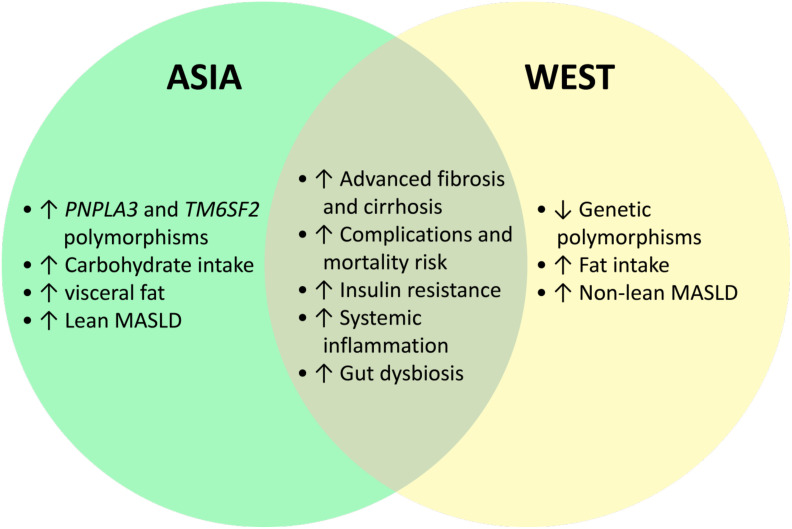
Metabolic dysfunction-associated steatotic liver disease (MASLD) has emerged as a leading global cause of chronic liver disease, affecting 25-30% of the population. While MASLD is traditionally associated with obesity, lean MASLD-a subset characterized by hepatic steatosis and metabolic dysfunction in individuals with a normal body mass index (BMI)-is increasingly recognized as a distinct clinical entity. Lean MASLD accounts for approximately 5.1% of the global population and is more prevalent in Asia, where genetic predispositions such as PNPLA3 and TM6SF2 polymorphisms, visceral obesity, and high-carbohydrate dietary patterns are key risk factors. Lean MASLD is also associated with significant liver and non-liver complications, as well as increased all-cause mortality risk. Therefore, lean MASLD may pose a significant challenge for practitioners.


 求助内容:
求助内容: 应助结果提醒方式:

 京公网安备 11010802042870号


