Maria Utter, Andreas Forsvall, Fredrik Altmark, Tomas Thiel, Christian Torbrand, Magnus Wagenius
{"title":"Emergency computed tomography in acute renal colic is essential for correct diagnosis and shortens time to treatment and stone-free status.","authors":"Maria Utter, Andreas Forsvall, Fredrik Altmark, Tomas Thiel, Christian Torbrand, Magnus Wagenius","doi":"10.5173/ceju.2025.0245","DOIUrl":null,"url":null,"abstract":"<p><strong>Introduction: </strong>This study aimed to evaluate the clinical impact of implementing routine emergency computed tomography (eCT) for all patients presenting with suspected acute renal colic at the emergency department (ED).</p><p><strong>Material and methods: </strong>We did a retrospective observational study of all patients who underwent eCT for suspected acute renal colic at the ED in Helsingborg between May 9, 2023 and May 8, 2024 and compared with a 2019/2020 cohort not using routine eCT.</p><p><strong>Results: </strong>Of 66,540 ED visits during the study period, 1,566 patients underwent eCT for suspected acute renal colic; 1,261 were included in the analysis after exclusions. In 57% of patients, no symptomatic stone was identified; nevertheless, one fifth required hospital admission for alternative diagnoses. A radiologically proven stone explaining their symptoms was found in 43% of patients. Compared with the 2019/2020 cohort, the 2023/2024 cohort had more treatments (33% vs 21%), and significantly shorter time to both treatment (p = 0.01) and clinical closure (p <0.001). Stone size, location, type of treatment and number of visits to the ED were comparable between the two cohorts.</p><p><strong>Conclusions: </strong>Acute renal colic in its clinical presentation appeared to be less diagnostically reliable than previously assumed. The use of eCT ensured accurate diagnosis of urolithiasis, significantly shortened time to treatment, and to a stone-free patient as well as reduced the use of stents. We propose that eCT should be implemented as a routine procedure in the management of acute renal colic.</p>","PeriodicalId":9744,"journal":{"name":"Central European Journal of Urology","volume":"79 1","pages":"42-48"},"PeriodicalIF":1.7000,"publicationDate":"2026-01-01","publicationTypes":"Journal Article","fieldsOfStudy":null,"isOpenAccess":false,"openAccessPdf":"https://www.ncbi.nlm.nih.gov/pmc/articles/PMC12976745/pdf/","citationCount":"0","resultStr":null,"platform":"Semanticscholar","paperid":null,"PeriodicalName":"Central European Journal of Urology","FirstCategoryId":"1085","ListUrlMain":"https://doi.org/10.5173/ceju.2025.0245","RegionNum":0,"RegionCategory":null,"ArticlePicture":[],"TitleCN":null,"AbstractTextCN":null,"PMCID":null,"EPubDate":"2026/1/15 0:00:00","PubModel":"Epub","JCR":"Q3","JCRName":"UROLOGY & NEPHROLOGY","Score":null,"Total":0}
引用次数: 0
Abstract
Introduction: This study aimed to evaluate the clinical impact of implementing routine emergency computed tomography (eCT) for all patients presenting with suspected acute renal colic at the emergency department (ED).
Material and methods: We did a retrospective observational study of all patients who underwent eCT for suspected acute renal colic at the ED in Helsingborg between May 9, 2023 and May 8, 2024 and compared with a 2019/2020 cohort not using routine eCT.
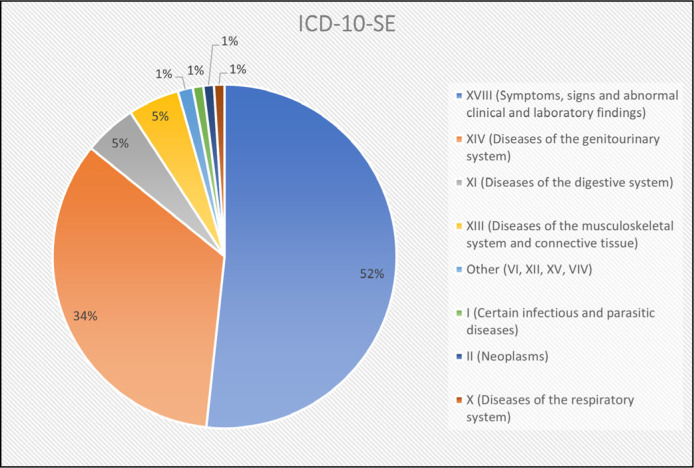
Results: Of 66,540 ED visits during the study period, 1,566 patients underwent eCT for suspected acute renal colic; 1,261 were included in the analysis after exclusions. In 57% of patients, no symptomatic stone was identified; nevertheless, one fifth required hospital admission for alternative diagnoses. A radiologically proven stone explaining their symptoms was found in 43% of patients. Compared with the 2019/2020 cohort, the 2023/2024 cohort had more treatments (33% vs 21%), and significantly shorter time to both treatment (p = 0.01) and clinical closure (p <0.001). Stone size, location, type of treatment and number of visits to the ED were comparable between the two cohorts.
Conclusions: Acute renal colic in its clinical presentation appeared to be less diagnostically reliable than previously assumed. The use of eCT ensured accurate diagnosis of urolithiasis, significantly shortened time to treatment, and to a stone-free patient as well as reduced the use of stents. We propose that eCT should be implemented as a routine procedure in the management of acute renal colic.
简介:本研究旨在评估在急诊科(ED)对所有疑似急性肾绞痛患者实施常规急诊计算机断层扫描(eCT)的临床影响。材料和方法:我们对2023年5月9日至2024年5月8日在赫尔辛堡急诊科接受eCT治疗疑似急性肾绞痛的所有患者进行了回顾性观察研究,并与2019/2020年未使用常规eCT的队列进行了比较。结果:在研究期间66,540例ED就诊中,1,566例患者因疑似急性肾绞痛接受了eCT治疗;经排除后,1261例纳入分析。57%的患者未发现症状性结石;然而,五分之一的患者需要住院接受替代诊断。在43%的患者中发现放射学证实的结石可以解释其症状。与2019/2020队列相比,2023/2024队列接受了更多的治疗(33% vs 21%),治疗时间(p = 0.01)和临床结束时间(p)均显著缩短。结论:急性肾绞痛的临床表现似乎不如之前假设的那样可靠。eCT的使用确保了尿石症的准确诊断,显著缩短了治疗时间,并减少了无结石患者的使用,减少了支架的使用。我们建议eCT作为急性肾绞痛的常规治疗方法。




 求助内容:
求助内容: 应助结果提醒方式:

 京公网安备 11010802042870号


