{"title":"Tumor Vaccines in Hepatocellular Carcinoma: Advances, Challenges, and the Path Toward Precision Immunotherapy.","authors":"Bin Niu, Jun Xu, Liaoyun Zhang","doi":"10.14218/JCTH.2025.00401","DOIUrl":null,"url":null,"abstract":"<p><p>Primary hepatocellular carcinoma (HCC) remains one of the leading causes of cancer-related mortality worldwide, with curative options still limited for patients with advanced disease. As an emerging modality of cancer immunotherapy, tumor vaccines represent a promising approach that activates the host immune system to recognize and eliminate malignant cells. Multiple vaccine platforms, including peptide vaccines, dendritic-cell vaccines, nucleic-acid vaccines, and viral-vector vaccines, have been explored for HCC. Among these, peptide- and dendritic-cell-based vaccines are supported by the most extensive clinical data, demonstrating favorable safety and immunogenicity profiles. The advent of personalized therapeutic cancer vaccines based on tumor-specific antigens has further refined the precision of vaccine design. Nevertheless, several major challenges persist, including immune suppression within the tumor immune microenvironment, marked tumor heterogeneity, immune-escape mechanisms, and limited vaccine immunogenicity, all of which hinder clinical efficacy. In addition, issues related to standardization, large-scale production, and regulatory oversight remain unresolved. Recent advances in sequencing technology, nanotechnology, and artificial intelligence have opened new avenues for optimizing vaccine platforms and delivery strategies. Combination therapies that integrate cancer vaccines with immune checkpoint inhibitors, chemotherapy, or locoregional treatments are also being actively investigated to improve patient outcomes. In summary, although vaccine-based immunotherapy for HCC is still at an early stage, its integration with personalized medicine and multimodal therapeutic strategies holds great potential for improving the long-term prognosis of patients with HCC. Therefore, this review aims to systematically summarize current advances in tumor vaccine-based immunotherapy for hepatocellular carcinoma, with a particular focus on vaccine platforms, target antigens, clinical trial outcomes, and future challenges for clinical translation.</p>","PeriodicalId":15484,"journal":{"name":"Journal of Clinical and Translational Hepatology","volume":"14 2","pages":"202-214"},"PeriodicalIF":6.0000,"publicationDate":"2026-02-28","publicationTypes":"Journal Article","fieldsOfStudy":null,"isOpenAccess":false,"openAccessPdf":"https://www.ncbi.nlm.nih.gov/pmc/articles/PMC12967886/pdf/","citationCount":"0","resultStr":null,"platform":"Semanticscholar","paperid":null,"PeriodicalName":"Journal of Clinical and Translational Hepatology","FirstCategoryId":"3","ListUrlMain":"https://doi.org/10.14218/JCTH.2025.00401","RegionNum":3,"RegionCategory":"医学","ArticlePicture":[],"TitleCN":null,"AbstractTextCN":null,"PMCID":null,"EPubDate":"2026/1/19 0:00:00","PubModel":"Epub","JCR":"Q2","JCRName":"GASTROENTEROLOGY & HEPATOLOGY","Score":null,"Total":0}
引用次数: 0
Abstract
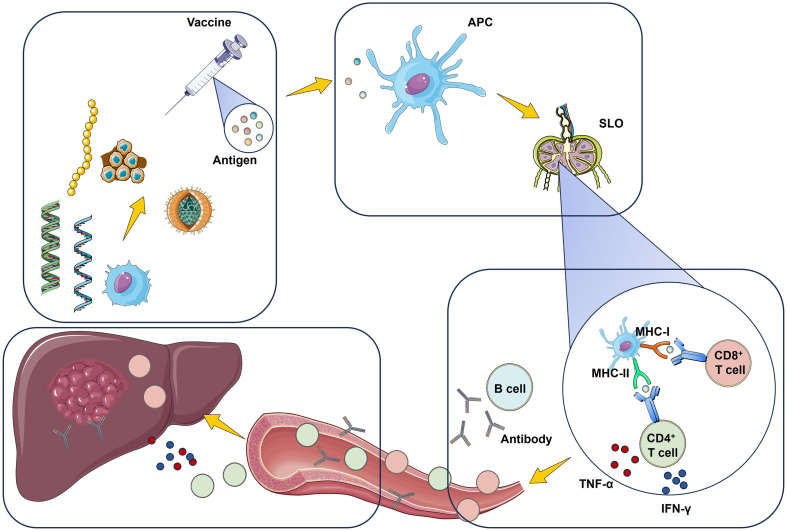
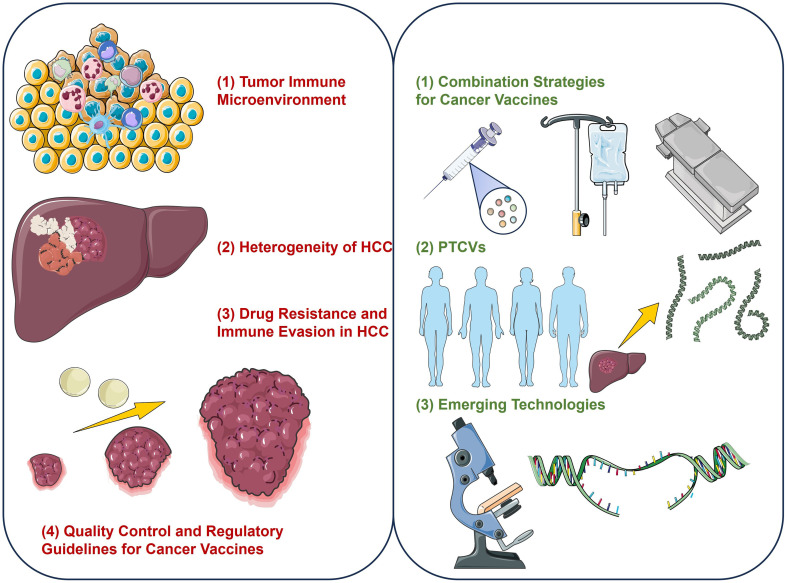
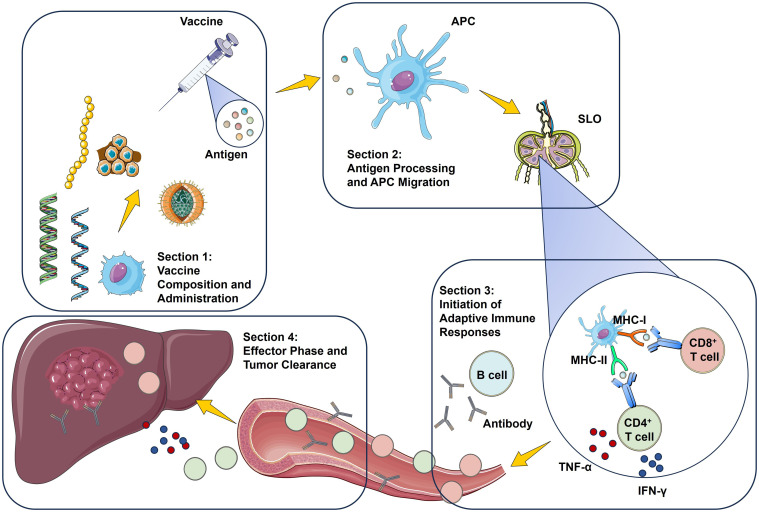
Primary hepatocellular carcinoma (HCC) remains one of the leading causes of cancer-related mortality worldwide, with curative options still limited for patients with advanced disease. As an emerging modality of cancer immunotherapy, tumor vaccines represent a promising approach that activates the host immune system to recognize and eliminate malignant cells. Multiple vaccine platforms, including peptide vaccines, dendritic-cell vaccines, nucleic-acid vaccines, and viral-vector vaccines, have been explored for HCC. Among these, peptide- and dendritic-cell-based vaccines are supported by the most extensive clinical data, demonstrating favorable safety and immunogenicity profiles. The advent of personalized therapeutic cancer vaccines based on tumor-specific antigens has further refined the precision of vaccine design. Nevertheless, several major challenges persist, including immune suppression within the tumor immune microenvironment, marked tumor heterogeneity, immune-escape mechanisms, and limited vaccine immunogenicity, all of which hinder clinical efficacy. In addition, issues related to standardization, large-scale production, and regulatory oversight remain unresolved. Recent advances in sequencing technology, nanotechnology, and artificial intelligence have opened new avenues for optimizing vaccine platforms and delivery strategies. Combination therapies that integrate cancer vaccines with immune checkpoint inhibitors, chemotherapy, or locoregional treatments are also being actively investigated to improve patient outcomes. In summary, although vaccine-based immunotherapy for HCC is still at an early stage, its integration with personalized medicine and multimodal therapeutic strategies holds great potential for improving the long-term prognosis of patients with HCC. Therefore, this review aims to systematically summarize current advances in tumor vaccine-based immunotherapy for hepatocellular carcinoma, with a particular focus on vaccine platforms, target antigens, clinical trial outcomes, and future challenges for clinical translation.

 求助内容:
求助内容: 应助结果提醒方式:

 京公网安备 11010802042870号


