Surgical Pleth Index as a Potentially Useful and Noninvasive Tool for Assessing Tracheal Intubation Conditions in Female Patients During Neuromuscular Blockade-Free Anesthesia.
{"title":"Surgical Pleth Index as a Potentially Useful and Noninvasive Tool for Assessing Tracheal Intubation Conditions in Female Patients During Neuromuscular Blockade-Free Anesthesia.","authors":"Jiale Chen, Zhihao Pan, Jinwei Zheng","doi":"10.1155/emmi/7863986","DOIUrl":null,"url":null,"abstract":"<p><strong>Background: </strong>Neuromuscular blocking agents (NMBAs) are commonly used during tracheal intubation to ensure smoother procedural conditions, but they are associated with the risk of prolonged paralysis and respiratory complications. This study explores the relationship between the surgical pleth index (SPI) measured immediately before intubation and tracheal intubation conditions in patients who did not receive neuromuscular blockers, along with the predictive value of the SPI in these conditions.</p><p><strong>Methods: </strong>A total of 100 surgical patients (excluded 17 patients who did not meet the eligibility criteria) undergoing elective surgery under general anesthesia at The Affiliated Lihuili Hospital of Ningbo University between November 2021 and June 2022 were included, and key parameters, including systolic blood pressure (SBP), diastolic blood pressure (DBP), heart rate (HR), and SPI, were measured at different time points (T0 to T5).</p><p><strong>Results: </strong>At T2, significant reductions in SBP, DBP, HR, and SPI were observed compared to baseline (T0, after the completion of 6 mL/kg of lactate Ringer's solution infusion) and preintubation values (T1, at the time of loss of consciousness) (<i>p</i> < 0.05). Postintubation, both SBP and DBP significantly increased at T5 (3 min after intubation) compared to T2 (immediately before intubation) (<i>p</i> < 0.05). The patients were classified into \"excellent\" and \"good\" groups based on their intubation conditions. SPI values at T3 (immediately after intubation), T4 (1 min after intubation), and T5 were significantly higher in the \"good\" group compared to the \"excellent\" group (<i>p</i> < 0.05). Post hoc sex-stratified receiver operating characteristic (ROC) analysis showed an area under the curve (AUC) of 0.713 (<i>p</i> = 0.037) and 95% confidence interval (CI) (0.539-0.887), indicating moderate predictive value for the SPI in assessing tracheal intubation conditions.</p><p><strong>Conclusions: </strong>The SPI proves to be a potentially useful and noninvasive tool for evaluating tracheal intubation conditions in female patients without the use of NMBAs.</p>","PeriodicalId":11528,"journal":{"name":"Emergency Medicine International","volume":"2026 ","pages":"7863986"},"PeriodicalIF":0.8000,"publicationDate":"2026-03-09","publicationTypes":"Journal Article","fieldsOfStudy":null,"isOpenAccess":false,"openAccessPdf":"https://www.ncbi.nlm.nih.gov/pmc/articles/PMC12968434/pdf/","citationCount":"0","resultStr":null,"platform":"Semanticscholar","paperid":null,"PeriodicalName":"Emergency Medicine International","FirstCategoryId":"3","ListUrlMain":"https://doi.org/10.1155/emmi/7863986","RegionNum":4,"RegionCategory":"医学","ArticlePicture":[],"TitleCN":null,"AbstractTextCN":null,"PMCID":null,"EPubDate":"2026/1/1 0:00:00","PubModel":"eCollection","JCR":"Q3","JCRName":"EMERGENCY MEDICINE","Score":null,"Total":0}
引用次数: 0
Abstract
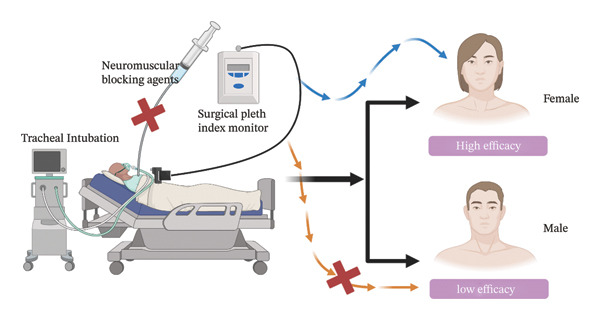
Background: Neuromuscular blocking agents (NMBAs) are commonly used during tracheal intubation to ensure smoother procedural conditions, but they are associated with the risk of prolonged paralysis and respiratory complications. This study explores the relationship between the surgical pleth index (SPI) measured immediately before intubation and tracheal intubation conditions in patients who did not receive neuromuscular blockers, along with the predictive value of the SPI in these conditions.
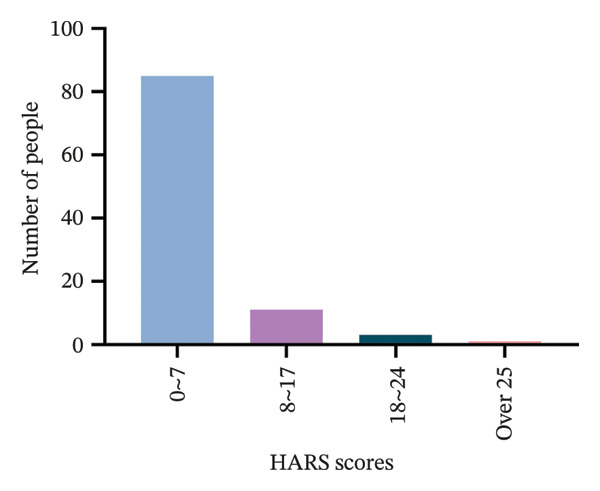
Methods: A total of 100 surgical patients (excluded 17 patients who did not meet the eligibility criteria) undergoing elective surgery under general anesthesia at The Affiliated Lihuili Hospital of Ningbo University between November 2021 and June 2022 were included, and key parameters, including systolic blood pressure (SBP), diastolic blood pressure (DBP), heart rate (HR), and SPI, were measured at different time points (T0 to T5).
Results: At T2, significant reductions in SBP, DBP, HR, and SPI were observed compared to baseline (T0, after the completion of 6 mL/kg of lactate Ringer's solution infusion) and preintubation values (T1, at the time of loss of consciousness) (p < 0.05). Postintubation, both SBP and DBP significantly increased at T5 (3 min after intubation) compared to T2 (immediately before intubation) (p < 0.05). The patients were classified into "excellent" and "good" groups based on their intubation conditions. SPI values at T3 (immediately after intubation), T4 (1 min after intubation), and T5 were significantly higher in the "good" group compared to the "excellent" group (p < 0.05). Post hoc sex-stratified receiver operating characteristic (ROC) analysis showed an area under the curve (AUC) of 0.713 (p = 0.037) and 95% confidence interval (CI) (0.539-0.887), indicating moderate predictive value for the SPI in assessing tracheal intubation conditions.
Conclusions: The SPI proves to be a potentially useful and noninvasive tool for evaluating tracheal intubation conditions in female patients without the use of NMBAs.
期刊介绍:
Emergency Medicine International is a peer-reviewed, Open Access journal that provides a forum for doctors, nurses, paramedics and ambulance staff. The journal publishes original research articles, review articles, and clinical studies related to prehospital care, disaster preparedness and response, acute medical and paediatric emergencies, critical care, sports medicine, wound care, and toxicology.


 求助内容:
求助内容: 应助结果提醒方式:

 京公网安备 11010802042870号


