
Bio-inspired adaptive neurons for dynamic weighting in Artificial Neural Networks

IF 14.8
AI Open Pub Date : 2026-01-01 Epub Date: 2026-02-05 DOI:10.1016/j.aiopen.2026.02.001
Ashhadul Islam , Abdesselam Bouzerdoum , Samir Brahim Belhaouari
{"title":"Bio-inspired adaptive neurons for dynamic weighting in Artificial Neural Networks","authors":"Ashhadul Islam ,&nbsp;Abdesselam Bouzerdoum ,&nbsp;Samir Brahim Belhaouari","doi":"10.1016/j.aiopen.2026.02.001","DOIUrl":null,"url":null,"abstract":"<div><div>Traditional neural networks employ fixed weights during inference, limiting their ability to adapt to changing input conditions, unlike biological neurons that adjust signal strength dynamically based on stimuli. This discrepancy between artificial and biological neurons constrains neural network flexibility and adaptability. To bridge this gap, we propose a novel framework for adaptive neural networks, where neuron weights are modeled as functions of the input signal, allowing the network to adjust dynamically in real-time. Importantly, we achieve this within the same traditional architecture of an Artificial Neural Network, maintaining structural familiarity while introducing dynamic adaptability. In our research, we apply Chebyshev polynomials as one of the many possible decomposition methods to achieve this adaptive weighting mechanism, with polynomial coefficients learned during training. Of the 145 datasets tested, our adaptive Chebyshev neural network demonstrated a marked improvement over an equivalent MLP in approximately 83% of the cases, performing strictly better on 121 datasets. In the remaining 24 datasets, the performance of our algorithm matched that of the MLP, highlighting its ability to generalize the behavior of standard neural networks while offering enhanced adaptability. As a generalized form of MLP, this model seamlessly retains MLP performance where needed while extending its capabilities to achieve superior accuracy across a wide range of complex tasks. These results underscore the potential of adaptive neurons to enhance generalization, flexibility, and robustness in neural networks, particularly in applications with dynamic or non-linear data dependencies.</div></div>","PeriodicalId":100068,"journal":{"name":"AI Open","volume":"7 ","pages":"Pages 1-17"},"PeriodicalIF":14.8000,"publicationDate":"2026-01-01","publicationTypes":"Journal Article","fieldsOfStudy":null,"isOpenAccess":false,"openAccessPdf":"","citationCount":"0","resultStr":null,"platform":"Semanticscholar","paperid":null,"PeriodicalName":"AI Open","FirstCategoryId":"1085","ListUrlMain":"https://www.sciencedirect.com/science/article/pii/S266665102600001X","RegionNum":0,"RegionCategory":null,"ArticlePicture":[],"TitleCN":null,"AbstractTextCN":null,"PMCID":null,"EPubDate":"2026/2/5 0:00:00","PubModel":"Epub","JCR":"","JCRName":"","Score":null,"Total":0}
引用次数: 0

Abstract

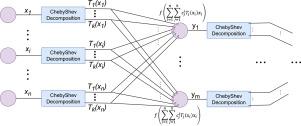
Traditional neural networks employ fixed weights during inference, limiting their ability to adapt to changing input conditions, unlike biological neurons that adjust signal strength dynamically based on stimuli. This discrepancy between artificial and biological neurons constrains neural network flexibility and adaptability. To bridge this gap, we propose a novel framework for adaptive neural networks, where neuron weights are modeled as functions of the input signal, allowing the network to adjust dynamically in real-time. Importantly, we achieve this within the same traditional architecture of an Artificial Neural Network, maintaining structural familiarity while introducing dynamic adaptability. In our research, we apply Chebyshev polynomials as one of the many possible decomposition methods to achieve this adaptive weighting mechanism, with polynomial coefficients learned during training. Of the 145 datasets tested, our adaptive Chebyshev neural network demonstrated a marked improvement over an equivalent MLP in approximately 83% of the cases, performing strictly better on 121 datasets. In the remaining 24 datasets, the performance of our algorithm matched that of the MLP, highlighting its ability to generalize the behavior of standard neural networks while offering enhanced adaptability. As a generalized form of MLP, this model seamlessly retains MLP performance where needed while extending its capabilities to achieve superior accuracy across a wide range of complex tasks. These results underscore the potential of adaptive neurons to enhance generalization, flexibility, and robustness in neural networks, particularly in applications with dynamic or non-linear data dependencies.
Abstract Image

人工神经网络中动态加权的仿生自适应神经元
传统的神经网络在推理过程中使用固定的权重,限制了它们适应不断变化的输入条件的能力,不像生物神经元根据刺激动态调整信号强度。人工神经元与生物神经元的这种差异制约了神经网络的灵活性和适应性。为了弥补这一差距,我们提出了一种新的自适应神经网络框架,其中神经元权重被建模为输入信号的函数,允许网络实时动态调整。重要的是,我们在人工神经网络的相同传统架构中实现了这一点,在引入动态适应性的同时保持了结构熟悉度。在我们的研究中,我们使用切比雪夫多项式作为许多可能的分解方法之一来实现这种自适应加权机制,多项式系数在训练过程中学习。在测试的145个数据集中,我们的自适应Chebyshev神经网络在大约83%的情况下比等效MLP有显着改善,在121个数据集上表现得更好。在剩下的24个数据集中,我们的算法的性能与MLP相匹配,突出了其概括标准神经网络行为的能力,同时提供了增强的适应性。作为MLP的一种广义形式,该模型在需要的地方无缝地保留了MLP的性能,同时扩展了其能力,以在广泛的复杂任务中实现卓越的准确性。这些结果强调了自适应神经元在增强神经网络的泛化、灵活性和鲁棒性方面的潜力,特别是在动态或非线性数据依赖的应用中。
本文章由计算机程序翻译,如有差异,请以英文原文为准。
求助全文
约1分钟内获得全文 求助全文
来源期刊
CiteScore
45.00
自引率
0.00%
发文量
0
×
引用
GB/T 7714-2015
复制
MLA
复制
APA
复制
导出至
BibTeX EndNote RefMan NoteFirst NoteExpress
×
提示
您的信息不完整,为了账户安全,请先补充。
现在去补充
×
提示
您因"违规操作"
具体请查看互助需知
我知道了
×
提示
确定
请完成安全验证×
copy
已复制链接
快去分享给好友吧!
我知道了
右上角分享
点击右上角分享
0
联系我们:info@booksci.cn Book学术提供免费学术资源搜索服务,方便国内外学者检索中英文文献。致力于提供最便捷和优质的服务体验。 Copyright © 2023 布克学术 All rights reserved.
京ICP备2023020795号-1
ghs 京公网安备 11010802042870号
Book学术文献互助
Book学术文献互助群
群 号:604180095
Book学术官方微信
小红书



