Intramedullary nailing with absorbable antibiotic-eluting ceramic for fracture-related infection prophylaxis in high-risk open fractures: a case series and technique.
{"title":"Intramedullary nailing with absorbable antibiotic-eluting ceramic for fracture-related infection prophylaxis in high-risk open fractures: a case series and technique.","authors":"Scott M Sandilands, Akshay V Daji","doi":"10.1097/OI9.0000000000000478","DOIUrl":null,"url":null,"abstract":"<p><strong>Objectives: </strong>Fracture-related infection (FRI) is a devastating complication of open fractures and remains common even with ideal open fracture care including prompt systemic antibiotics and thorough surgical debridement. There is growing interest in the use of adjuvant local antibiotics; however, traditional carriers like polymethylmethacrylate (PMMA) are limited by subtherapeutic elution, biofilm formation, and the need for secondary removal. We describe a technique of in vivo augmentation of intramedullary nailing with Cerament G, a resorbable gentamicin-eluting calcium sulfate/hydroxyapatite ceramic, delivered through the 2-CAN device for targeted antibiotic prophylaxis.</p><p><strong>Methods: </strong>Nine patients (mean age 44 years; 22% female) with Gustilo-Anderson Type II (n = 3), IIIA (n = 4), IIIB (n = 1), and IIIC (n = 1) open fractures of the tibia, femur, or humerus underwent this technique at a Level 1 trauma center by a single fellowship-trained orthopaedic traumatologist. Postoperative outcomes included FRI incidence, fracture union, complications, and functional recovery.</p><p><strong>Results: </strong>At a mean follow-up of 9.1 months (2.6-17.1 months), all fractures achieved union with no cases of FRI. Two GA IIIB/C cases required flap coverage, including one flap failure successfully revised. Self-limiting serous drainage (n = 3) resolved within 1 week. No secondary procedures for infection, implant removal, or amputations occurred.</p><p><strong>Conclusion: </strong>Intramedullary nailing and intraoperative augmentation with Cerament G using the 2-CAN device offer a technically simple, time-efficient strategy for FRI prophylaxis in high-risk open fractures. The technique provides sustained local antibiotic delivery, avoids PMMA-related complications, and maximizes biomechanical stability by eliminating nail downsizing. Early results demonstrate promising infection prophylaxis, warranting further prospective trials to validate long-term efficacy and cost-effectiveness.</p>","PeriodicalId":74381,"journal":{"name":"OTA international : the open access journal of orthopaedic trauma","volume":"9 1","pages":"e478"},"PeriodicalIF":0.0000,"publicationDate":"2026-03-05","publicationTypes":"Journal Article","fieldsOfStudy":null,"isOpenAccess":false,"openAccessPdf":"https://www.ncbi.nlm.nih.gov/pmc/articles/PMC12962574/pdf/","citationCount":"0","resultStr":null,"platform":"Semanticscholar","paperid":null,"PeriodicalName":"OTA international : the open access journal of orthopaedic trauma","FirstCategoryId":"1085","ListUrlMain":"https://doi.org/10.1097/OI9.0000000000000478","RegionNum":0,"RegionCategory":null,"ArticlePicture":[],"TitleCN":null,"AbstractTextCN":null,"PMCID":null,"EPubDate":"2026/3/1 0:00:00","PubModel":"eCollection","JCR":"","JCRName":"","Score":null,"Total":0}
引用次数: 0
Abstract
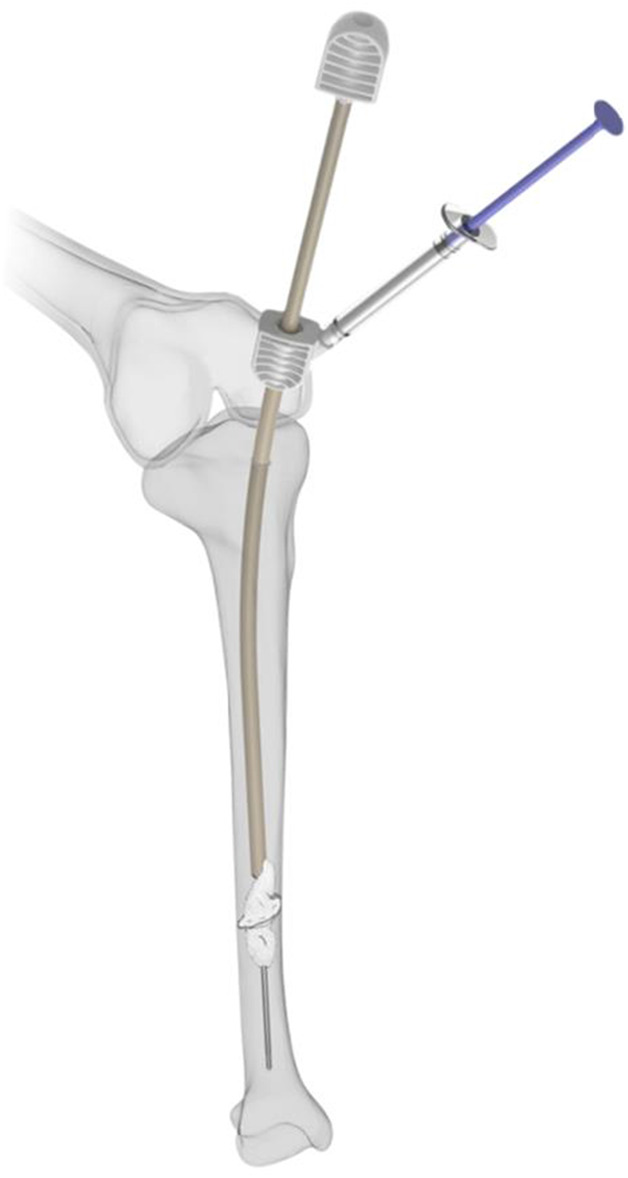
Objectives: Fracture-related infection (FRI) is a devastating complication of open fractures and remains common even with ideal open fracture care including prompt systemic antibiotics and thorough surgical debridement. There is growing interest in the use of adjuvant local antibiotics; however, traditional carriers like polymethylmethacrylate (PMMA) are limited by subtherapeutic elution, biofilm formation, and the need for secondary removal. We describe a technique of in vivo augmentation of intramedullary nailing with Cerament G, a resorbable gentamicin-eluting calcium sulfate/hydroxyapatite ceramic, delivered through the 2-CAN device for targeted antibiotic prophylaxis.
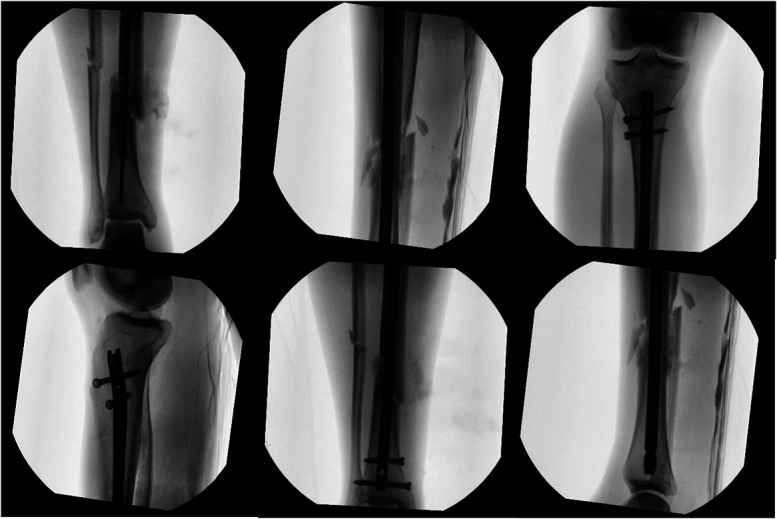
Methods: Nine patients (mean age 44 years; 22% female) with Gustilo-Anderson Type II (n = 3), IIIA (n = 4), IIIB (n = 1), and IIIC (n = 1) open fractures of the tibia, femur, or humerus underwent this technique at a Level 1 trauma center by a single fellowship-trained orthopaedic traumatologist. Postoperative outcomes included FRI incidence, fracture union, complications, and functional recovery.
Results: At a mean follow-up of 9.1 months (2.6-17.1 months), all fractures achieved union with no cases of FRI. Two GA IIIB/C cases required flap coverage, including one flap failure successfully revised. Self-limiting serous drainage (n = 3) resolved within 1 week. No secondary procedures for infection, implant removal, or amputations occurred.
Conclusion: Intramedullary nailing and intraoperative augmentation with Cerament G using the 2-CAN device offer a technically simple, time-efficient strategy for FRI prophylaxis in high-risk open fractures. The technique provides sustained local antibiotic delivery, avoids PMMA-related complications, and maximizes biomechanical stability by eliminating nail downsizing. Early results demonstrate promising infection prophylaxis, warranting further prospective trials to validate long-term efficacy and cost-effectiveness.



 求助内容:
求助内容: 应助结果提醒方式:

 京公网安备 11010802042870号


