Santiago Bustince, Nicolás H Dreifuss, Marcelo F Amante, Lucas McCormack, Pablo Capitanich
{"title":"Pancreatic Atypical Neurofibromatous Neoplasm with Uncertain Biological Potential (ANNUBP) Mimicking a Solid Pseudopapillary Tumor Pancreatic ANNUBP.","authors":"Santiago Bustince, Nicolás H Dreifuss, Marcelo F Amante, Lucas McCormack, Pablo Capitanich","doi":"10.52787/agl.v55i4.481","DOIUrl":null,"url":null,"abstract":"<p><p>Atypical neurofibromatous neoplasms of uncertain biological potential have recently been added as a subset of lesions that have the potential to transform into malignant peripheral nerve sheath tumors in patients with neurofibromatosis type 1. Only a few cases of atypical neurofibromatous neoplasms of uncertain biological potential , have been reported in the literature. Here we present the first case of this type of neoplasm located in the pancreas in a 30-year-old woman with neurofibromatosis type 1. The mass was discovered incidentally on imaging studies. Computed tomography and magnetic resonance imaging showed a 3 x 2 cm solidcystic mass in the head of the pancreas, suggestive of a pseudopapillary solid tumor. Following an inconclusive endoscopic ultrasound-guided biopsy, a pancreaticoduodenectomy was performed. The patient had an uneventful postoperative recovery. Histopathological and immunohistochemical analysis confirmed the diagnosis of atypical neurofibromatous neoplasms of uncertain biological potential. To our knowledge, this is the first report of this type of tumor located in the pancreas. They are often difficult to differentiate from other solid and solid-cystic tumors of the pancreas based on imaging studies. Imaging techniques such as magnetic resonance imaging and positron emission tomography along with computed tomography, combined with histopathology, and a history of type 1 neurofibromatosis are essential for an accurate diagnosis. Current treatment consists of radical surgical removal of the tumor, due to the risk of malignant transformation. This case highlights the importance of considering atypical neurofibromatous neoplasms of uncertain biological potential as a differential diagnosis in patients with neurofibromatosis type 1 and a pancreatic mass. Further studies are needed to improve preoperative diagnostic strategies and evaluate longterm prognosis after surgical resection.</p>","PeriodicalId":35700,"journal":{"name":"Acta Gastroenterologica Latinoamericana","volume":"55 4","pages":"392-397"},"PeriodicalIF":0.0000,"publicationDate":"2025-12-23","publicationTypes":"Journal Article","fieldsOfStudy":null,"isOpenAccess":false,"openAccessPdf":"https://www.ncbi.nlm.nih.gov/pmc/articles/PMC12965158/pdf/","citationCount":"0","resultStr":null,"platform":"Semanticscholar","paperid":null,"PeriodicalName":"Acta Gastroenterologica Latinoamericana","FirstCategoryId":"1085","ListUrlMain":"https://doi.org/10.52787/agl.v55i4.481","RegionNum":0,"RegionCategory":null,"ArticlePicture":[],"TitleCN":null,"AbstractTextCN":null,"PMCID":null,"EPubDate":"2025/9/1 0:00:00","PubModel":"eCollection","JCR":"Q4","JCRName":"Medicine","Score":null,"Total":0}
引用次数: 0
Abstract
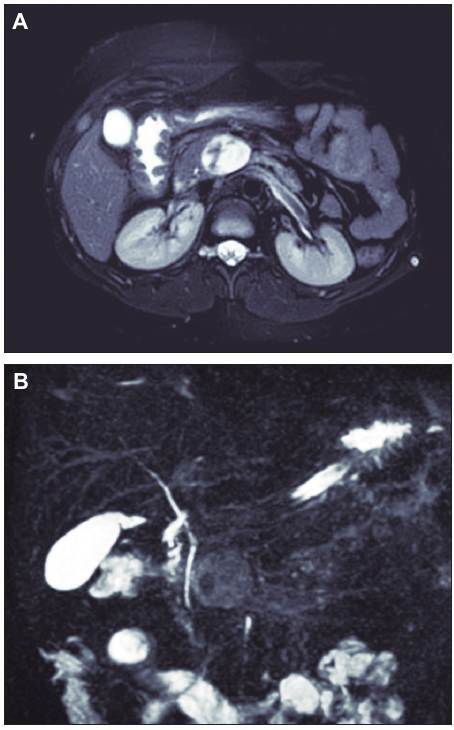
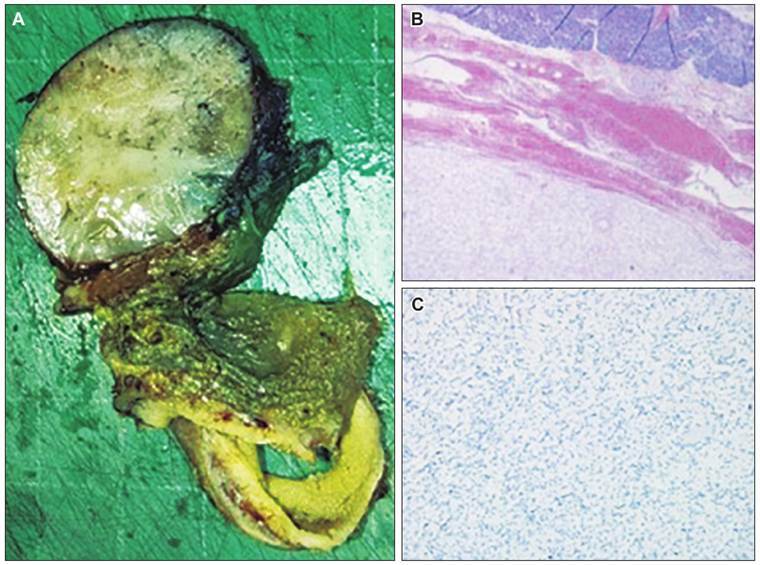
Atypical neurofibromatous neoplasms of uncertain biological potential have recently been added as a subset of lesions that have the potential to transform into malignant peripheral nerve sheath tumors in patients with neurofibromatosis type 1. Only a few cases of atypical neurofibromatous neoplasms of uncertain biological potential , have been reported in the literature. Here we present the first case of this type of neoplasm located in the pancreas in a 30-year-old woman with neurofibromatosis type 1. The mass was discovered incidentally on imaging studies. Computed tomography and magnetic resonance imaging showed a 3 x 2 cm solidcystic mass in the head of the pancreas, suggestive of a pseudopapillary solid tumor. Following an inconclusive endoscopic ultrasound-guided biopsy, a pancreaticoduodenectomy was performed. The patient had an uneventful postoperative recovery. Histopathological and immunohistochemical analysis confirmed the diagnosis of atypical neurofibromatous neoplasms of uncertain biological potential. To our knowledge, this is the first report of this type of tumor located in the pancreas. They are often difficult to differentiate from other solid and solid-cystic tumors of the pancreas based on imaging studies. Imaging techniques such as magnetic resonance imaging and positron emission tomography along with computed tomography, combined with histopathology, and a history of type 1 neurofibromatosis are essential for an accurate diagnosis. Current treatment consists of radical surgical removal of the tumor, due to the risk of malignant transformation. This case highlights the importance of considering atypical neurofibromatous neoplasms of uncertain biological potential as a differential diagnosis in patients with neurofibromatosis type 1 and a pancreatic mass. Further studies are needed to improve preoperative diagnostic strategies and evaluate longterm prognosis after surgical resection.
期刊介绍:
Está dedicada a la investigación clínica y básica sobre todos los aspectos del aparato digestivo, incluídos el hígado, el páncreas y la nutrición, en seres humanos adultos y niños, animales de experimentación o sistemas celulares.



 求助内容:
求助内容: 应助结果提醒方式:

 京公网安备 11010802042870号


