Pedro Andrade-Andrade, Juan Carlos Acevedo-González
{"title":"Radiologic Insights: Diagnosing Lumbosacral Transitional Vertebrae. Systematic Review of the Literature.","authors":"Pedro Andrade-Andrade, Juan Carlos Acevedo-González","doi":"10.1111/papr.70138","DOIUrl":null,"url":null,"abstract":"<p><strong>Introduction: </strong>The lumbosacral transitional vertebra (LSTV) has been studied since 1876, with Castellvi developing a classification in 1984 based on its anatomy and laterality. It often goes unnoticed, or its diagnosis is limited to a lumbar spine X-ray for confirmation. This has led to LSTV being underdiagnosed or even ignored. Our aim is to describe and evaluate radiological diagnostic techniques for LSTV and propose a diagnostic methodology to reduce errors in vertebral level identification, useful for percutaneous procedures and/or biomechanical measurement analysis.</p><p><strong>Materials and methods: </strong>A systematic literature review was conducted. The search terms included: \"Castellvi,\" \"Lumbosacral Transitional Vertebra,\" \"Radiology.\" Logical connectors such as \"and\" and \"or\" were applied. The following databases were reviewed: Scopus, PubMed, Ovid, ScienceDirect, EBSCO, and Nature. The timeframe was limited from 2004 to December 2024. Inclusion and exclusion criteria were applied. A total of 419 articles were identified. The \"Rayyan\" program was used to compile information, and \"PRISMA,\" \"STROBE,\" and \"CONSORT\" were used to facilitate the analysis process.</p><p><strong>Results: </strong>Forty-eight articles were included and analyzed (10 CT, 4 PET-CT, 2 bone scans, 9 MRI, 6 X-rays, 4 EOS, and 13 mixed). The most common findings highlighted CT as the gold standard for diagnosing LSTV, with spinopelvic parameters correlating with LSTV. Radiography is effective for vertebral numbering. MRI studies utilize anatomical landmarks to identify vertebral levels and LSTV, although they are less sensitive. EOS is also used for vertebral level identification.</p><p><strong>Conclusions: </strong>Our proposed diagnostic methodology for LSTV includes: first, using plain AP radiography for cranial-to-caudal vertebral numbering and evaluating morphological anomalies. Second, if LSTV is suspected, performing CT as the gold standard for diagnosis due to its high sensitivity and specificity, and measuring spinopelvic parameters to correlate with LSTV. Third, using MRI in special cases. Fourth, conducting a morphological analysis and using Jenkins' classification for LSTV categorization.</p>","PeriodicalId":19974,"journal":{"name":"Pain Practice","volume":"26 3","pages":"e70138"},"PeriodicalIF":2.7000,"publicationDate":"2026-03-01","publicationTypes":"Journal Article","fieldsOfStudy":null,"isOpenAccess":false,"openAccessPdf":"https://www.ncbi.nlm.nih.gov/pmc/articles/PMC12969546/pdf/","citationCount":"0","resultStr":null,"platform":"Semanticscholar","paperid":null,"PeriodicalName":"Pain Practice","FirstCategoryId":"3","ListUrlMain":"https://doi.org/10.1111/papr.70138","RegionNum":3,"RegionCategory":"医学","ArticlePicture":[],"TitleCN":null,"AbstractTextCN":null,"PMCID":null,"EPubDate":"","PubModel":"","JCR":"Q2","JCRName":"ANESTHESIOLOGY","Score":null,"Total":0}
引用次数: 0
Abstract
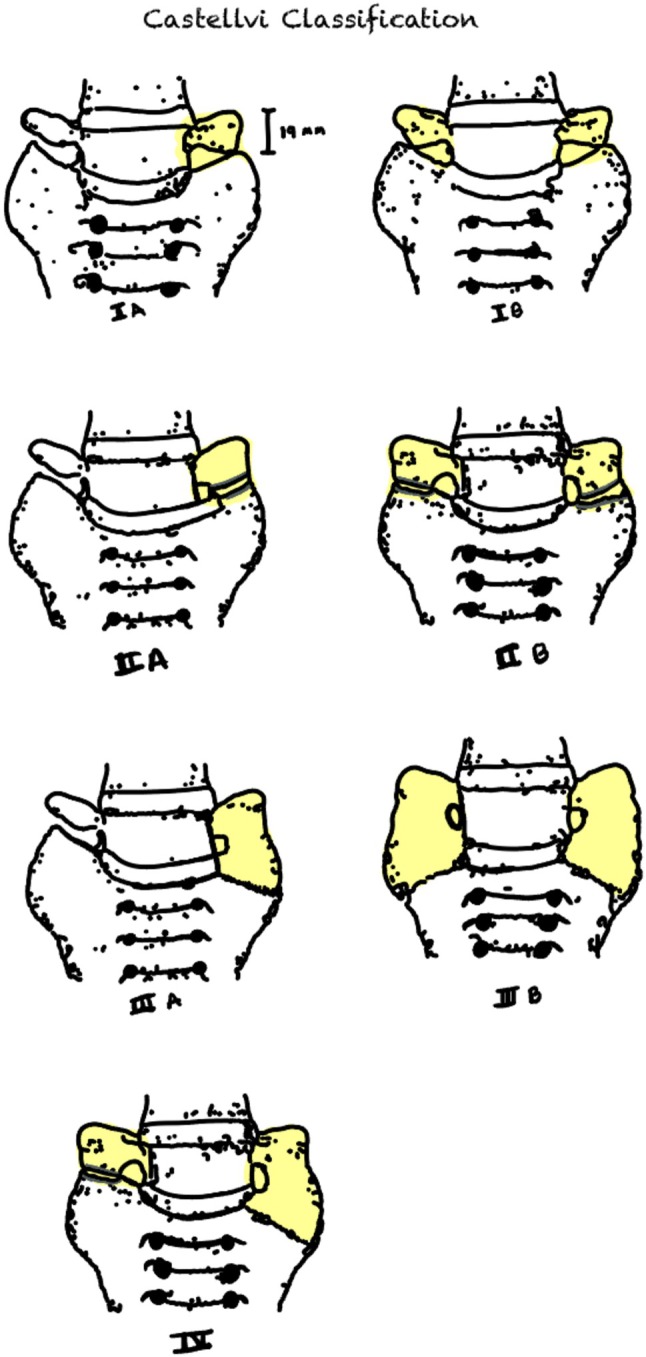
Introduction: The lumbosacral transitional vertebra (LSTV) has been studied since 1876, with Castellvi developing a classification in 1984 based on its anatomy and laterality. It often goes unnoticed, or its diagnosis is limited to a lumbar spine X-ray for confirmation. This has led to LSTV being underdiagnosed or even ignored. Our aim is to describe and evaluate radiological diagnostic techniques for LSTV and propose a diagnostic methodology to reduce errors in vertebral level identification, useful for percutaneous procedures and/or biomechanical measurement analysis.
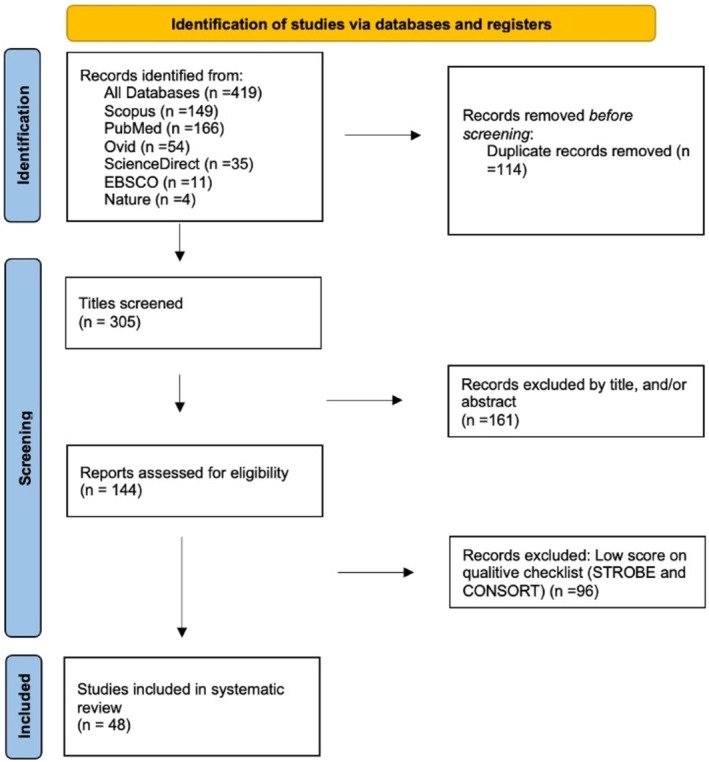
Materials and methods: A systematic literature review was conducted. The search terms included: "Castellvi," "Lumbosacral Transitional Vertebra," "Radiology." Logical connectors such as "and" and "or" were applied. The following databases were reviewed: Scopus, PubMed, Ovid, ScienceDirect, EBSCO, and Nature. The timeframe was limited from 2004 to December 2024. Inclusion and exclusion criteria were applied. A total of 419 articles were identified. The "Rayyan" program was used to compile information, and "PRISMA," "STROBE," and "CONSORT" were used to facilitate the analysis process.
Results: Forty-eight articles were included and analyzed (10 CT, 4 PET-CT, 2 bone scans, 9 MRI, 6 X-rays, 4 EOS, and 13 mixed). The most common findings highlighted CT as the gold standard for diagnosing LSTV, with spinopelvic parameters correlating with LSTV. Radiography is effective for vertebral numbering. MRI studies utilize anatomical landmarks to identify vertebral levels and LSTV, although they are less sensitive. EOS is also used for vertebral level identification.
Conclusions: Our proposed diagnostic methodology for LSTV includes: first, using plain AP radiography for cranial-to-caudal vertebral numbering and evaluating morphological anomalies. Second, if LSTV is suspected, performing CT as the gold standard for diagnosis due to its high sensitivity and specificity, and measuring spinopelvic parameters to correlate with LSTV. Third, using MRI in special cases. Fourth, conducting a morphological analysis and using Jenkins' classification for LSTV categorization.
期刊介绍:
Pain Practice, the official journal of the World Institute of Pain, publishes international multidisciplinary articles on pain and analgesia that provide its readership with up-to-date research, evaluation methods, and techniques for pain management. Special sections including the Consultant’s Corner, Images in Pain Practice, Case Studies from Mayo, Tutorials, and the Evidence-Based Medicine combine to give pain researchers, pain clinicians and pain fellows in training a systematic approach to continuing education in pain medicine. Prior to publication, all articles and reviews undergo peer review by at least two experts in the field.


 求助内容:
求助内容: 应助结果提醒方式:

 京公网安备 11010802042870号


