Ana V Araujo, Murray J Bartho, Garren M I Low, Ryan J Li
{"title":"Modeling Financial Insolvency and Income Loss Insurance in Head and Neck Cancer.","authors":"Ana V Araujo, Murray J Bartho, Garren M I Low, Ryan J Li","doi":"10.36469/001c.155597","DOIUrl":null,"url":null,"abstract":"<p><strong>Background: </strong>Head and neck cancer (HNC) carries high morbidity, and its treatment can be functionally devastating, impacting a patient's ability to work. While most patients have medical insurance benefits, studies on the impact of HNC on overall household finances have been limited.</p><p><strong>Objectives: </strong>This study explored the effect of HNC treatment on household finances and the feasibility of catastrophic income loss insurance.</p><p><strong>Methods: </strong>This cross-sectional study was based on a population-level survey of American adults. Participants, aged 35 to 64 years, were respondents to the US Federal Reserve 2023 Survey on Household Economics and Decisionmaking (SHED).</p><p><strong>Results: </strong>With total income loss, 16% of simulated HNC patients were insolvent after 3 months, rising to 49% at 6 months. With a 50% loss in income, 3% of patients were insolvent at 3 months, increasing to 5% at 6 months. If savings were liquid, 0.5% of patients were insolvent at 3 months, rising to 1.3% at 6 months.</p><p><strong>Discussion: </strong>Our findings underscore the substantial financial vulnerability faced by patients undergoing treatment for HNC. Even in a simulated model based on national economic data, nearly half of patients experiencing total income loss were insolvent by 6 months. Given the intensive and prolonged nature of HNC treatment, these financial challenges may compound physical and psychosocial stressors, affecting overall recovery and quality of life.</p><p><strong>Conclusion: </strong>The model suggested a need for more substantial income loss protection programs. Financial hardship applies to other cancer types and merits further study into the household financial impact of HNC and other cancers.</p>","PeriodicalId":16012,"journal":{"name":"Journal of Health Economics and Outcomes Research","volume":"13 1","pages":"80-84"},"PeriodicalIF":2.3000,"publicationDate":"2026-03-03","publicationTypes":"Journal Article","fieldsOfStudy":null,"isOpenAccess":false,"openAccessPdf":"https://www.ncbi.nlm.nih.gov/pmc/articles/PMC12962255/pdf/","citationCount":"0","resultStr":null,"platform":"Semanticscholar","paperid":null,"PeriodicalName":"Journal of Health Economics and Outcomes Research","FirstCategoryId":"1085","ListUrlMain":"https://doi.org/10.36469/001c.155597","RegionNum":0,"RegionCategory":null,"ArticlePicture":[],"TitleCN":null,"AbstractTextCN":null,"PMCID":null,"EPubDate":"2026/1/1 0:00:00","PubModel":"eCollection","JCR":"Q2","JCRName":"ECONOMICS","Score":null,"Total":0}
引用次数: 0
Abstract
Background: Head and neck cancer (HNC) carries high morbidity, and its treatment can be functionally devastating, impacting a patient's ability to work. While most patients have medical insurance benefits, studies on the impact of HNC on overall household finances have been limited.
Objectives: This study explored the effect of HNC treatment on household finances and the feasibility of catastrophic income loss insurance.
Methods: This cross-sectional study was based on a population-level survey of American adults. Participants, aged 35 to 64 years, were respondents to the US Federal Reserve 2023 Survey on Household Economics and Decisionmaking (SHED).
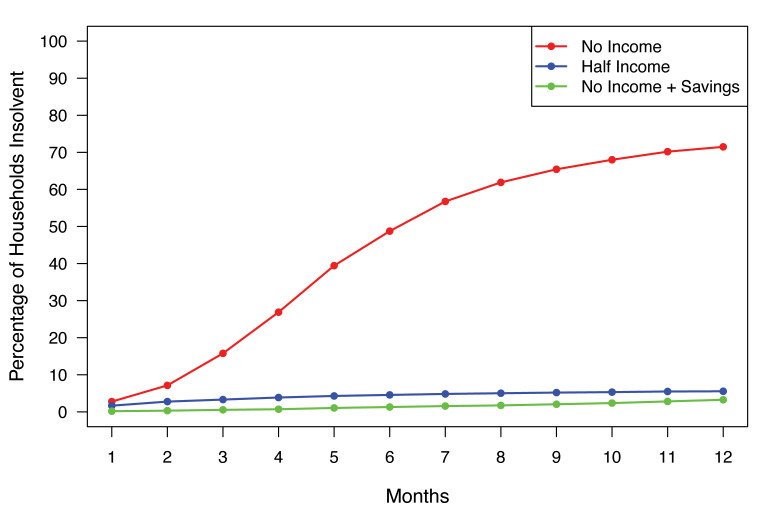
Results: With total income loss, 16% of simulated HNC patients were insolvent after 3 months, rising to 49% at 6 months. With a 50% loss in income, 3% of patients were insolvent at 3 months, increasing to 5% at 6 months. If savings were liquid, 0.5% of patients were insolvent at 3 months, rising to 1.3% at 6 months.
Discussion: Our findings underscore the substantial financial vulnerability faced by patients undergoing treatment for HNC. Even in a simulated model based on national economic data, nearly half of patients experiencing total income loss were insolvent by 6 months. Given the intensive and prolonged nature of HNC treatment, these financial challenges may compound physical and psychosocial stressors, affecting overall recovery and quality of life.
Conclusion: The model suggested a need for more substantial income loss protection programs. Financial hardship applies to other cancer types and merits further study into the household financial impact of HNC and other cancers.


 求助内容:
求助内容: 应助结果提醒方式:

 京公网安备 11010802042870号


