{"title":"Impaired Pituitary Axis Following Traumatic Skull Base Fracture and Associated Brain Injury.","authors":"Rajendra Prasad, Arvind Sharma, Atul Kumar Khare","doi":"10.1055/s-0045-1813262","DOIUrl":null,"url":null,"abstract":"<p><strong>Introduction: </strong>The pituitary gland is particularly vulnerable to head trauma due to the anatomical location. Posttraumatic hypopituitarism is an underdiagnosed consequence of traumatic brain injury (TBI), where the pituitary gland fails to produce one or more hormones due to head injury. This study aimed to evaluate the early and late changes in pituitary hormone levels after TBI and correlate them with outcomes.</p><p><strong>Materials and methods: </strong>This prospective study was conducted on 150 patients presenting to the Trauma Centre of Sawai Man Singh (SMS) Hospital, Jaipur, Rajasthan, India. Pituitary hormones (growth hormone [GH], thyroid-stimulating hormone [TSH], adrenocorticotropic hormone [ACTH], follicle-stimulating hormone [FSH], luteinizing hormone [LH], prolactin) were assessed at different intervals: immediately after trauma, on the 4th day, 21st day, and at 3-month postinjury.<i>Inclusion Criteria</i> All traumatic skull base fractures (with and without brain injury) that were radiologically proven, Traumatic sella turcica or sphenoid bone fractures. History of trauma and consent. <i>Exclusion Criteria</i> Nontraumatic fracture, pituitary diseases, patient with other conditions like micro- and macroadenoma that might alter pituitary hormones, nonconsenting and uncooperative patients, old traumatic fracture, and patients already on hormone therapy.</p><p><strong>Results: </strong>It was observed that mean TSH increased from day 1 to day 4, then decreased by the 21st day and the 3rd month. Other hormones like prolactin, LH, FSH, ACTH, and GH were high on the day of admission and on the 4th day it starts to decrease and on the 21st and 90th day it starts to normalize.</p><p><strong>Conclusion: </strong>An increase in pituitary hormone on the day of injury may be attributed to physiological adaptation to acute illness. Post-TBI pituitary dysfunction is a clinically significant entity. Secondary hypoadrenalism, hypothyroidism, and central diabetes insipidus should be treated acutely, while deficiencies in growth and gonadotrophic hormones should initially be observed. A follow-up strategy with periodic evaluation is a necessary part of the optimal care for patients with TBI.</p>","PeriodicalId":94300,"journal":{"name":"Asian journal of neurosurgery","volume":"21 1","pages":"124-130"},"PeriodicalIF":0.0000,"publicationDate":"2025-12-18","publicationTypes":"Journal Article","fieldsOfStudy":null,"isOpenAccess":false,"openAccessPdf":"https://www.ncbi.nlm.nih.gov/pmc/articles/PMC12956390/pdf/","citationCount":"0","resultStr":null,"platform":"Semanticscholar","paperid":null,"PeriodicalName":"Asian journal of neurosurgery","FirstCategoryId":"1085","ListUrlMain":"https://doi.org/10.1055/s-0045-1813262","RegionNum":0,"RegionCategory":null,"ArticlePicture":[],"TitleCN":null,"AbstractTextCN":null,"PMCID":null,"EPubDate":"2026/3/1 0:00:00","PubModel":"eCollection","JCR":"","JCRName":"","Score":null,"Total":0}
引用次数: 0
Abstract
Introduction: The pituitary gland is particularly vulnerable to head trauma due to the anatomical location. Posttraumatic hypopituitarism is an underdiagnosed consequence of traumatic brain injury (TBI), where the pituitary gland fails to produce one or more hormones due to head injury. This study aimed to evaluate the early and late changes in pituitary hormone levels after TBI and correlate them with outcomes.
Materials and methods: This prospective study was conducted on 150 patients presenting to the Trauma Centre of Sawai Man Singh (SMS) Hospital, Jaipur, Rajasthan, India. Pituitary hormones (growth hormone [GH], thyroid-stimulating hormone [TSH], adrenocorticotropic hormone [ACTH], follicle-stimulating hormone [FSH], luteinizing hormone [LH], prolactin) were assessed at different intervals: immediately after trauma, on the 4th day, 21st day, and at 3-month postinjury.Inclusion Criteria All traumatic skull base fractures (with and without brain injury) that were radiologically proven, Traumatic sella turcica or sphenoid bone fractures. History of trauma and consent. Exclusion Criteria Nontraumatic fracture, pituitary diseases, patient with other conditions like micro- and macroadenoma that might alter pituitary hormones, nonconsenting and uncooperative patients, old traumatic fracture, and patients already on hormone therapy.
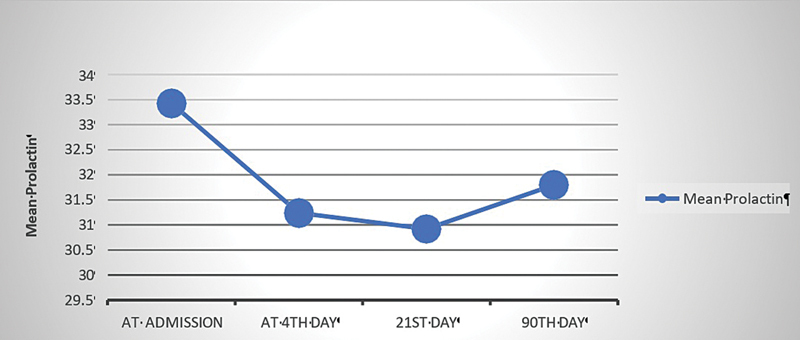
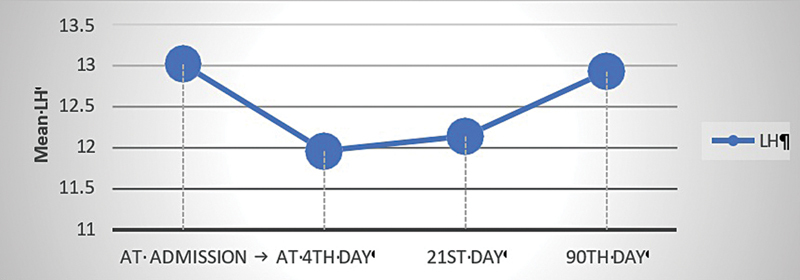
Results: It was observed that mean TSH increased from day 1 to day 4, then decreased by the 21st day and the 3rd month. Other hormones like prolactin, LH, FSH, ACTH, and GH were high on the day of admission and on the 4th day it starts to decrease and on the 21st and 90th day it starts to normalize.
Conclusion: An increase in pituitary hormone on the day of injury may be attributed to physiological adaptation to acute illness. Post-TBI pituitary dysfunction is a clinically significant entity. Secondary hypoadrenalism, hypothyroidism, and central diabetes insipidus should be treated acutely, while deficiencies in growth and gonadotrophic hormones should initially be observed. A follow-up strategy with periodic evaluation is a necessary part of the optimal care for patients with TBI.



 求助内容:
求助内容: 应助结果提醒方式:

 京公网安备 11010802042870号


