Athanasios Poulios, Lambros Tsiokanos, Dimitrios Draganidis, Konstantinos Papanikolaou, Panagiotis Tsimeas, Niki Syrou, Georgios Metsios, Athanasios Chatzinikolaou, Georgios Ermidis, Athanasios Tsiokanos, Aggelos Pappas, Magni Mohr, Peter Krustrup, Athanasios Z Jamurtas, Ioannis G Fatouros
{"title":"Energy expenditure and physical activity responses to football for health training in adults with metabolic syndrome: a randomized clinical trial.","authors":"Athanasios Poulios, Lambros Tsiokanos, Dimitrios Draganidis, Konstantinos Papanikolaou, Panagiotis Tsimeas, Niki Syrou, Georgios Metsios, Athanasios Chatzinikolaou, Georgios Ermidis, Athanasios Tsiokanos, Aggelos Pappas, Magni Mohr, Peter Krustrup, Athanasios Z Jamurtas, Ioannis G Fatouros","doi":"10.5114/biolsport.2026.154146","DOIUrl":null,"url":null,"abstract":"<p><p>This investigation determined the energy expenditure (EE), physical activity (PA), and physiological responses of football for health training (FFH). Twenty middle-aged males with metabolic syndrome (MetS) completed a 60-min FFH and a control trial using a randomized crossover design. The FFH load and EE were determined using a mobile gas analyzer, heart rate (HR) monitors, blood lactate measurements, a global positioning system, and accelerometry. Participants in FFH run a total distance of ~3.800 m (1,121 m at > 7 km/h, accelerations of 141 m, decelerations of 162 m) using a mean and maximal speed of 4.1 km/h and 20.6 km/h, respectively. FFH demonstrated a moderate-to-vigorous PA of > 41 min and a step count of ~4900. FFH increased (p < .001) the perceived exertion (55.8%, 13.6 ± 2.6), HR<sub>mean</sub> (151.1 ± 15.2 beats/min, 83.1 ± 10.9 %HRmax), lactate (80.8%, 5.4 ± 0.9 mmol/L), <math> <mrow> <msub> <mrow><mover><mtext>V</mtext> <mo>˙</mo></mover> <mtext>O</mtext></mrow> <mn>2</mn></msub> </mrow> </math> (88.6%, 1.9 ± 0.3 L/min, 79.9 ± 10.5% <math> <mrow> <msub> <mrow><mover><mtext>V</mtext> <mo>˙</mo></mover> <mtext>O</mtext></mrow> <mrow><mn>2</mn> <mi>max</mi></mrow> </msub> </mrow> </math> , 6.7 ± 0.8 METs), breathing frequency (32.6 ± 3.0 breaths/min), and respiratory exchange ratio (0.98 ± 0.03) compared to the control trial. Total EE reached 524.2 ± 81.0 kcals (mitochondrial energy production: 476.8 kcals; anaerobic energy production: AS 5.4 ± 1.0 kcals; EPOC: 42.0 ± 11.8 kcals). The present results suggest that FFH meets the international PA and EE standards for adults with MetS, with participants taking part in moderate-to-vigorous PA (MVPA) for approximately 68% of each session, rendering it a suitable and efficient strategy to lower cardiometabolic risk.</p>","PeriodicalId":55365,"journal":{"name":"Biology of Sport","volume":"43 ","pages":"449-461"},"PeriodicalIF":4.2000,"publicationDate":"2025-10-01","publicationTypes":"Journal Article","fieldsOfStudy":null,"isOpenAccess":false,"openAccessPdf":"https://www.ncbi.nlm.nih.gov/pmc/articles/PMC12954501/pdf/","citationCount":"0","resultStr":null,"platform":"Semanticscholar","paperid":null,"PeriodicalName":"Biology of Sport","FirstCategoryId":"3","ListUrlMain":"https://doi.org/10.5114/biolsport.2026.154146","RegionNum":2,"RegionCategory":"医学","ArticlePicture":[],"TitleCN":null,"AbstractTextCN":null,"PMCID":null,"EPubDate":"2026/1/1 0:00:00","PubModel":"eCollection","JCR":"Q1","JCRName":"SPORT SCIENCES","Score":null,"Total":0}
引用次数: 0
Abstract
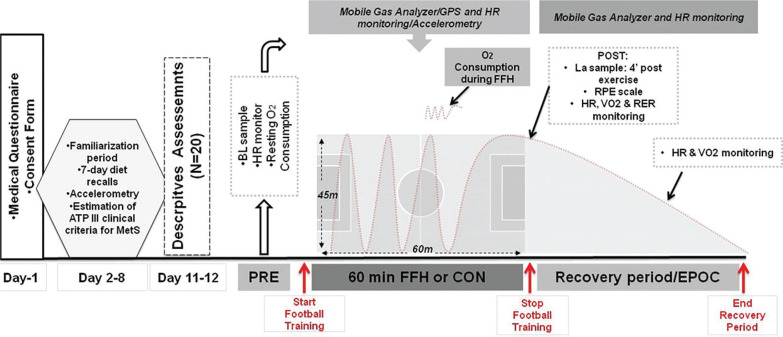
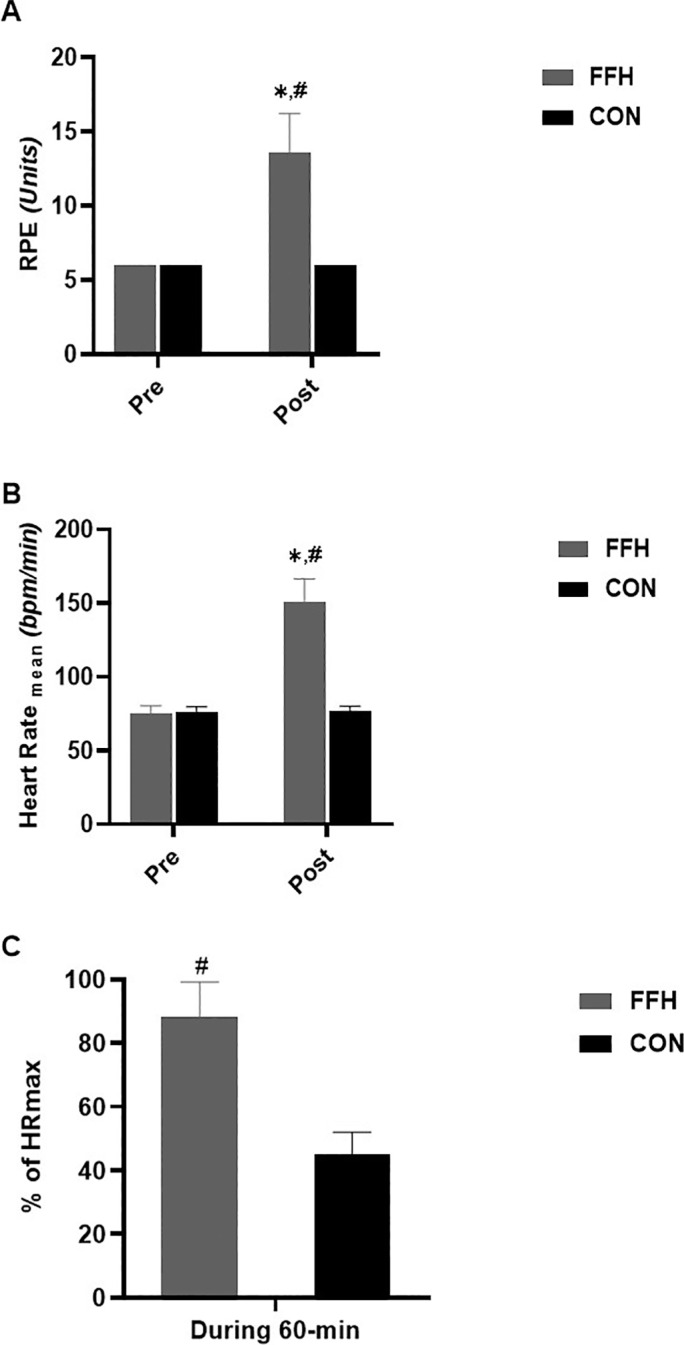
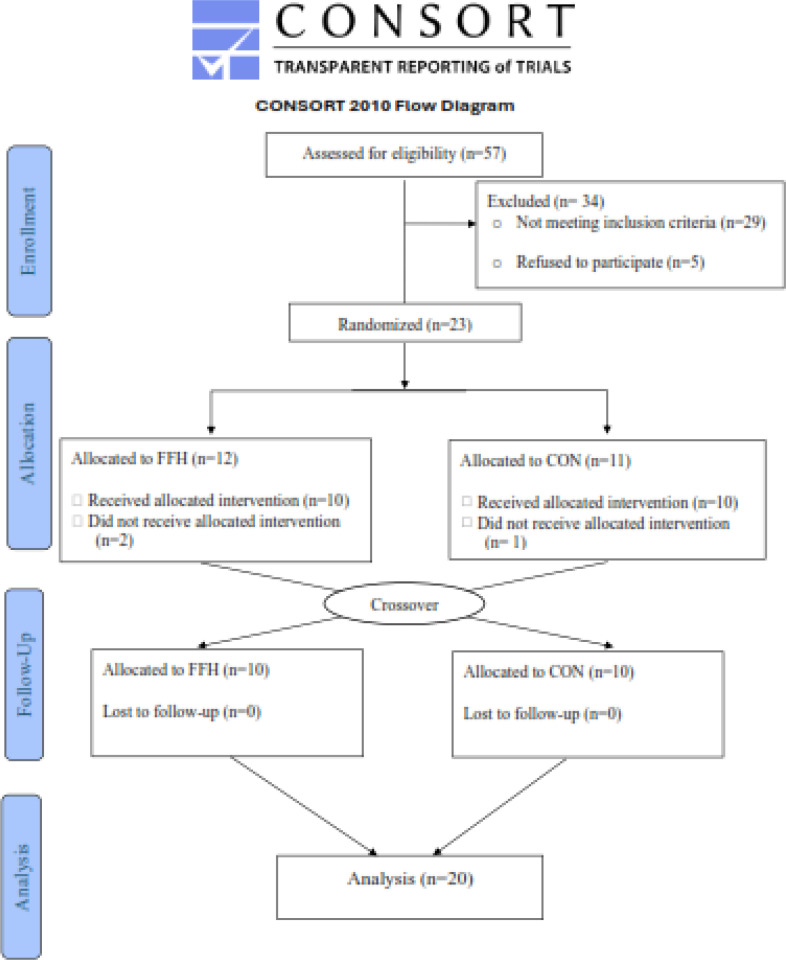
This investigation determined the energy expenditure (EE), physical activity (PA), and physiological responses of football for health training (FFH). Twenty middle-aged males with metabolic syndrome (MetS) completed a 60-min FFH and a control trial using a randomized crossover design. The FFH load and EE were determined using a mobile gas analyzer, heart rate (HR) monitors, blood lactate measurements, a global positioning system, and accelerometry. Participants in FFH run a total distance of ~3.800 m (1,121 m at > 7 km/h, accelerations of 141 m, decelerations of 162 m) using a mean and maximal speed of 4.1 km/h and 20.6 km/h, respectively. FFH demonstrated a moderate-to-vigorous PA of > 41 min and a step count of ~4900. FFH increased (p < .001) the perceived exertion (55.8%, 13.6 ± 2.6), HRmean (151.1 ± 15.2 beats/min, 83.1 ± 10.9 %HRmax), lactate (80.8%, 5.4 ± 0.9 mmol/L), (88.6%, 1.9 ± 0.3 L/min, 79.9 ± 10.5% , 6.7 ± 0.8 METs), breathing frequency (32.6 ± 3.0 breaths/min), and respiratory exchange ratio (0.98 ± 0.03) compared to the control trial. Total EE reached 524.2 ± 81.0 kcals (mitochondrial energy production: 476.8 kcals; anaerobic energy production: AS 5.4 ± 1.0 kcals; EPOC: 42.0 ± 11.8 kcals). The present results suggest that FFH meets the international PA and EE standards for adults with MetS, with participants taking part in moderate-to-vigorous PA (MVPA) for approximately 68% of each session, rendering it a suitable and efficient strategy to lower cardiometabolic risk.
期刊介绍:
Biology of Sport is the official journal of the Institute of Sport in Warsaw, Poland, published since 1984.
Biology of Sport is an international scientific peer-reviewed journal, published quarterly in both paper and electronic format. The journal publishes articles concerning basic and applied sciences in sport: sports and exercise physiology, sports immunology and medicine, sports genetics, training and testing, pharmacology, as well as in other biological aspects related to sport. Priority is given to inter-disciplinary papers.

 求助内容:
求助内容: 应助结果提醒方式:

 京公网安备 11010802042870号


