{"title":"[Differential effects of GluN2A and GluN2B subunits in the medial prefrontal cortex on chronic pain and anxiety/depressive-like behaviors].","authors":"Jia-Li Ding, Hui-Ran Yang, Yu-Qiu Zhang, Hong Cao","doi":"","DOIUrl":null,"url":null,"abstract":"<p><p>This study aimed to investigate the differential roles of GluN2A and GluN2B subunits of <i>N</i>-methyl-<i>D</i>-aspartate receptor (NMDAR) in the medial prefrontal cortex (mPFC) and their downstream signaling pathways in a mouse model of chronic constrictive injury of the infraorbital nerve (CION)-induced pain and anxiety/depression-like behaviors. A mouse model of trigeminal neuropathic pain was established under CION surgery. Behavioral tests were conducted to assess mechanical thresholds and anxiety/depression-like behaviors. The protein expression levels of GluN2A, GluN2B, ERK and mTOR in the mPFC were detected by Western blot. GluN2A antagonist (PEAQX) and GluN2B antagonist (Ifenprodil) were microinjected into the mPFC to observe their behavioral effects and underlying molecular mechanisms. CION mice developed persistent pain and anxiety/depression-like behaviors, accompanied by increased GluN2B expression in the mPFC. Behavioral results showed that compared with the vehicle group, GluN2A antagonist PEAQX ameliorated anxiety/depression-like behaviors, but not pain hyperalgesia. However, GluN2B antagonist Ifenprodil significantly alleviated pain and depressive-like symptoms instead of anxiety-like behaviors. Western blot analysis revealed that PEAQX significantly increased the expression of phosphorylation of ERK1 and ERK2, while reduced the expression of both total ERK1 and total ERK2. On the other hand, Ifenprodil decreased the expression of total mTOR protein. Neither antagonist had a significant effect on phospho-mTOR levels. Taken together, our findings suggest that GluN2A and GluN2B subunits in the mPFC differentially contribute to chronic pain and anxiety/depressive-like behaviors through their respective intracellular signaling. This study provides novel insights into the mechanisms underlying chronic pain and emotional comorbidity, and offers experimental evidence for developing targeted therapeutic strategies against specific NMDAR subunits.</p>","PeriodicalId":7134,"journal":{"name":"生理学报","volume":"78 1","pages":"195-206"},"PeriodicalIF":0.0000,"publicationDate":"2026-02-25","publicationTypes":"Journal Article","fieldsOfStudy":null,"isOpenAccess":false,"openAccessPdf":"","citationCount":"0","resultStr":null,"platform":"Semanticscholar","paperid":null,"PeriodicalName":"生理学报","FirstCategoryId":"1087","ListUrlMain":"","RegionNum":0,"RegionCategory":null,"ArticlePicture":[],"TitleCN":null,"AbstractTextCN":null,"PMCID":null,"EPubDate":"","PubModel":"","JCR":"Q3","JCRName":"Medicine","Score":null,"Total":0}
引用次数: 0
Abstract
This study aimed to investigate the differential roles of GluN2A and GluN2B subunits of N-methyl-D-aspartate receptor (NMDAR) in the medial prefrontal cortex (mPFC) and their downstream signaling pathways in a mouse model of chronic constrictive injury of the infraorbital nerve (CION)-induced pain and anxiety/depression-like behaviors. A mouse model of trigeminal neuropathic pain was established under CION surgery. Behavioral tests were conducted to assess mechanical thresholds and anxiety/depression-like behaviors. The protein expression levels of GluN2A, GluN2B, ERK and mTOR in the mPFC were detected by Western blot. GluN2A antagonist (PEAQX) and GluN2B antagonist (Ifenprodil) were microinjected into the mPFC to observe their behavioral effects and underlying molecular mechanisms. CION mice developed persistent pain and anxiety/depression-like behaviors, accompanied by increased GluN2B expression in the mPFC. Behavioral results showed that compared with the vehicle group, GluN2A antagonist PEAQX ameliorated anxiety/depression-like behaviors, but not pain hyperalgesia. However, GluN2B antagonist Ifenprodil significantly alleviated pain and depressive-like symptoms instead of anxiety-like behaviors. Western blot analysis revealed that PEAQX significantly increased the expression of phosphorylation of ERK1 and ERK2, while reduced the expression of both total ERK1 and total ERK2. On the other hand, Ifenprodil decreased the expression of total mTOR protein. Neither antagonist had a significant effect on phospho-mTOR levels. Taken together, our findings suggest that GluN2A and GluN2B subunits in the mPFC differentially contribute to chronic pain and anxiety/depressive-like behaviors through their respective intracellular signaling. This study provides novel insights into the mechanisms underlying chronic pain and emotional comorbidity, and offers experimental evidence for developing targeted therapeutic strategies against specific NMDAR subunits.
期刊介绍:
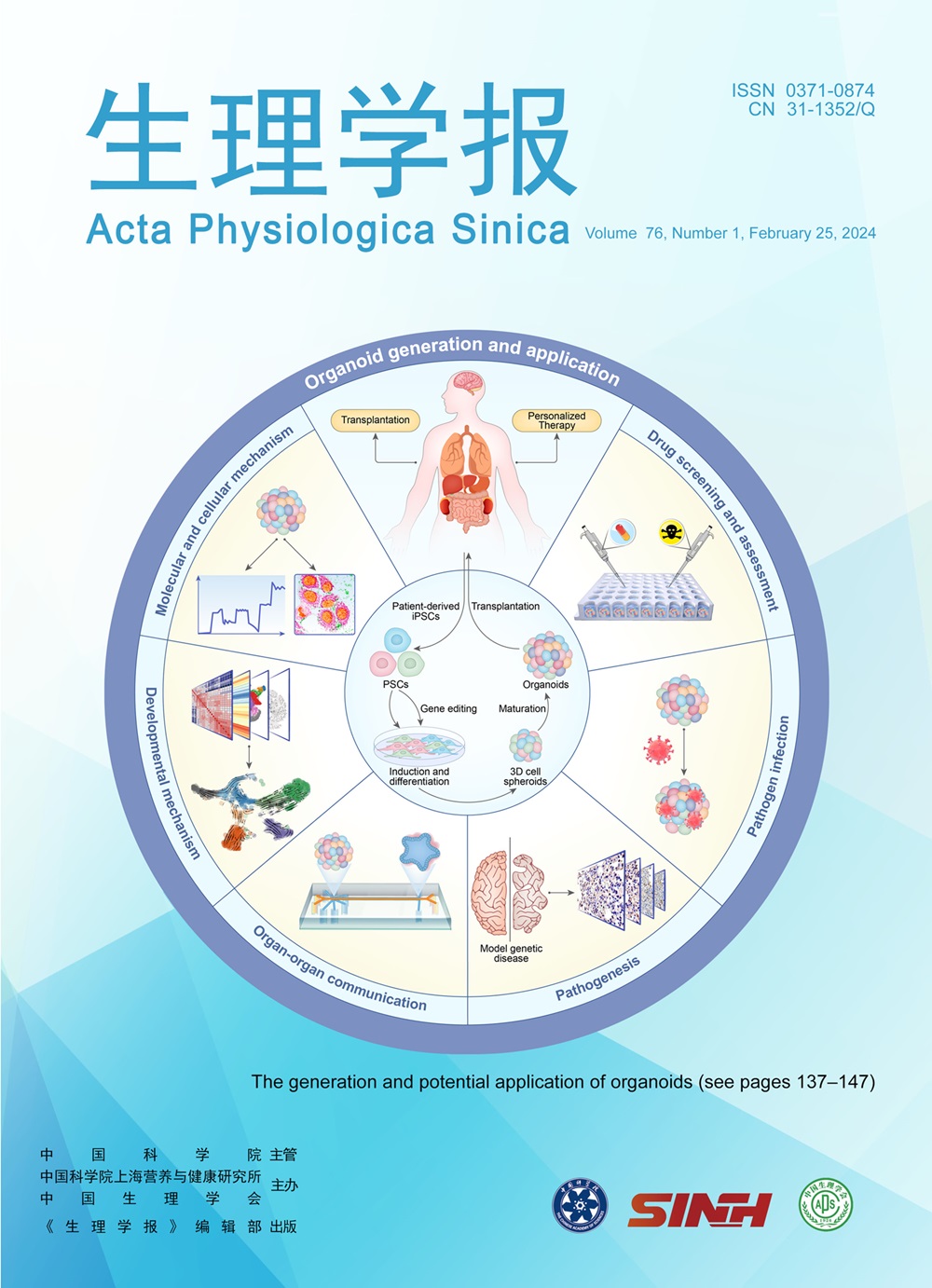
Acta Physiologica Sinica (APS) is sponsored by the Chinese Association for Physiological Sciences and Shanghai Institutes of Biological Sciences, Chinese Academy of Sciences (CAS), and is published bimonthly by the Science Press, China. APS publishes original research articles in the field of physiology as well as research contributions from other biomedical disciplines and proceedings of conferences and symposia of physiological sciences. Besides “Original Research Articles”, the journal also provides columns as “Brief Review”, “Rapid Communication”, “Experimental Technique”, and “Letter to the Editor”. Articles are published in either Chinese or English according to authors’ submission.

 求助内容:
 应助结果提醒方式:


 京公网安备 11010802042870号


