Guo-Qun Xu, Ying-Xin Tian, Guang-Yi Si, Xiao-Na Bu, Min Zhang, Hui-Feng Jiao, Hai-Li Pan
{"title":"Mechanisms of cancer pain and the multitarget therapeutic potential of Traditional Chinese Medicine.","authors":"Guo-Qun Xu, Ying-Xin Tian, Guang-Yi Si, Xiao-Na Bu, Min Zhang, Hui-Feng Jiao, Hai-Li Pan","doi":"","DOIUrl":null,"url":null,"abstract":"<p><p>Cancer pain is one of the most prevalent and debilitating symptoms in patients with advanced malignancies, arising from multifactorial mechanisms involving peripheral, central, and systemic pathways. Conventional analgesics, including opioids and nonsteroidal anti-inflammatory drugs, are often limited by their insufficient efficacy, tolerance, and risk of dependence. Traditional Chinese Medicine (TCM), characterized by its multi-component, multi-target, and systemic regulatory properties, has shown promising potential in cancer pain management. This review provides a comprehensive overview of the clinical classification and underlying mechanisms of cancer pain (including nerve infiltration, dysregulation of inflammatory mediators and ion channels, central sensitization, neuro-immune crosstalk, metabolic reprogramming, and gut-brain axis impairment), as well as the analgesic effects of representative TCM agents in cancer pain management. For example, bioactive components such as tetrahydroberberine, levo-tetrahydropalmatine, and piperine exert analgesic effects, thereby improving the quality of life of patients by inhibiting inflammatory cascades, regulating neurotransmitter systems, and preserving neural integrity. Commonly used preclinical models, including bone cancer pain, pancreatic cancer pain, and chemotherapy-induced peripheral neuropathy models, are summarized for their utility in mechanistic studies and efficacy evaluations. This review also discusses the current limitations of clinical evidence, such as small sample sizes, short follow-up periods, and limited translation from animal models, alongside major challenges in standardization, mechanistic elucidation, and clinical trial design. Future directions should focus on precise pain phenotyping, integrated multi-target interventions, rigorous efficacy-safety validation, and innovations in drug delivery to facilitate the standardization and global adoption of TCM in cancer pain management.</p>","PeriodicalId":7134,"journal":{"name":"生理学报","volume":"78 1","pages":"16-46"},"PeriodicalIF":0.0000,"publicationDate":"2026-02-25","publicationTypes":"Journal Article","fieldsOfStudy":null,"isOpenAccess":false,"openAccessPdf":"","citationCount":"0","resultStr":null,"platform":"Semanticscholar","paperid":null,"PeriodicalName":"生理学报","FirstCategoryId":"1087","ListUrlMain":"","RegionNum":0,"RegionCategory":null,"ArticlePicture":[],"TitleCN":null,"AbstractTextCN":null,"PMCID":null,"EPubDate":"","PubModel":"","JCR":"Q3","JCRName":"Medicine","Score":null,"Total":0}
引用次数: 0
Abstract
Cancer pain is one of the most prevalent and debilitating symptoms in patients with advanced malignancies, arising from multifactorial mechanisms involving peripheral, central, and systemic pathways. Conventional analgesics, including opioids and nonsteroidal anti-inflammatory drugs, are often limited by their insufficient efficacy, tolerance, and risk of dependence. Traditional Chinese Medicine (TCM), characterized by its multi-component, multi-target, and systemic regulatory properties, has shown promising potential in cancer pain management. This review provides a comprehensive overview of the clinical classification and underlying mechanisms of cancer pain (including nerve infiltration, dysregulation of inflammatory mediators and ion channels, central sensitization, neuro-immune crosstalk, metabolic reprogramming, and gut-brain axis impairment), as well as the analgesic effects of representative TCM agents in cancer pain management. For example, bioactive components such as tetrahydroberberine, levo-tetrahydropalmatine, and piperine exert analgesic effects, thereby improving the quality of life of patients by inhibiting inflammatory cascades, regulating neurotransmitter systems, and preserving neural integrity. Commonly used preclinical models, including bone cancer pain, pancreatic cancer pain, and chemotherapy-induced peripheral neuropathy models, are summarized for their utility in mechanistic studies and efficacy evaluations. This review also discusses the current limitations of clinical evidence, such as small sample sizes, short follow-up periods, and limited translation from animal models, alongside major challenges in standardization, mechanistic elucidation, and clinical trial design. Future directions should focus on precise pain phenotyping, integrated multi-target interventions, rigorous efficacy-safety validation, and innovations in drug delivery to facilitate the standardization and global adoption of TCM in cancer pain management.
期刊介绍:
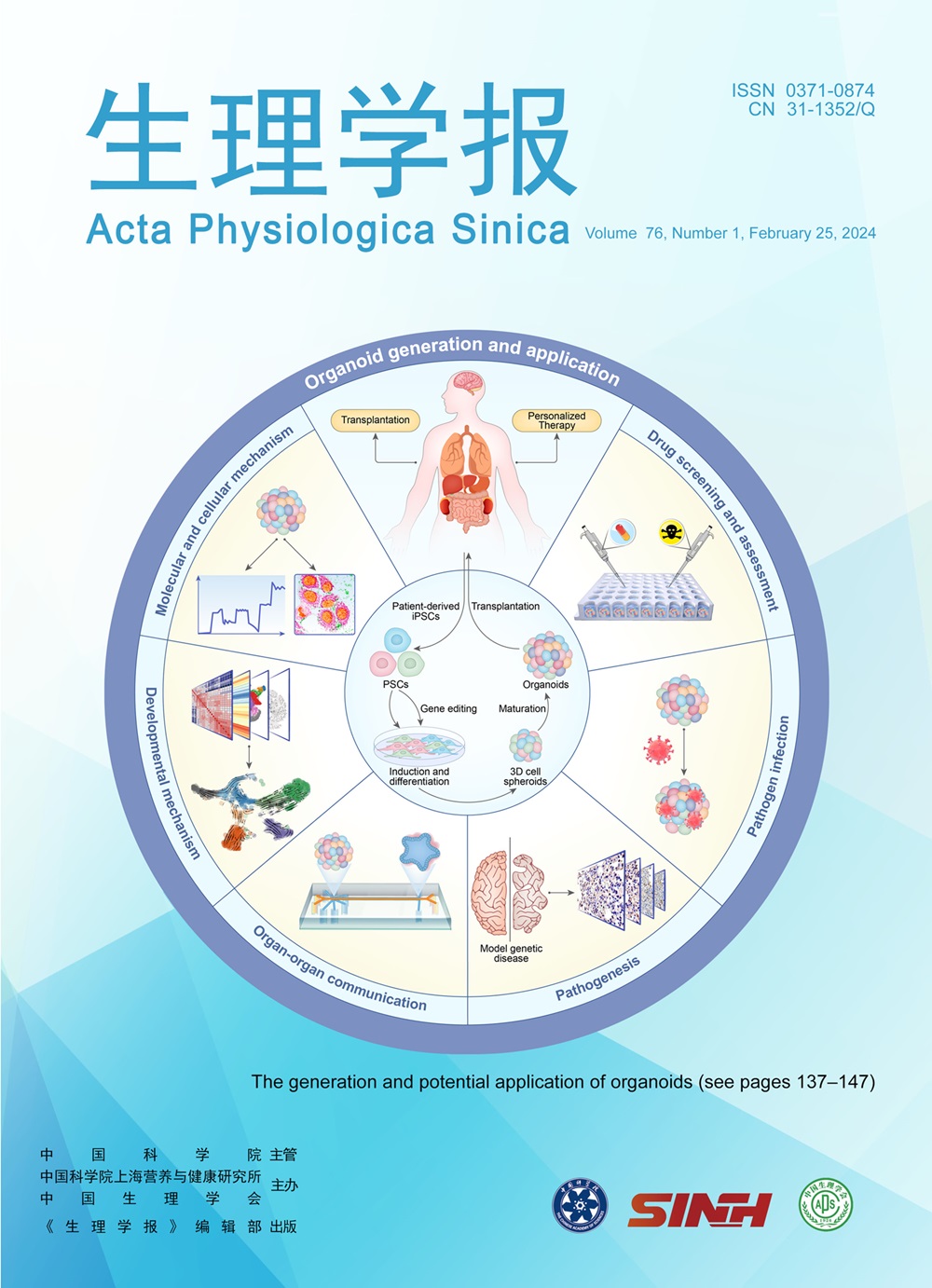
Acta Physiologica Sinica (APS) is sponsored by the Chinese Association for Physiological Sciences and Shanghai Institutes of Biological Sciences, Chinese Academy of Sciences (CAS), and is published bimonthly by the Science Press, China. APS publishes original research articles in the field of physiology as well as research contributions from other biomedical disciplines and proceedings of conferences and symposia of physiological sciences. Besides “Original Research Articles”, the journal also provides columns as “Brief Review”, “Rapid Communication”, “Experimental Technique”, and “Letter to the Editor”. Articles are published in either Chinese or English according to authors’ submission.

 求助内容:
 应助结果提醒方式:


 京公网安备 11010802042870号


