{"title":"Autism Spectrum Disorder Identification Using Dual-Branch Fusion Model with Privacy-Preserving","authors":"Hezi Jing, Wanyi Chen, Qingyang Xu, Jianjun Yang, Danushka Bandara, Rongzhen Wang, Ziping Zhao, Chao Liu","doi":"10.1007/s40745-025-00603-1","DOIUrl":null,"url":null,"abstract":"<div><p>Autism Spectrum Disorder (ASD) are neurodevelopmental disorders that severely impact daily life and social interactions. According to research, early diagnosis and intervention of autism is crucial to improve the overall quality of life of patients. Although existing machine learning and deep learning methods have been applied to the identification and detection of autism, healthcare organizations often refuse to share or disclose medical data with the improvement of laws and regulations. Therefore, we propose a privacy-preserving deep learning method based on the local client using a dual-stream model to further improve the ASD recognition performance by capturing the features of functional MRI in both temporal and spatial structures, and further ensure that each client improves the performance of the local recognition task through federated learning by optimizing the two steps of the local client update and the client aggregation during federated learning. The experimental results show that our model achieves the best AUC of 0.952, which ensures the overall performance of the classification model, and the recognition accuracy is significantly improved by using federated learning compared to the results when clients are trained independently.</p></div>","PeriodicalId":36280,"journal":{"name":"Annals of Data Science","volume":"13 1","pages":"79 - 104"},"PeriodicalIF":0.0000,"publicationDate":"2025-10-13","publicationTypes":"Journal Article","fieldsOfStudy":null,"isOpenAccess":false,"openAccessPdf":"","citationCount":"0","resultStr":null,"platform":"Semanticscholar","paperid":null,"PeriodicalName":"Annals of Data Science","FirstCategoryId":"1085","ListUrlMain":"https://link.springer.com/article/10.1007/s40745-025-00603-1","RegionNum":0,"RegionCategory":null,"ArticlePicture":[],"TitleCN":null,"AbstractTextCN":null,"PMCID":null,"EPubDate":"","PubModel":"","JCR":"Q1","JCRName":"Decision Sciences","Score":null,"Total":0}
引用次数: 0
Abstract
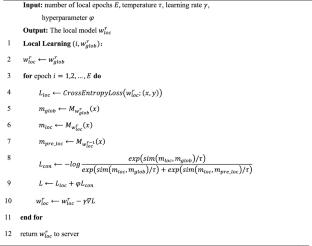
Autism Spectrum Disorder (ASD) are neurodevelopmental disorders that severely impact daily life and social interactions. According to research, early diagnosis and intervention of autism is crucial to improve the overall quality of life of patients. Although existing machine learning and deep learning methods have been applied to the identification and detection of autism, healthcare organizations often refuse to share or disclose medical data with the improvement of laws and regulations. Therefore, we propose a privacy-preserving deep learning method based on the local client using a dual-stream model to further improve the ASD recognition performance by capturing the features of functional MRI in both temporal and spatial structures, and further ensure that each client improves the performance of the local recognition task through federated learning by optimizing the two steps of the local client update and the client aggregation during federated learning. The experimental results show that our model achieves the best AUC of 0.952, which ensures the overall performance of the classification model, and the recognition accuracy is significantly improved by using federated learning compared to the results when clients are trained independently.
期刊介绍:
Annals of Data Science (ADS) publishes cutting-edge research findings, experimental results and case studies of data science. Although Data Science is regarded as an interdisciplinary field of using mathematics, statistics, databases, data mining, high-performance computing, knowledge management and virtualization to discover knowledge from Big Data, it should have its own scientific contents, such as axioms, laws and rules, which are fundamentally important for experts in different fields to explore their own interests from Big Data. ADS encourages contributors to address such challenging problems at this exchange platform. At present, how to discover knowledge from heterogeneous data under Big Data environment needs to be addressed. ADS is a series of volumes edited by either the editorial office or guest editors. Guest editors will be responsible for call-for-papers and the review process for high-quality contributions in their volumes.

 求助内容:
求助内容: 应助结果提醒方式:

 京公网安备 11010802042870号


