O. A. Legonkova, V. V. Stafford, T. I. Vinokurova, N. B. Svischeva, I. N. Senchikhin
{"title":"Bioresorbable Threads In Vitro and In Vivo: Common and Distinctive Features","authors":"O. A. Legonkova, V. V. Stafford, T. I. Vinokurova, N. B. Svischeva, I. N. Senchikhin","doi":"10.1134/S2070205125701175","DOIUrl":null,"url":null,"abstract":"<p>General comparative studies were conducted on changes in the surface, physical and mechanical properties of bioresorbable sutures in vitro and in vivo, and tissue reactions to the use of suture materials with different biodegradation times: copolymer of lactide with glycolide (PGL), polydoxanone (PDO), and copolymer of glycolide and ε-caprolactone (PGK). The cause of the possible inflammatory tissue reaction has been determined. The biodegradation process for all sutures begins from the surface and is accompanied by the “leaching” of low-molecular substances, the mechanism of bioresorption is phagocytic, the sutures are considered by biological tissues as foreign bodies. However, depending on the chemical composition of the suture material, the local tissue reaction differs somewhat. Thus, in the case of PGL, an increase in the number of multinucleated Pirogov–Langhans giant cells phagocytizing particles of suture material is observed; when using PDO sutures, an increase in the number of lymphocytes with a ring-shaped nucleus predominates, as in the case of PGC sutures. The tissue reaction also depends on whether the suture material is monofilament or braided. In monofilaments, the bed, the connective tissue “case,” is clearly visible; in braided sutures, the fibers grow into connective tissue, forming giant multinucleated cells, which can lead to the formation of granulomas and “connective nodules.” In all variants of bioresorbable sutures, after complete loss of strength, they turn into oxyphilic heterogeneous substances on histological sections, which is confirmed by the differential scanning calorimetry method; amorphization of the supramolecular structure of the polymers is noted. At the initial stages of bioresorption of suture materials, the mechanism of change in the supramolecular structure of polymers in vivo and in vitro varies: usually in vitro the changes go through a recrystallization stage, and in vivo, through gradual amorphization. Therefore, let us explain the fact that, under biological tissue conditions, the strength of the suture at different stages of wound healing can be 5–10% lower than in vitro, which is, however, being within the confidence intervals, which allows the method to be replaced if necessary in vivo or in vitro until a residual strength of 50% is reached.</p>","PeriodicalId":745,"journal":{"name":"Protection of Metals and Physical Chemistry of Surfaces","volume":"61 6","pages":"1329 - 1339"},"PeriodicalIF":0.8000,"publicationDate":"2026-02-06","publicationTypes":"Journal Article","fieldsOfStudy":null,"isOpenAccess":false,"openAccessPdf":"","citationCount":"0","resultStr":null,"platform":"Semanticscholar","paperid":null,"PeriodicalName":"Protection of Metals and Physical Chemistry of Surfaces","FirstCategoryId":"88","ListUrlMain":"https://link.springer.com/article/10.1134/S2070205125701175","RegionNum":4,"RegionCategory":"材料科学","ArticlePicture":[],"TitleCN":null,"AbstractTextCN":null,"PMCID":null,"EPubDate":"","PubModel":"","JCR":"Q3","JCRName":"METALLURGY & METALLURGICAL ENGINEERING","Score":null,"Total":0}
引用次数: 0
Abstract
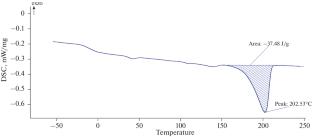
General comparative studies were conducted on changes in the surface, physical and mechanical properties of bioresorbable sutures in vitro and in vivo, and tissue reactions to the use of suture materials with different biodegradation times: copolymer of lactide with glycolide (PGL), polydoxanone (PDO), and copolymer of glycolide and ε-caprolactone (PGK). The cause of the possible inflammatory tissue reaction has been determined. The biodegradation process for all sutures begins from the surface and is accompanied by the “leaching” of low-molecular substances, the mechanism of bioresorption is phagocytic, the sutures are considered by biological tissues as foreign bodies. However, depending on the chemical composition of the suture material, the local tissue reaction differs somewhat. Thus, in the case of PGL, an increase in the number of multinucleated Pirogov–Langhans giant cells phagocytizing particles of suture material is observed; when using PDO sutures, an increase in the number of lymphocytes with a ring-shaped nucleus predominates, as in the case of PGC sutures. The tissue reaction also depends on whether the suture material is monofilament or braided. In monofilaments, the bed, the connective tissue “case,” is clearly visible; in braided sutures, the fibers grow into connective tissue, forming giant multinucleated cells, which can lead to the formation of granulomas and “connective nodules.” In all variants of bioresorbable sutures, after complete loss of strength, they turn into oxyphilic heterogeneous substances on histological sections, which is confirmed by the differential scanning calorimetry method; amorphization of the supramolecular structure of the polymers is noted. At the initial stages of bioresorption of suture materials, the mechanism of change in the supramolecular structure of polymers in vivo and in vitro varies: usually in vitro the changes go through a recrystallization stage, and in vivo, through gradual amorphization. Therefore, let us explain the fact that, under biological tissue conditions, the strength of the suture at different stages of wound healing can be 5–10% lower than in vitro, which is, however, being within the confidence intervals, which allows the method to be replaced if necessary in vivo or in vitro until a residual strength of 50% is reached.
期刊介绍:
Protection of Metals and Physical Chemistry of Surfaces is an international peer reviewed journal that publishes articles covering all aspects of the physical chemistry of materials and interfaces in various environments. The journal covers all related problems of modern physical chemistry and materials science, including: physicochemical processes at interfaces; adsorption phenomena; complexing from molecular and supramolecular structures at the interfaces to new substances, materials and coatings; nanoscale and nanostructured materials and coatings, composed and dispersed materials; physicochemical problems of corrosion, degradation and protection; investigation methods for surface and interface systems, processes, structures, materials and coatings. No principe restrictions exist related systems, types of processes, methods of control and study. The journal welcomes conceptual, theoretical, experimental, methodological, instrumental, environmental, and all other possible studies.

 求助内容:
求助内容: 应助结果提醒方式:

 京公网安备 11010802042870号


