{"title":"Corrosion Protection of Mild Steel in 1 M HCL Solution Using the Triazole Derivative","authors":"K. Raviprabha, Ramesh S. Bhat, N. Raghavendra","doi":"10.1134/S2070205125701114","DOIUrl":null,"url":null,"abstract":"<p>Mild steel (MS) is a cost-effective engineering material known for its versatility and strength. The mild steel has good ductility and weldability, making it suitable for various applications like automobile, and aerospace industries. We investigated the inhibition performance of 5-(pyridin-4-yl)-4<i>H</i>-1,2,4-triazole-3-thiol (PyTT) as an inhibitor for mild steel in 1 M hydrochloric acid at varying temperatures. The study employed conventional weight-loss along with potentiodynamic polarization (PP) and electrochemical impedance spectroscopy (EIS). As the concentration of PyTT increased, the inhibition efficiency increased; however, it declined with higher temperatures. PyTT confirmed mixed inhibition behavior and adhered to the Langmuir isotherm. The highest inhibitory efficiency observed was 85.50% at 100 ppm and 303 K. Notably, there was strong correlation between the results obtained from PP and EIS. A probable mechanism for preventing the MS corrosion was suggested. Scanning electron microscopy (SEM) and Atomic force microscopy (AFM) were used to examine the morphological and roughness investigations of MS with, and without inhibitor (PyTT). The SEM results showed a significant adsorption between MS-PyTT inhibitor. The structure of PyTT was correlated with its ability to suppress the corrosion using Monte Carlo simulation (MCS) and density function theory (DFT) techniques. The results of this investigation showed good agreement between experimental and theoretical data. The activation energy and thermodynamic parameters were calculated, and the findings were evaluated.</p>","PeriodicalId":745,"journal":{"name":"Protection of Metals and Physical Chemistry of Surfaces","volume":"61 6","pages":"1346 - 1361"},"PeriodicalIF":0.8000,"publicationDate":"2026-02-06","publicationTypes":"Journal Article","fieldsOfStudy":null,"isOpenAccess":false,"openAccessPdf":"","citationCount":"0","resultStr":null,"platform":"Semanticscholar","paperid":null,"PeriodicalName":"Protection of Metals and Physical Chemistry of Surfaces","FirstCategoryId":"88","ListUrlMain":"https://link.springer.com/article/10.1134/S2070205125701114","RegionNum":4,"RegionCategory":"材料科学","ArticlePicture":[],"TitleCN":null,"AbstractTextCN":null,"PMCID":null,"EPubDate":"","PubModel":"","JCR":"Q3","JCRName":"METALLURGY & METALLURGICAL ENGINEERING","Score":null,"Total":0}
引用次数: 0
Abstract
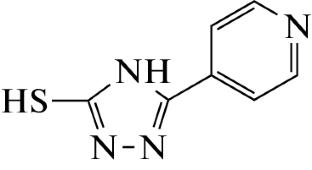
Mild steel (MS) is a cost-effective engineering material known for its versatility and strength. The mild steel has good ductility and weldability, making it suitable for various applications like automobile, and aerospace industries. We investigated the inhibition performance of 5-(pyridin-4-yl)-4H-1,2,4-triazole-3-thiol (PyTT) as an inhibitor for mild steel in 1 M hydrochloric acid at varying temperatures. The study employed conventional weight-loss along with potentiodynamic polarization (PP) and electrochemical impedance spectroscopy (EIS). As the concentration of PyTT increased, the inhibition efficiency increased; however, it declined with higher temperatures. PyTT confirmed mixed inhibition behavior and adhered to the Langmuir isotherm. The highest inhibitory efficiency observed was 85.50% at 100 ppm and 303 K. Notably, there was strong correlation between the results obtained from PP and EIS. A probable mechanism for preventing the MS corrosion was suggested. Scanning electron microscopy (SEM) and Atomic force microscopy (AFM) were used to examine the morphological and roughness investigations of MS with, and without inhibitor (PyTT). The SEM results showed a significant adsorption between MS-PyTT inhibitor. The structure of PyTT was correlated with its ability to suppress the corrosion using Monte Carlo simulation (MCS) and density function theory (DFT) techniques. The results of this investigation showed good agreement between experimental and theoretical data. The activation energy and thermodynamic parameters were calculated, and the findings were evaluated.
期刊介绍:
Protection of Metals and Physical Chemistry of Surfaces is an international peer reviewed journal that publishes articles covering all aspects of the physical chemistry of materials and interfaces in various environments. The journal covers all related problems of modern physical chemistry and materials science, including: physicochemical processes at interfaces; adsorption phenomena; complexing from molecular and supramolecular structures at the interfaces to new substances, materials and coatings; nanoscale and nanostructured materials and coatings, composed and dispersed materials; physicochemical problems of corrosion, degradation and protection; investigation methods for surface and interface systems, processes, structures, materials and coatings. No principe restrictions exist related systems, types of processes, methods of control and study. The journal welcomes conceptual, theoretical, experimental, methodological, instrumental, environmental, and all other possible studies.

 求助内容:
求助内容: 应助结果提醒方式:

 京公网安备 11010802042870号


