
Comparative study of Fe(II)/Fe(III) ions reaction in electrochemical polarization process of 304 stainless steel in H2SO4 and bipyridine solutions employing experimental and density functional theory methods
IF 6.9
1区 工程技术
Q1 ENGINEERING, AEROSPACE
引用次数: 0
Abstract
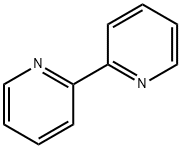
Localized corrosion of 304 stainless steel being the significant parts of Starship rocket seriously threatens the long-term service of such aerospace equipment. Scanning electron microscopy, in situ instruments combining electrochemical workstation and Raman spectroscopy, and Density Dunctional Theory (DFT) calculations were employed. The surface morphologies, alloying elements, molecular fingerprint Raman evidence and theoretical mechanism for the localized corrosion of 304 stainless steel during the electrochemical polarization in the mixture solutions containing 0.5 mol/L H 2 SO 4 and 2, 2′-bipyridine (bipy) with concentrations of 0.001, 0.010, 0.100 mol/L were discussed. In comparison, the presence of bipy up to 0.100 mol/L in such mixture solutions displayed the neglectable effect on the Fe(II)/Fe(III) reaction in the polarization process. Raman vibrational frequency around 1 492 cm −1 was the evidence of pink color appearance due to the formation of [Fe II (bipy) 3 ] 2+ . Raman and DFT indicated the yellow color emergence due to the presence of μ-O-[Fe III (bipy) 2 (H 2 O)] 2 4+ due to the oxidation reaction of [Fe II (bipy) 3 ] 2+ with H 2 O 2 oxidant, and the dimerization of [Fe III (bipy) 3 ] 3+ . Furthermore, a quantitative model between [Fe II (bipy) 3 ] 2+ concentration and Raman intensity at 1 492 cm −1 has been built up. Two linear functions were revealed when [Fe II (bipy) 3 ] 2+ concentrations were at 0–0.002 mol/L and 0.002–0.004 mol/L and a concentration error of less than 5% was evidenced in comparison with that investigated by the inductively coupled plasma. The proposed passivation mechanism and quantitative concentration model of 304 stainless steel have certain significance for its corrosion protection and corrosion evaluation.采用实验和密度泛函理论方法对304不锈钢在H2SO4和联吡啶溶液中Fe(II)/Fe(III)离子电化学极化过程中的反应进行比较研究
304不锈钢是星舰火箭的重要部件,其局部腐蚀严重威胁着星舰火箭的长期使用。采用扫描电镜、电化学工作站和拉曼光谱相结合的原位仪器以及密度泛函理论(DFT)计算。讨论了304不锈钢在浓度分别为0.001、0.010、0.100 mol/L的h2so4和2,2′-联吡啶(bipy)的混合溶液中电化学极化过程中局部腐蚀的表面形貌、合金元素、分子指纹拉曼证据和理论机理。相比之下,在这种混合溶液中存在高达0.100 mol/L的bipy,对极化过程中Fe(II)/Fe(III)反应的影响可以忽略不计。在1 492 cm−1左右的拉曼振动频率是由于[Fe II (bipy) 3] 2+形成的粉红色外观的证据。Raman和DFT结果表明,由于μ-O-[Fe III (bipy) 2 (h2o)] 2+与h2o2氧化剂的氧化反应和[Fe III (bipy) 3] 3+的二聚化作用,[Fe III (bipy) 3] 3+呈现黄色。此外,建立了[Fe II (bipy) 3] 2+浓度与1 492 cm−1处拉曼强度之间的定量模型。[Fe II (bipy) 3] 2+浓度在0 ~ 0.002 mol/L和0.002 ~ 0.004 mol/L范围内存在线性函数,与电感耦合等离子体的浓度误差小于5%。本文提出的304不锈钢钝化机理和定量浓度模型对304不锈钢的腐蚀防护和腐蚀评价具有一定的意义。
本文章由计算机程序翻译,如有差异,请以英文原文为准。
求助全文
约1分钟内获得全文
求助全文
来源期刊

Chinese Journal of Aeronautics
工程技术-工程:宇航
CiteScore
10.00
自引率
17.50%
发文量
3080
审稿时长
55 days
期刊介绍:
Chinese Journal of Aeronautics (CJA) is an open access, peer-reviewed international journal covering all aspects of aerospace engineering. The Journal reports the scientific and technological achievements and frontiers in aeronautic engineering and astronautic engineering, in both theory and practice, such as theoretical research articles, experiment ones, research notes, comprehensive reviews, technological briefs and other reports on the latest developments and everything related to the fields of aeronautics and astronautics, as well as those ground equipment concerned.
文献相关原料
原料信息
原料厂家
 求助内容:
 应助结果提醒方式:


 京公网安备 11010802042870号


