Panax notoginseng Saponins Enhance Chemotherapy Carboplatin and Immune Checkpoint Blockades PD1ab by Modulating SERPINE1 Downregulation in LUAD

Yuhuai Wang, Ping Wang, Jiaqi Liu, Yi Yang, Frederick S. Huang
{"title":"<i>Panax notoginseng</i> Saponins Enhance Chemotherapy Carboplatin and Immune Checkpoint Blockades PD1ab by Modulating SERPINE1 Downregulation in LUAD","authors":"Yuhuai Wang, Ping Wang, Jiaqi Liu, Yi Yang, Frederick S. Huang","doi":"10.1177/09731296251355018","DOIUrl":null,"url":null,"abstract":"Introduction and Objectives Panax notoginseng saponins (PNS), extracted from Chinese ginseng, exert various pharmacological activities, including anti-tumor effects. Lung cancer remains the malignancy with the highest morbidity and mortality rates. However, the mechanisms underlying PNS’s potential tumor-inhibitory effects on lung adenocarcinoma (LUAD) remain largely unknown and warrant investigation. Purpose This study aimed to explore the PNS’s potential tumor-inhibitory effects and related mechanisms in LUAD. Materials and Methods LUAD cell lines A549 and Lewis were utilized to examine the proliferation, colony formation, and migration of LUAD cells after PNS treatment. WI38 cells were employed to evaluate the toxic impact of PNS on human lung fibroblasts. A Lewis subcutaneous tumor-bearing model was established to assess the combined effects of PNS and carboplatin (CBP) or immune checkpoint blockade with programmed cell death 1 antibody (PD1ab). Lentivirus transfection and quantitative polymerase chain reaction (qPCR) assays were conducted to explore the role of serine protease inhibitor clade E member 1 (SERPINE1) in PNS’s anti-tumor mechanism. Immunohistochemistry was utilized to detect CD8 + T cell infiltration in tumor tissue. Cell counting kit-8 and qPCR assays were applied to determine the specific PNS components exerting anti-tumor effects. Results In vitro and in vivo results indicated that PNS selectively inhibited the proliferation, colony formation, and migration of LUAD cells while promoting CD8 + T-cell infiltration in tumor tissue. Consequently, PNS enhanced the inhibitory effects of CBP and PD1ab on LUAD tumors. Mechanistically, the results preliminarily indicated that PNS might impede tumor progression and enhance CBP and PD1ab effects by downregulating SERPINE1. Five PNS components, including notoginsenoside R1, ginsenoside Rg1, ginsenoside Rd, ginsenoside Re, and ginsenoside Rb1, demonstrated anti-tumor effects. Conclusion PNS suppressed LUAD progression and enhanced CBP and PD1ab therapeutic effects by downregulating SERPINE1 expression, indicating its potential as a promising agent for LUAD therapy.","PeriodicalId":508089,"journal":{"name":"Pharmacognosy Magazine","volume":"1 1","pages":""},"PeriodicalIF":0.0000,"publicationDate":"2025-07-24","publicationTypes":"Journal Article","fieldsOfStudy":null,"isOpenAccess":false,"openAccessPdf":"","citationCount":"0","resultStr":null,"platform":"Semanticscholar","paperid":null,"PeriodicalName":"Pharmacognosy Magazine","FirstCategoryId":"0","ListUrlMain":"https://doi.org/10.1177/09731296251355018","RegionNum":0,"RegionCategory":null,"ArticlePicture":[],"TitleCN":null,"AbstractTextCN":null,"PMCID":null,"EPubDate":"","PubModel":"","JCR":"","JCRName":"","Score":null,"Total":0}
引用次数: 0

Abstract

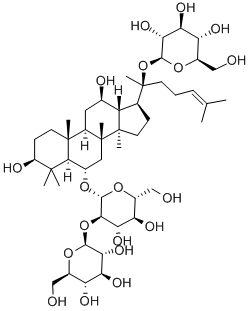
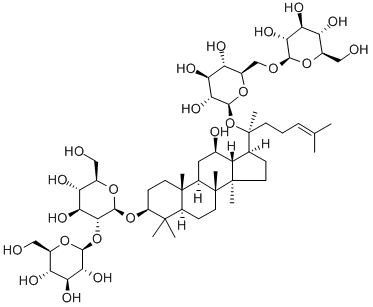
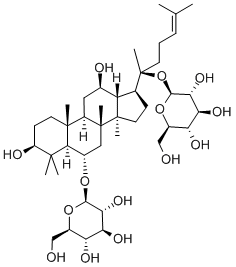
Introduction and Objectives Panax notoginseng saponins (PNS), extracted from Chinese ginseng, exert various pharmacological activities, including anti-tumor effects. Lung cancer remains the malignancy with the highest morbidity and mortality rates. However, the mechanisms underlying PNS’s potential tumor-inhibitory effects on lung adenocarcinoma (LUAD) remain largely unknown and warrant investigation. Purpose This study aimed to explore the PNS’s potential tumor-inhibitory effects and related mechanisms in LUAD. Materials and Methods LUAD cell lines A549 and Lewis were utilized to examine the proliferation, colony formation, and migration of LUAD cells after PNS treatment. WI38 cells were employed to evaluate the toxic impact of PNS on human lung fibroblasts. A Lewis subcutaneous tumor-bearing model was established to assess the combined effects of PNS and carboplatin (CBP) or immune checkpoint blockade with programmed cell death 1 antibody (PD1ab). Lentivirus transfection and quantitative polymerase chain reaction (qPCR) assays were conducted to explore the role of serine protease inhibitor clade E member 1 (SERPINE1) in PNS’s anti-tumor mechanism. Immunohistochemistry was utilized to detect CD8 + T cell infiltration in tumor tissue. Cell counting kit-8 and qPCR assays were applied to determine the specific PNS components exerting anti-tumor effects. Results In vitro and in vivo results indicated that PNS selectively inhibited the proliferation, colony formation, and migration of LUAD cells while promoting CD8 + T-cell infiltration in tumor tissue. Consequently, PNS enhanced the inhibitory effects of CBP and PD1ab on LUAD tumors. Mechanistically, the results preliminarily indicated that PNS might impede tumor progression and enhance CBP and PD1ab effects by downregulating SERPINE1. Five PNS components, including notoginsenoside R1, ginsenoside Rg1, ginsenoside Rd, ginsenoside Re, and ginsenoside Rb1, demonstrated anti-tumor effects. Conclusion PNS suppressed LUAD progression and enhanced CBP and PD1ab therapeutic effects by downregulating SERPINE1 expression, indicating its potential as a promising agent for LUAD therapy.
三七皂苷通过调节LUAD中SERPINE1的下调增强化疗卡铂和免疫检查点阻断PD1ab
三七皂苷是一种从人参中提取的具有抗肿瘤等多种药理活性的物质。肺癌仍然是发病率和死亡率最高的恶性肿瘤。然而,PNS对肺腺癌(LUAD)潜在的肿瘤抑制作用的机制仍然很大程度上未知,需要进一步研究。目的探讨PNS在LUAD中潜在的肿瘤抑制作用及其机制。材料与方法利用LUAD细胞系A549和Lewis检测PNS处理后LUAD细胞的增殖、集落形成和迁移情况。采用WI38细胞评价PNS对人肺成纤维细胞的毒性作用。建立Lewis皮下荷瘤模型,评估PNS联合卡铂(CBP)或免疫检查点阻断联合程序性细胞死亡1抗体(PD1ab)的联合效应。采用慢病毒转染和定量聚合酶链反应(qPCR)方法探讨丝氨酸蛋白酶抑制剂分支E成员1 (SERPINE1)在PNS抗肿瘤机制中的作用。免疫组化检测肿瘤组织中CD8 + T细胞浸润情况。采用细胞计数试剂盒-8和qPCR检测PNS中具有抗肿瘤作用的特异性成分。结果体外和体内实验结果表明,PNS选择性抑制LUAD细胞的增殖、集落形成和迁移,同时促进CD8 + t细胞在肿瘤组织中的浸润。因此,PNS增强了CBP和PD1ab对LUAD肿瘤的抑制作用。机制上,初步提示PNS可能通过下调SERPINE1抑制肿瘤进展,增强CBP和PD1ab的作用。三七皂苷R1、人参皂苷Rg1、人参皂苷Rd、人参皂苷Re、人参皂苷Rb1等五种PNS成分均有抗肿瘤作用。结论PNS通过下调SERPINE1的表达,抑制LUAD的进展,增强CBP和PD1ab的治疗效果,提示PNS可能是一种有前景的LUAD治疗药物。
本文章由计算机程序翻译,如有差异,请以英文原文为准。
求助全文
约1分钟内获得全文 求助全文
来源期刊
自引率
0.00%
发文量
0
文献相关原料
原料信息
原料厂家
1
Panax notoginseng saponins
2
CCK-8 kit
3
Dulbecco's modified Eagle medium
4
fetal bovine serum
5
RPMI-1640 medium
6
Lipofectamine 2000
7
TRIzol reagent
8
C57BL/6 mice
10
PrimeScript RT reagent kit
11
microplate reader
12
PCDNA3.1-mouse-SERPINE1
14
22
notoginsenoside R1
80418-24-2
¥91.00-¥6963.00
15
22
ginsenoside Rd
52705-93-8
¥29.00-¥8712.00
16
22
ginsenoside Re
52286-59-6
¥30.00-¥11438.00
17
Panax notoginseng saponins
94279-78-4
18
22
ginsenoside Rb1
41753-43-9
¥28.00-¥53688.00
19
22
ginsenoside Rg1
22427-39-0
¥30.00-¥8119.00
×
引用
GB/T 7714-2015
复制
MLA
复制
APA
复制
导出至
BibTeX EndNote RefMan NoteFirst NoteExpress
×
提示
您的信息不完整,为了账户安全,请先补充。
现在去补充
×
提示
您因"违规操作"
具体请查看互助需知
我知道了
×
提示
确定
请完成安全验证×
copy
已复制链接
快去分享给好友吧!
我知道了
右上角分享
点击右上角分享
0
联系我们:info@booksci.cn Book学术提供免费学术资源搜索服务,方便国内外学者检索中英文文献。致力于提供最便捷和优质的服务体验。 Copyright © 2023 布克学术 All rights reserved.
京ICP备2023020795号-1
ghs 京公网安备 11010802042870号
Book学术文献互助
Book学术文献互助群
群 号:604180095
Book学术官方微信
小红书