Manisha Khatiwada, Dana Howard, Tema Krempley, Katherine Walton, Crystal Williams, Abraham David Graber
{"title":"Reasonable to Whom? Rethinking Informed Consent Disclosures in Light of the Research Related Concerns of the Autistic Community.","authors":"Manisha Khatiwada, Dana Howard, Tema Krempley, Katherine Walton, Crystal Williams, Abraham David Graber","doi":"10.1080/15265161.2026.2632012","DOIUrl":null,"url":null,"abstract":"<p><p>Information disclosure during the informed consent process presents a dilemma. If too little information is presented, participants are unable to make an informed decision. Exhaustive disclosure is, however, a practical impossibility. In the United States, this dilemma was historically navigated in the research context by requiring that disclosure include enumerated items: the purpose of the research, potential risks, etc. In 2018, federal guidelines were updated to require that disclosure adhere to the reasonable person standard, whereby participants must be given all information that an \"average\" person would want to know. Drawing on the Autistic community's unique concerns regarding research, we argue that, because of its emphasis on the informational wants of the \"average\" person, the reasonable person standard systematically fails to meet the informational needs of (many) people from minoritized populations. We argue for an individualized understanding of the reasonable person standard and provide recommendations for research teams.</p>","PeriodicalId":50962,"journal":{"name":"American Journal of Bioethics","volume":" ","pages":"1-14"},"PeriodicalIF":20.8000,"publicationDate":"2026-03-02","publicationTypes":"Journal Article","fieldsOfStudy":null,"isOpenAccess":false,"openAccessPdf":"","citationCount":"0","resultStr":null,"platform":"Semanticscholar","paperid":null,"PeriodicalName":"American Journal of Bioethics","FirstCategoryId":"98","ListUrlMain":"https://doi.org/10.1080/15265161.2026.2632012","RegionNum":1,"RegionCategory":"哲学","ArticlePicture":[],"TitleCN":null,"AbstractTextCN":null,"PMCID":null,"EPubDate":"","PubModel":"","JCR":"Q1","JCRName":"ETHICS","Score":null,"Total":0}
引用次数: 0
Abstract
Information disclosure during the informed consent process presents a dilemma. If too little information is presented, participants are unable to make an informed decision. Exhaustive disclosure is, however, a practical impossibility. In the United States, this dilemma was historically navigated in the research context by requiring that disclosure include enumerated items: the purpose of the research, potential risks, etc. In 2018, federal guidelines were updated to require that disclosure adhere to the reasonable person standard, whereby participants must be given all information that an "average" person would want to know. Drawing on the Autistic community's unique concerns regarding research, we argue that, because of its emphasis on the informational wants of the "average" person, the reasonable person standard systematically fails to meet the informational needs of (many) people from minoritized populations. We argue for an individualized understanding of the reasonable person standard and provide recommendations for research teams.
期刊介绍:
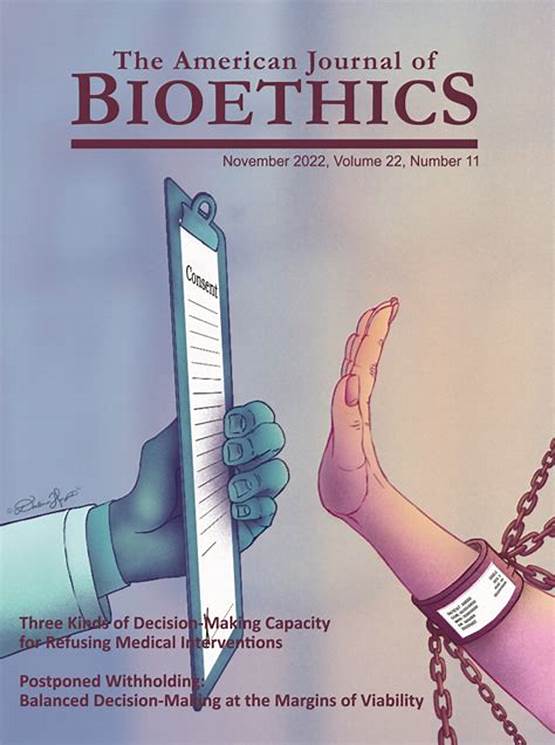
The American Journal of Bioethics (AJOB) is a renowned global publication focused on bioethics. It tackles pressing ethical challenges in the realm of health sciences.
With a commitment to the original vision of bioethics, AJOB explores the social consequences of advancements in biomedicine. It sparks meaningful discussions that have proved invaluable to a wide range of professionals, including judges, senators, journalists, scholars, and educators.
AJOB covers various areas of interest, such as the ethical implications of clinical research, ensuring access to healthcare services, and the responsible handling of medical records and data.
The journal welcomes contributions in the form of target articles presenting original research, open peer commentaries facilitating a dialogue, book reviews, and responses to open peer commentaries.
By presenting insightful and authoritative content, AJOB continues to shape the field of bioethics and engage diverse stakeholders in crucial conversations about the intersection of medicine, ethics, and society.

 求助内容:
求助内容: 应助结果提醒方式:

 京公网安备 11010802042870号


