
Magnesium ions facilitate osteogenic differentiation and intervertebral fusion via m6A methylation of RhoA mRNA
IF 9.8
1区 医学
Q1 ORTHOPEDICS
Journal of Orthopaedic Translation
Pub Date : 2026-03-01
Epub Date: 2026-02-18
DOI:10.1016/j.jot.2026.101056
引用次数: 0
Abstract
Background
Magnesium-based implants facilitate bone regeneration via degradation. However, the epigenetic mechanisms, particularly N6-methyladenosine (m6A) modification regulated by Mg2+, remain incompletely understood. This study investigated the role of Mg2+ in osteogenic differentiation through the METTL3-RhoA axis and evaluated its potential in intervertebral fusion.
Methods
The optimal Mg2+ concentration was identified using MC3T3-E1 cells. Methylated RNA immunoprecipitation sequencing (MeRIP-seq) and MeRIP-PCR were employed to identify m6A target genes. Functional assays (knockdown, overexpression, and rescue) validated the METTL3-YTHDF1-RhoA pathway. A rat tail intervertebral fusion model with magnesium implants was used to assess in vivo effects.
Results
Treatment with 4 mM Mg2+ significantly enhanced osteogenic activity and increased METTL3 levels. Mechanistically, METTL3 promoted m6A methylation of RhoA mRNA, which was subsequently bound by YTHDF1, enhancing translation and activating the RhoA/ROCK pathway. In vivo, magnesium implants accelerated fusion and improved trabecular bone quality; however, these effects were inhibited by METTL3 or RhoA inhibitors.
Conclusion
Mg2+ enhances osteogenic differentiation through the METTL3-YTHDF1-RhoA/ROCK pathway.
The translational potential of this article
This study provides an epigenetic framework for optimizing magnesium-based orthopedic implants and suggests that targeting the m6A-RhoA axis could improve spinal fusion outcomes.
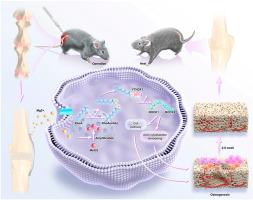
镁离子通过RhoA mRNA的m6A甲基化促进成骨分化和椎间融合。
背景:镁基种植体通过降解促进骨再生。然而,表观遗传机制,特别是Mg2+调控的n6 -甲基腺苷(m6A)修饰,仍然不完全清楚。本研究通过METTL3-RhoA轴研究了Mg2+在成骨分化中的作用,并评估了其在椎间融合中的潜力。方法:采用MC3T3-E1细胞筛选最佳Mg2+浓度。采用甲基化RNA免疫沉淀测序(MeRIP-seq)和MeRIP-PCR鉴定m6A靶基因。功能分析(敲除、过表达和挽救)验证了METTL3-YTHDF1-RhoA通路。采用大鼠尾巴椎间融合术模型对镁植入物进行体内效果评估。结果:4 mM Mg2+治疗显著增强成骨活性,增加METTL3水平。在机制上,METTL3促进RhoA mRNA的m6A甲基化,随后与YTHDF1结合,增强翻译并激活RhoA/ROCK途径。在体内,镁植入物加速融合,改善骨小梁质量;然而,这些作用被METTL3或RhoA抑制剂抑制。结论:Mg2+通过METTL3-YTHDF1-RhoA/ROCK途径促进成骨分化。本文的转化潜力:该研究为优化镁基骨科植入物提供了表观遗传学框架,并表明靶向m6A-RhoA轴可以改善脊柱融合结果。
本文章由计算机程序翻译,如有差异,请以英文原文为准。
求助全文
约1分钟内获得全文
求助全文
来源期刊
Journal of Orthopaedic Translation
Medicine-Orthopedics and Sports Medicine
CiteScore
11.80
自引率
13.60%
发文量
91
审稿时长
29 days
期刊介绍:
The Journal of Orthopaedic Translation (JOT) is the official peer-reviewed, open access journal of the Chinese Speaking Orthopaedic Society (CSOS) and the International Chinese Musculoskeletal Research Society (ICMRS). It is published quarterly, in January, April, July and October, by Elsevier.
 求助内容:
求助内容: 应助结果提醒方式:

 京公网安备 11010802042870号


