
Medical large language models and systems in the clinical application of spinal diseases: Current status, challenges, and future prospects

IF 5.9 1区 医学 Q1 ORTHOPEDICS
Journal of Orthopaedic Translation Pub Date : 2026-03-01 Epub Date: 2026-02-18 DOI:10.1016/j.jot.2026.101050
Wenyan Tang , Ruizhi Chen , Xiao Long , Dongdong Yu , Shen Zhao , Bin Chen
{"title":"Medical large language models and systems in the clinical application of spinal diseases: Current status, challenges, and future prospects","authors":"Wenyan Tang ,&nbsp;Ruizhi Chen ,&nbsp;Xiao Long ,&nbsp;Dongdong Yu ,&nbsp;Shen Zhao ,&nbsp;Bin Chen","doi":"10.1016/j.jot.2026.101050","DOIUrl":null,"url":null,"abstract":"<div><div>Large Language Models (LLMs), represented by the Generative Pretrained Transformer (GPT), are profoundly transforming the healthcare sector. Spine medicine, a discipline heavily reliant on complex imaging data, detailed clinical records, and evidence-based medical practice, serves as an ideal testing ground for exploring and applying these advanced artificial intelligence technologies. It holds the promise of optimizing clinical workflows, enhancing the quality of diagnosis and treatment decisions, and improving patient communication.</div><div>We systematically searched PubMed and Embase from January 2023 to September 2025 for studies investigating LLMs in spinal diseases. Original research articles published in English with a Journal Impact Factor (JIF) ≥ 3.0 were included. Reviews, case reports, animal studies, and non-orthopedic topics were excluded. Data from eligible studies were extracted and narratively synthesized.</div><div>This review aims to systematically and comprehensively examine the current state of clinical applications of medical large models and related intelligent systems in the field of spinal diseases. The focus is on analyzing their core technical pathways, specific clinical application scenarios, and their medical value, and performance evaluation results, thereby identifying current opportunities and key challenges. Furthermore, it anticipates future developments, from leveraging general-purpose models to constructing specialized models based on high-quality, large-scale, multimodal spine-specific datasets.</div><div><em>The translational potential of this article</em>: The translational potential of this article lies in its provision of a comprehensive roadmap and practical framework for implementing artificial intelligence in spinal surgery. It systematically synthesizes core application scenarios for large language models—including clinical documentation assistance and preoperative planning—while explicitly addressing four critical challenges requiring resolution for successful clinical integration: regulatory compliance, data privacy protection, algorithmic bias mitigation, and workflow integration. It establishes an actionable foundation for collaborative efforts among clinicians, developers, and policymakers to deploy safe, effective, and compliant AI tools in spinal care.</div></div>","PeriodicalId":16636,"journal":{"name":"Journal of Orthopaedic Translation","volume":"57 ","pages":"Article 101050"},"PeriodicalIF":5.9000,"publicationDate":"2026-03-01","publicationTypes":"Journal Article","fieldsOfStudy":null,"isOpenAccess":false,"openAccessPdf":"","citationCount":"0","resultStr":null,"platform":"Semanticscholar","paperid":null,"PeriodicalName":"Journal of Orthopaedic Translation","FirstCategoryId":"3","ListUrlMain":"https://www.sciencedirect.com/science/article/pii/S2214031X26000057","RegionNum":1,"RegionCategory":"医学","ArticlePicture":[],"TitleCN":null,"AbstractTextCN":null,"PMCID":null,"EPubDate":"2026/2/18 0:00:00","PubModel":"Epub","JCR":"Q1","JCRName":"ORTHOPEDICS","Score":null,"Total":0}
引用次数: 0

Abstract

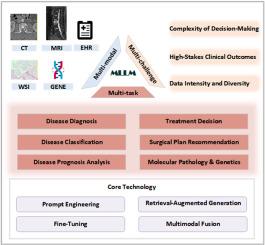
Large Language Models (LLMs), represented by the Generative Pretrained Transformer (GPT), are profoundly transforming the healthcare sector. Spine medicine, a discipline heavily reliant on complex imaging data, detailed clinical records, and evidence-based medical practice, serves as an ideal testing ground for exploring and applying these advanced artificial intelligence technologies. It holds the promise of optimizing clinical workflows, enhancing the quality of diagnosis and treatment decisions, and improving patient communication.
We systematically searched PubMed and Embase from January 2023 to September 2025 for studies investigating LLMs in spinal diseases. Original research articles published in English with a Journal Impact Factor (JIF) ≥ 3.0 were included. Reviews, case reports, animal studies, and non-orthopedic topics were excluded. Data from eligible studies were extracted and narratively synthesized.
This review aims to systematically and comprehensively examine the current state of clinical applications of medical large models and related intelligent systems in the field of spinal diseases. The focus is on analyzing their core technical pathways, specific clinical application scenarios, and their medical value, and performance evaluation results, thereby identifying current opportunities and key challenges. Furthermore, it anticipates future developments, from leveraging general-purpose models to constructing specialized models based on high-quality, large-scale, multimodal spine-specific datasets.
The translational potential of this article: The translational potential of this article lies in its provision of a comprehensive roadmap and practical framework for implementing artificial intelligence in spinal surgery. It systematically synthesizes core application scenarios for large language models—including clinical documentation assistance and preoperative planning—while explicitly addressing four critical challenges requiring resolution for successful clinical integration: regulatory compliance, data privacy protection, algorithmic bias mitigation, and workflow integration. It establishes an actionable foundation for collaborative efforts among clinicians, developers, and policymakers to deploy safe, effective, and compliant AI tools in spinal care.
Abstract Image

医学大语言模型和系统在脊柱疾病的临床应用:现状、挑战和未来展望
以生成式预训练转换器(GPT)为代表的大型语言模型(llm)正在深刻地改变医疗保健行业。脊柱医学是一门高度依赖于复杂影像数据、详细临床记录和循证医学实践的学科,是探索和应用这些先进人工智能技术的理想试验场。它有望优化临床工作流程,提高诊断和治疗决策的质量,并改善患者沟通。从2023年1月到2025年9月,我们系统地检索了PubMed和Embase关于脊柱疾病法学硕士的研究。纳入期刊影响因子(JIF)≥3.0的英文原创研究文章。综述、病例报告、动物研究和非骨科主题被排除在外。从符合条件的研究中提取数据并进行叙述性综合。本文旨在系统、全面地综述医学大模型及相关智能系统在脊柱疾病领域的临床应用现状。重点分析其核心技术路径、具体临床应用场景、医疗价值和绩效评估结果,从而识别当前的机遇和主要挑战。此外,它还预测了未来的发展,从利用通用模型到基于高质量、大规模、多模态脊柱特定数据集构建专门模型。本文的翻译潜力:本文的翻译潜力在于它提供了在脊柱外科中实施人工智能的全面路线图和实用框架。它系统地综合了大型语言模型的核心应用场景,包括临床文档辅助和术前规划,同时明确解决了成功临床集成所需解决的四个关键挑战:法规遵从性、数据隐私保护、算法偏见缓解和工作流集成。它为临床医生、开发人员和政策制定者之间的协作努力奠定了可操作的基础,以便在脊柱护理中部署安全、有效和合规的人工智能工具。
本文章由计算机程序翻译,如有差异,请以英文原文为准。
求助全文
约1分钟内获得全文 求助全文
来源期刊

Journal of Orthopaedic Translation
Journal of Orthopaedic Translation Medicine-Orthopedics and Sports Medicine
CiteScore
11.80
自引率
13.60%
发文量
91
审稿时长
29 days
期刊介绍: The Journal of Orthopaedic Translation (JOT) is the official peer-reviewed, open access journal of the Chinese Speaking Orthopaedic Society (CSOS) and the International Chinese Musculoskeletal Research Society (ICMRS). It is published quarterly, in January, April, July and October, by Elsevier.

×
引用
GB/T 7714-2015
复制
MLA
复制
APA
复制
导出至
BibTeX EndNote RefMan NoteFirst NoteExpress
×
提示
您的信息不完整,为了账户安全,请先补充。
现在去补充
×
提示
您因"违规操作"
具体请查看互助需知
我知道了
×
提示
确定
请完成安全验证×
copy
已复制链接
快去分享给好友吧!
我知道了
右上角分享
点击右上角分享
0
联系我们:info@booksci.cn Book学术提供免费学术资源搜索服务,方便国内外学者检索中英文文献。致力于提供最便捷和优质的服务体验。 Copyright © 2023 布克学术 All rights reserved.
京ICP备2023020795号-1
ghs 京公网安备 11010802042870号
Book学术文献互助
Book学术文献互助群
群 号:604180095
Book学术官方微信
小红书


