Hoang Thi Tue Trang, Nguyen Ngoc Anh Thu, Nguyen Xuan Ha
{"title":"Theoretical exploration of iseluxine as a promising natural antioxidant","authors":"Hoang Thi Tue Trang, Nguyen Ngoc Anh Thu, Nguyen Xuan Ha","doi":"10.1007/s00894-026-06666-y","DOIUrl":null,"url":null,"abstract":"<div><h3>Context</h3><p>Iseluxine (ISL), an isoquinolinone alkaloid derived from <i>Iseia luxurians</i>, exhibits remarkable antioxidant potential, surpassing conventional antioxidants such as vitamin C and BHA in vitro. To clarify its radical-scavenging behavior, density functional theory (DFT) calculations were conducted against key reactive oxygen and nitrogen species (ROS and RNS), including HO<sup>•</sup>, CH₃O<sup>•</sup>, CH₃OO<sup>•</sup>, HOO<sup>•</sup>, NO<sup>•</sup>, NO₂<sup>•</sup>, and O₂<sup>•–</sup>. Three mechanisms, formal hydrogen atom transfer (fHAT), sequential electron transfer–proton transfer (SETPT), and sequential proton loss–electron transfer (SPLET) were examined in gas, water, and lipid-like (pentylethanoate) media. Thermodynamic analysis identified the O6–H bond as the most reactive site due to its low bond dissociation enthalpy and proton affinity. Kinetic modeling indicated efficient HOO<sup>•</sup> scavenging via the SET pathway in water, with a rate constant of 1.8 × 10<sup>6</sup> M⁻<sup>1</sup> s⁻<sup>1</sup>, significantly higher than that of Trolox. ISL also showed strong activity against CH₃O<sup>•</sup>, CH₃OO<sup>•</sup>, and NO₂, but limited reactivity toward NO, and O₂<sup>•–</sup>, emphasizing its selective antioxidant potential.</p><h3>Methods</h3><p>Density functional theory (DFT) calculations were performed using the M06-2X functional with the 6-31G(d,p)//6–311 + + G(d,p) basis set for single-point energy, geometry optimizations and kinetic calculations. Thermodynamic and kinetic parameters were obtained following the QM-ORSA protocol, combined with the SMD solvation model to simulate aqueous and pentylethanoate media.</p></div>","PeriodicalId":651,"journal":{"name":"Journal of Molecular Modeling","volume":"32 3","pages":""},"PeriodicalIF":2.5000,"publicationDate":"2026-02-25","publicationTypes":"Journal Article","fieldsOfStudy":null,"isOpenAccess":false,"openAccessPdf":"","citationCount":"0","resultStr":null,"platform":"Semanticscholar","paperid":null,"PeriodicalName":"Journal of Molecular Modeling","FirstCategoryId":"92","ListUrlMain":"https://link.springer.com/article/10.1007/s00894-026-06666-y","RegionNum":4,"RegionCategory":"化学","ArticlePicture":[],"TitleCN":null,"AbstractTextCN":null,"PMCID":null,"EPubDate":"","PubModel":"","JCR":"Q4","JCRName":"BIOCHEMISTRY & MOLECULAR BIOLOGY","Score":null,"Total":0}
引用次数: 0
Abstract
Context
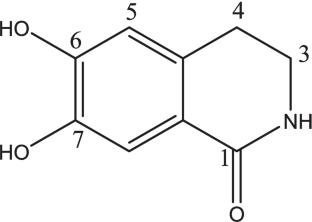
Iseluxine (ISL), an isoquinolinone alkaloid derived from Iseia luxurians, exhibits remarkable antioxidant potential, surpassing conventional antioxidants such as vitamin C and BHA in vitro. To clarify its radical-scavenging behavior, density functional theory (DFT) calculations were conducted against key reactive oxygen and nitrogen species (ROS and RNS), including HO•, CH₃O•, CH₃OO•, HOO•, NO•, NO₂•, and O₂•–. Three mechanisms, formal hydrogen atom transfer (fHAT), sequential electron transfer–proton transfer (SETPT), and sequential proton loss–electron transfer (SPLET) were examined in gas, water, and lipid-like (pentylethanoate) media. Thermodynamic analysis identified the O6–H bond as the most reactive site due to its low bond dissociation enthalpy and proton affinity. Kinetic modeling indicated efficient HOO• scavenging via the SET pathway in water, with a rate constant of 1.8 × 10⁶ M⁻1 s⁻1, significantly higher than that of Trolox. ISL also showed strong activity against CH₃O•, CH₃OO•, and NO₂, but limited reactivity toward NO, and O₂•–, emphasizing its selective antioxidant potential.
Methods
Density functional theory (DFT) calculations were performed using the M06-2X functional with the 6-31G(d,p)//6–311 + + G(d,p) basis set for single-point energy, geometry optimizations and kinetic calculations. Thermodynamic and kinetic parameters were obtained following the QM-ORSA protocol, combined with the SMD solvation model to simulate aqueous and pentylethanoate media.
期刊介绍:
The Journal of Molecular Modeling focuses on "hardcore" modeling, publishing high-quality research and reports. Founded in 1995 as a purely electronic journal, it has adapted its format to include a full-color print edition, and adjusted its aims and scope fit the fast-changing field of molecular modeling, with a particular focus on three-dimensional modeling.
Today, the journal covers all aspects of molecular modeling including life science modeling; materials modeling; new methods; and computational chemistry.
Topics include computer-aided molecular design; rational drug design, de novo ligand design, receptor modeling and docking; cheminformatics, data analysis, visualization and mining; computational medicinal chemistry; homology modeling; simulation of peptides, DNA and other biopolymers; quantitative structure-activity relationships (QSAR) and ADME-modeling; modeling of biological reaction mechanisms; and combined experimental and computational studies in which calculations play a major role.

 求助内容:
求助内容: 应助结果提醒方式:

 京公网安备 11010802042870号


