Rachel Layton, David Beggs, Peter Mansell, Andrew Fisher, Daniel Layton, Brint Gardner, David Williams, Kelly Stanger
{"title":"A non-AI preliminary algorithm for the prediction and detection of highly pathogenic African swine fever in pigs using health monitoring collars.","authors":"Rachel Layton, David Beggs, Peter Mansell, Andrew Fisher, Daniel Layton, Brint Gardner, David Williams, Kelly Stanger","doi":"10.1017/awf.2026.10060","DOIUrl":null,"url":null,"abstract":"<p><p>Collar monitoring devices are used in animals for the minimally invasive collection of physiological data, using software and algorithms to provide general health trends. There is potential to utilise the raw data collected from these devices to improve animal monitoring strategies and intervention points in animal disease studies. We aimed to develop an algorithm for the early detection of highly pathogenic African swine fever disease in research pigs (<i>Sus scrofa</i>), using data collected via modified PetPace<sup>TM</sup> health monitoring collars. Pigs from two other studies (n = 6 per study, total n = 12) were opportunistically available and fitted with collar monitors for the daily collection of pulse rate, respiratory rate and heart rate variability, prior to and after experimental challenge with highly pathogenic African swine fever virus. Collar monitors detected a decreased mean, and increased variability, of pulse rate and heart rate variability in pigs post-challenge, which was not detected by single daily point-in-time measurements. The incidence of abnormal pulse rate, respiratory rate and heart rate variability readings increased in pigs after infection with highly pathogenic African swine fever, with increasing abnormal readings occurring both prior to the onset of, and during, clinical disease. A preliminary non-AI algorithm utilising these data detected disease in 100%, and predicted disease onset in 67%, of infected pigs. This paper describes how health-monitoring collars can be used to improve the early detection of African swine fever disease in pigs. Additionally, it provides a potential framework for developing and using non-AI algorithms in other disease models, to enhance animal monitoring and welfare outcomes in research animals.</p>","PeriodicalId":520228,"journal":{"name":"Animal welfare (South Mimms, England)","volume":"35 ","pages":"e8"},"PeriodicalIF":2.3000,"publicationDate":"2026-01-28","publicationTypes":"Journal Article","fieldsOfStudy":null,"isOpenAccess":false,"openAccessPdf":"https://www.ncbi.nlm.nih.gov/pmc/articles/PMC12895198/pdf/","citationCount":"0","resultStr":null,"platform":"Semanticscholar","paperid":null,"PeriodicalName":"Animal welfare (South Mimms, England)","FirstCategoryId":"1085","ListUrlMain":"https://doi.org/10.1017/awf.2026.10060","RegionNum":0,"RegionCategory":null,"ArticlePicture":[],"TitleCN":null,"AbstractTextCN":null,"PMCID":null,"EPubDate":"2026/1/1 0:00:00","PubModel":"eCollection","JCR":"","JCRName":"","Score":null,"Total":0}
引用次数: 0
Abstract
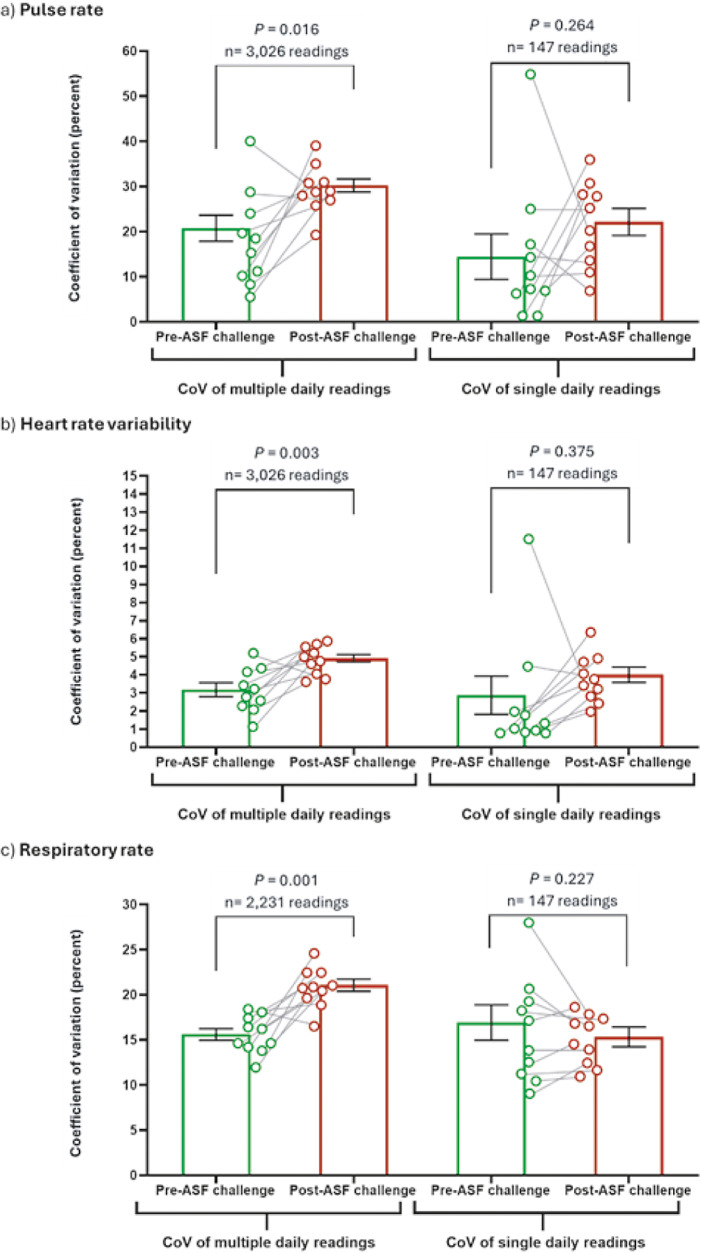
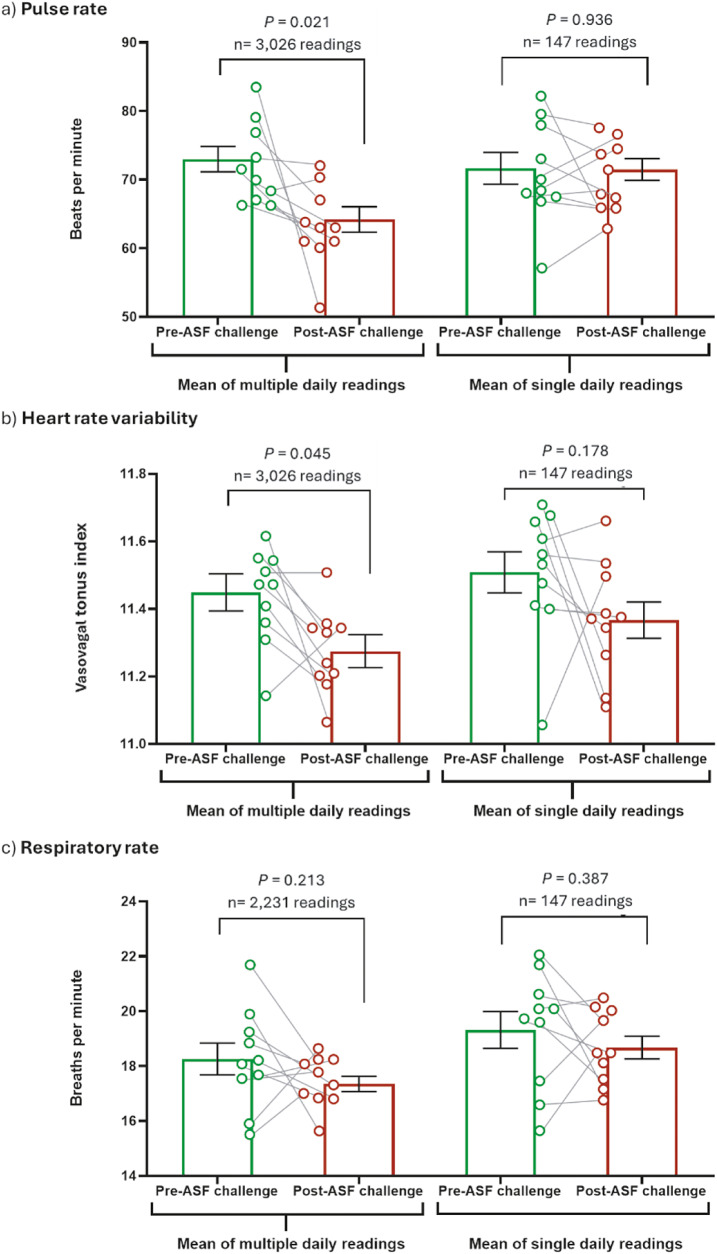
Collar monitoring devices are used in animals for the minimally invasive collection of physiological data, using software and algorithms to provide general health trends. There is potential to utilise the raw data collected from these devices to improve animal monitoring strategies and intervention points in animal disease studies. We aimed to develop an algorithm for the early detection of highly pathogenic African swine fever disease in research pigs (Sus scrofa), using data collected via modified PetPaceTM health monitoring collars. Pigs from two other studies (n = 6 per study, total n = 12) were opportunistically available and fitted with collar monitors for the daily collection of pulse rate, respiratory rate and heart rate variability, prior to and after experimental challenge with highly pathogenic African swine fever virus. Collar monitors detected a decreased mean, and increased variability, of pulse rate and heart rate variability in pigs post-challenge, which was not detected by single daily point-in-time measurements. The incidence of abnormal pulse rate, respiratory rate and heart rate variability readings increased in pigs after infection with highly pathogenic African swine fever, with increasing abnormal readings occurring both prior to the onset of, and during, clinical disease. A preliminary non-AI algorithm utilising these data detected disease in 100%, and predicted disease onset in 67%, of infected pigs. This paper describes how health-monitoring collars can be used to improve the early detection of African swine fever disease in pigs. Additionally, it provides a potential framework for developing and using non-AI algorithms in other disease models, to enhance animal monitoring and welfare outcomes in research animals.



 求助内容:
求助内容: 应助结果提醒方式:

 京公网安备 11010802042870号


