Identification of Novel Hub Genes and Potential Signaling Pathways with the Pathogenesis of Oral Cavity Squamous Cell Carcinoma Based on Bioinformatics Analysis.
Mohammad Reza Eskandarion, Mojtaba Vand Rajabpour, Shahroo Etemad-Moghadam, Farrokh Heidari, Seyede FatemeMahmoudi Hashemi, Hadiseh Mohammadpour, Amir Mohammad Karimi, Ebrahim Karimi, Mojgan Alaeddini
{"title":"Identification of Novel Hub Genes and Potential Signaling Pathways with the Pathogenesis of Oral Cavity Squamous Cell Carcinoma Based on Bioinformatics Analysis.","authors":"Mohammad Reza Eskandarion, Mojtaba Vand Rajabpour, Shahroo Etemad-Moghadam, Farrokh Heidari, Seyede FatemeMahmoudi Hashemi, Hadiseh Mohammadpour, Amir Mohammad Karimi, Ebrahim Karimi, Mojgan Alaeddini","doi":"10.1177/11769351261417703","DOIUrl":null,"url":null,"abstract":"<p><strong>Background & aim: </strong>Oral squamous cell carcinoma (OSCC) is a devastating disease with poor prognosis and low survival rates, despite advancements in diagnosis and treatment. Early detection and identification of molecular targets are crucial for improving patient outcomes. This study aims to identify differentially expressed genes (DEGs) and key molecular pathways involved in the OSCC. This study's findings will contribute to the development of effective targeted therapies, ultimately improving the prognosis and survival rates of OSCC patients.</p><p><strong>Materials & methods: </strong>Three gene expression profiles (GSE37991, GSE30784, and GSE107591) from the GEO database were analyzed for differentially expressed genes using EnrichR. Subsequent downstream analyses of the selected module genes were conducted using various bioinformatics tools including STRING, Cytoscape, GEPIA, cBioPortal, NetworkAnalyst, MirWalk, and a bipartite miRNA-mRNA correlation network.</p><p><strong>Result: </strong>The reanalysis indicated that the Toll-like receptor (TLR) signaling pathway plays a significant role in the development of oral SCC and CXCL8, CCL5, CXCL10, STAT1, IL1B, and TLR2 genes were up-regulated and enriched significantly in the signaling pathways' interactions in oral SCC. Genetic mutation analysis of hub genes in OSCC revealed that STAT1 have 2.5% mutation rate and 0% for other genes. It was revealed that the development and prediction of OSCC may be affected by hsa-mir-146a-5 and hsa-mir-155-5p.</p><p><strong>Conclusion: </strong>Novel potential biomarkers and signaling pathways associated with OSCC have been identified, which may be important in the transformation of OSCC adenocarcinoma and may serve as therapeutic targets for OSCC.</p>","PeriodicalId":35418,"journal":{"name":"Cancer Informatics","volume":"25 ","pages":"11769351261417703"},"PeriodicalIF":2.5000,"publicationDate":"2026-02-13","publicationTypes":"Journal Article","fieldsOfStudy":null,"isOpenAccess":false,"openAccessPdf":"https://www.ncbi.nlm.nih.gov/pmc/articles/PMC12905109/pdf/","citationCount":"0","resultStr":null,"platform":"Semanticscholar","paperid":null,"PeriodicalName":"Cancer Informatics","FirstCategoryId":"1085","ListUrlMain":"https://doi.org/10.1177/11769351261417703","RegionNum":0,"RegionCategory":null,"ArticlePicture":[],"TitleCN":null,"AbstractTextCN":null,"PMCID":null,"EPubDate":"2026/1/1 0:00:00","PubModel":"eCollection","JCR":"Q2","JCRName":"MATHEMATICAL & COMPUTATIONAL BIOLOGY","Score":null,"Total":0}
引用次数: 0
Abstract
Background & aim: Oral squamous cell carcinoma (OSCC) is a devastating disease with poor prognosis and low survival rates, despite advancements in diagnosis and treatment. Early detection and identification of molecular targets are crucial for improving patient outcomes. This study aims to identify differentially expressed genes (DEGs) and key molecular pathways involved in the OSCC. This study's findings will contribute to the development of effective targeted therapies, ultimately improving the prognosis and survival rates of OSCC patients.
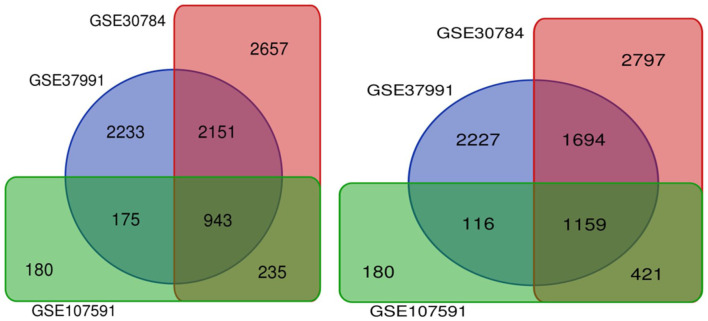
Materials & methods: Three gene expression profiles (GSE37991, GSE30784, and GSE107591) from the GEO database were analyzed for differentially expressed genes using EnrichR. Subsequent downstream analyses of the selected module genes were conducted using various bioinformatics tools including STRING, Cytoscape, GEPIA, cBioPortal, NetworkAnalyst, MirWalk, and a bipartite miRNA-mRNA correlation network.
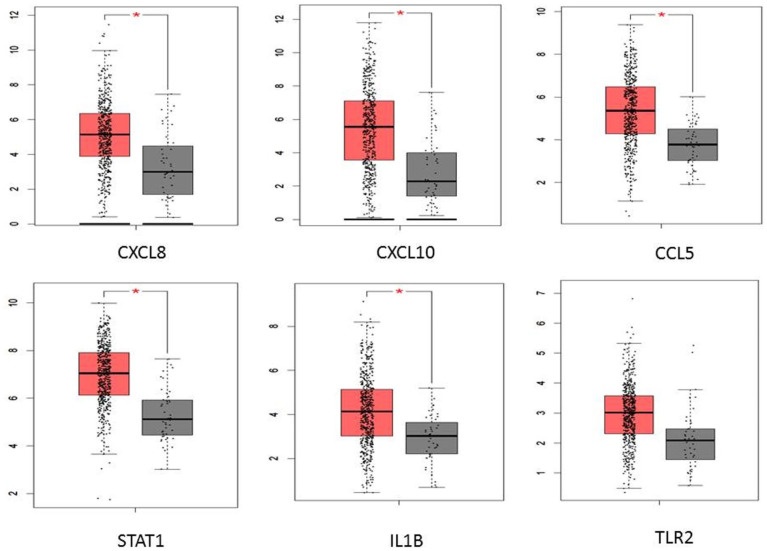
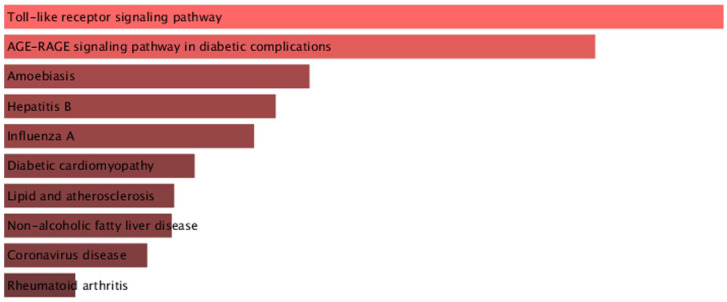
Result: The reanalysis indicated that the Toll-like receptor (TLR) signaling pathway plays a significant role in the development of oral SCC and CXCL8, CCL5, CXCL10, STAT1, IL1B, and TLR2 genes were up-regulated and enriched significantly in the signaling pathways' interactions in oral SCC. Genetic mutation analysis of hub genes in OSCC revealed that STAT1 have 2.5% mutation rate and 0% for other genes. It was revealed that the development and prediction of OSCC may be affected by hsa-mir-146a-5 and hsa-mir-155-5p.
Conclusion: Novel potential biomarkers and signaling pathways associated with OSCC have been identified, which may be important in the transformation of OSCC adenocarcinoma and may serve as therapeutic targets for OSCC.
期刊介绍:
The field of cancer research relies on advances in many other disciplines, including omics technology, mass spectrometry, radio imaging, computer science, and biostatistics. Cancer Informatics provides open access to peer-reviewed high-quality manuscripts reporting bioinformatics analysis of molecular genetics and/or clinical data pertaining to cancer, emphasizing the use of machine learning, artificial intelligence, statistical algorithms, advanced imaging techniques, data visualization, and high-throughput technologies. As the leading journal dedicated exclusively to the report of the use of computational methods in cancer research and practice, Cancer Informatics leverages methodological improvements in systems biology, genomics, proteomics, metabolomics, and molecular biochemistry into the fields of cancer detection, treatment, classification, risk-prediction, prevention, outcome, and modeling.


 求助内容:
求助内容: 应助结果提醒方式:

 京公网安备 11010802042870号


