Decimo Silvio Chiarenza , Enrico E. Verrina , Carolina Bigatti , Gianluca Caridi , Agnese Spennacchio , Xhuliana Kajana , Massimiliano De Bortoli , Paolo Cravedi , Andrea Angeletti
{"title":"B-Cell Depletion in Glomerular Diseases: Not Always as Safe as We May Think","authors":"Decimo Silvio Chiarenza , Enrico E. Verrina , Carolina Bigatti , Gianluca Caridi , Agnese Spennacchio , Xhuliana Kajana , Massimiliano De Bortoli , Paolo Cravedi , Andrea Angeletti","doi":"10.1016/j.xkme.2026.101268","DOIUrl":null,"url":null,"abstract":"<div><div>B-cell depletion with the chimeric anti-CD20 monoclonal antibody rituximab has revolutionized the treatment of glomerular diseases. Obinutuzumab, a type II glycoengineered anti-CD20 humanized monoclonal antibody, is increasingly being employed as an alternative to rituximab in the management of difficult-to-treat cases, due to deeper and more persistent B-cell depletion. However, its safety profile, especially in pediatric and young adults with glomerular diseases, remains to be fully elucidated.</div><div>Herein, we report 3 patients who developed severe hematologic toxicity after obinutuzumab infusion. Two patients with steroid-dependent nephrotic syndrome developed severe neutropenia (grade 4) at 4-6 weeks after obinutuzumab administration. Both cases were complicated by infections requiring antibiotic therapy, and 1 patient also required granulocyte colony-stimulating factor support. The third child, affected by membranous nephropathy, developed persistent normocytic anemia, necessitating chronic treatment with erythropoiesis-stimulating agents.</div><div>Cytopenia has been described in patients receiving obinutuzumab for the treatment of hematologic malignancies and in subjects with rheumatological conditions. In these conditions, obinutuzumab is often associated with other immune-targeting compounds. Herein, we show that such complication can occur also individuals with glomerular diseases receiving obinutuzumab as the sole treatment. This element should carefully considered when evaluating this treatment, especially for young patients.</div></div>","PeriodicalId":17885,"journal":{"name":"Kidney Medicine","volume":"8 3","pages":"Article 101268"},"PeriodicalIF":3.4000,"publicationDate":"2026-03-01","publicationTypes":"Journal Article","fieldsOfStudy":null,"isOpenAccess":false,"openAccessPdf":"","citationCount":"0","resultStr":null,"platform":"Semanticscholar","paperid":null,"PeriodicalName":"Kidney Medicine","FirstCategoryId":"1085","ListUrlMain":"https://www.sciencedirect.com/science/article/pii/S2590059526000294","RegionNum":0,"RegionCategory":null,"ArticlePicture":[],"TitleCN":null,"AbstractTextCN":null,"PMCID":null,"EPubDate":"2026/1/14 0:00:00","PubModel":"Epub","JCR":"Q1","JCRName":"UROLOGY & NEPHROLOGY","Score":null,"Total":0}
引用次数: 0
Abstract
B-cell depletion with the chimeric anti-CD20 monoclonal antibody rituximab has revolutionized the treatment of glomerular diseases. Obinutuzumab, a type II glycoengineered anti-CD20 humanized monoclonal antibody, is increasingly being employed as an alternative to rituximab in the management of difficult-to-treat cases, due to deeper and more persistent B-cell depletion. However, its safety profile, especially in pediatric and young adults with glomerular diseases, remains to be fully elucidated.
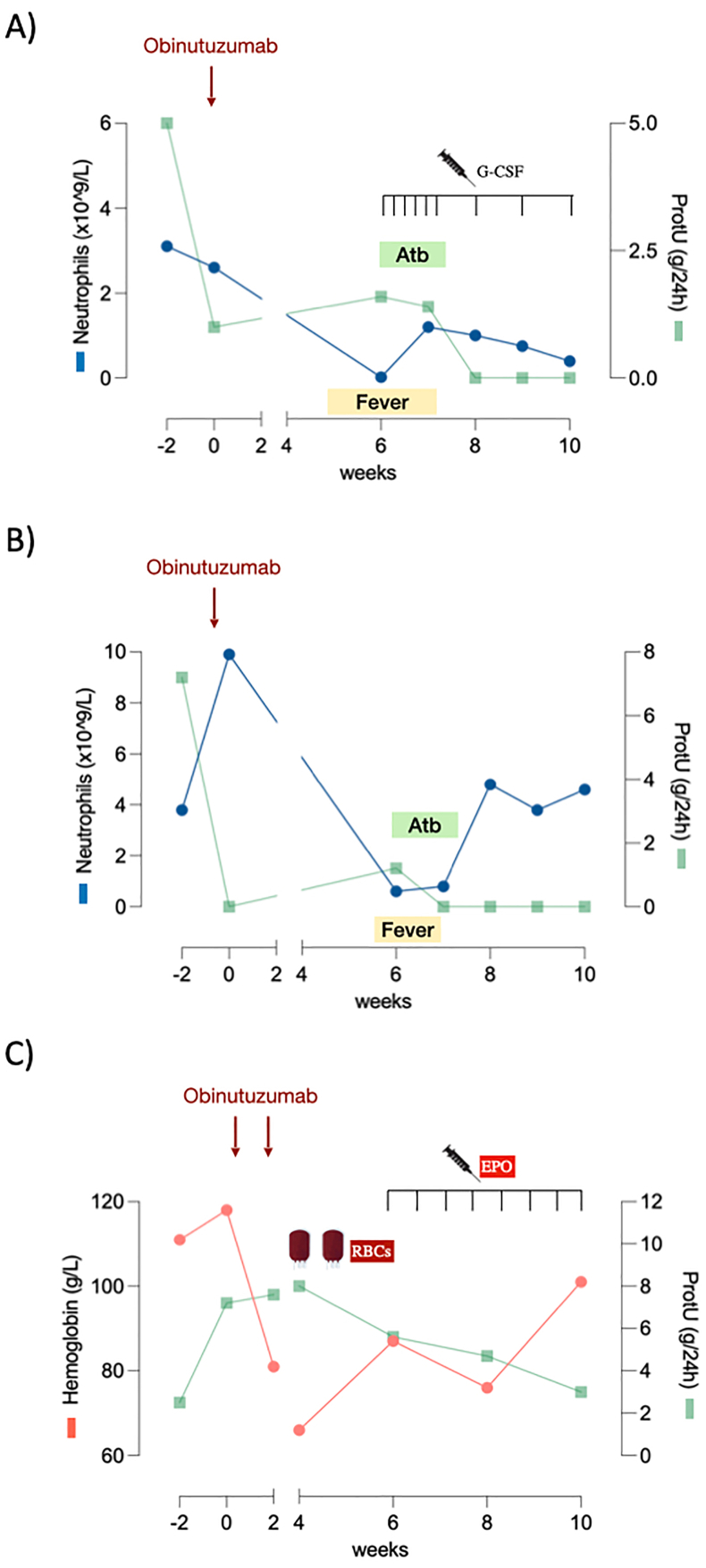
Herein, we report 3 patients who developed severe hematologic toxicity after obinutuzumab infusion. Two patients with steroid-dependent nephrotic syndrome developed severe neutropenia (grade 4) at 4-6 weeks after obinutuzumab administration. Both cases were complicated by infections requiring antibiotic therapy, and 1 patient also required granulocyte colony-stimulating factor support. The third child, affected by membranous nephropathy, developed persistent normocytic anemia, necessitating chronic treatment with erythropoiesis-stimulating agents.
Cytopenia has been described in patients receiving obinutuzumab for the treatment of hematologic malignancies and in subjects with rheumatological conditions. In these conditions, obinutuzumab is often associated with other immune-targeting compounds. Herein, we show that such complication can occur also individuals with glomerular diseases receiving obinutuzumab as the sole treatment. This element should carefully considered when evaluating this treatment, especially for young patients.


 求助内容:
求助内容: 应助结果提醒方式:

 京公网安备 11010802042870号


