Mehrnaz Mostafapour, Kate Barbosa, Jun Ji, Dov B Kagan, Natalie Gagne, Qian Yang, Gary E Garber, Harminder Singh
{"title":"Medico-legal cases involving gastroenterologists in Canada between 2017 and 2021.","authors":"Mehrnaz Mostafapour, Kate Barbosa, Jun Ji, Dov B Kagan, Natalie Gagne, Qian Yang, Gary E Garber, Harminder Singh","doi":"10.1093/jcag/gwaf035","DOIUrl":null,"url":null,"abstract":"<p><strong>Background: </strong>Gastroenterology may be a medical specialty with higher-than-average medico-legal risk. We evaluated the characteristics of medico-legal proceedings relating to the delivery of gastroenterology medical care in Canada during a five-year time period.</p><p><strong>Methods: </strong>We used a repository of Canadian medico-legal cases to identify cases between 2017 and 2021 involving a gastroenterologist. We analyzed patient, provider, team, and system contributing factors using a previously published Contributing Factors Framework and patient harm using a previously published coding system.</p><p><strong>Results: </strong>We identified 223 cases involving 229 gastroenterologists with no preponderance by years of experience. Gastroenterologists had a higher rate of civil legal actions than the average for all other physician specialties in the database. 59% involved patients older than 50 years of age, 10% with digestive tract malignancies, and 10% with IBD. 51% of involved patients had a healthcare-related harm that had a negative effect on their health or quality of life. 35% had avoidable harm. Patients most commonly reported a perception of deficient assessment (35%), communication breakdowns (27%), unprofessional manner (25%), diagnostic error (22%), and inadequate monitoring or follow-up (20%). 50% of cases were criticized by peer experts, of which they deemed 45% involved communication breakdown with patients, 38% involved clinical decision-making, 30% situational awareness, 25% documentation, and 15% communication among providers.</p><p><strong>Conclusions: </strong>Communication issues remain a major contributing factor to medico-legal cases involving gastroenterologists. Integrated risk-reduction strategies may include enhancing diagnostic rigor through improved clinical protocols and decision support tools and strengthening communication at all levels of care.</p>","PeriodicalId":17263,"journal":{"name":"Journal of the Canadian Association of Gastroenterology","volume":"9 1","pages":"49-56"},"PeriodicalIF":2.7000,"publicationDate":"2026-01-13","publicationTypes":"Journal Article","fieldsOfStudy":null,"isOpenAccess":false,"openAccessPdf":"https://www.ncbi.nlm.nih.gov/pmc/articles/PMC12884853/pdf/","citationCount":"0","resultStr":null,"platform":"Semanticscholar","paperid":null,"PeriodicalName":"Journal of the Canadian Association of Gastroenterology","FirstCategoryId":"1085","ListUrlMain":"https://doi.org/10.1093/jcag/gwaf035","RegionNum":0,"RegionCategory":null,"ArticlePicture":[],"TitleCN":null,"AbstractTextCN":null,"PMCID":null,"EPubDate":"2026/2/1 0:00:00","PubModel":"eCollection","JCR":"","JCRName":"","Score":null,"Total":0}
引用次数: 0
Abstract
Background: Gastroenterology may be a medical specialty with higher-than-average medico-legal risk. We evaluated the characteristics of medico-legal proceedings relating to the delivery of gastroenterology medical care in Canada during a five-year time period.
Methods: We used a repository of Canadian medico-legal cases to identify cases between 2017 and 2021 involving a gastroenterologist. We analyzed patient, provider, team, and system contributing factors using a previously published Contributing Factors Framework and patient harm using a previously published coding system.
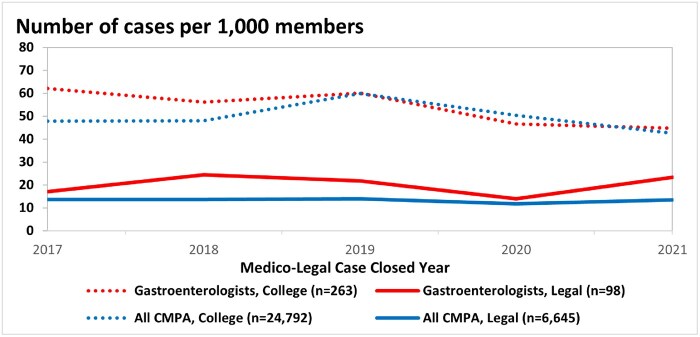
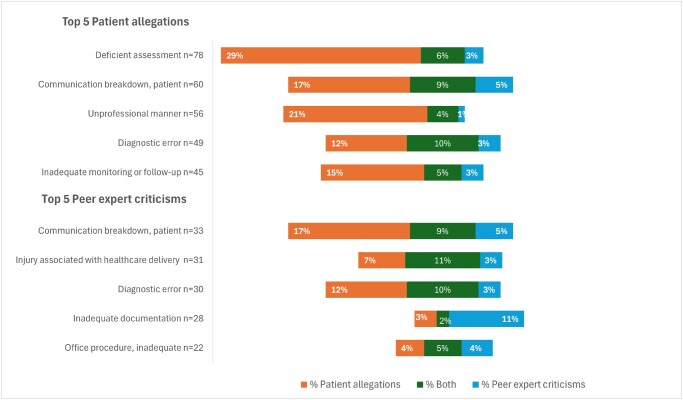
Results: We identified 223 cases involving 229 gastroenterologists with no preponderance by years of experience. Gastroenterologists had a higher rate of civil legal actions than the average for all other physician specialties in the database. 59% involved patients older than 50 years of age, 10% with digestive tract malignancies, and 10% with IBD. 51% of involved patients had a healthcare-related harm that had a negative effect on their health or quality of life. 35% had avoidable harm. Patients most commonly reported a perception of deficient assessment (35%), communication breakdowns (27%), unprofessional manner (25%), diagnostic error (22%), and inadequate monitoring or follow-up (20%). 50% of cases were criticized by peer experts, of which they deemed 45% involved communication breakdown with patients, 38% involved clinical decision-making, 30% situational awareness, 25% documentation, and 15% communication among providers.
Conclusions: Communication issues remain a major contributing factor to medico-legal cases involving gastroenterologists. Integrated risk-reduction strategies may include enhancing diagnostic rigor through improved clinical protocols and decision support tools and strengthening communication at all levels of care.



 求助内容:
求助内容: 应助结果提醒方式:

 京公网安备 11010802042870号


