Communicating Needs and Features of IBD Experiences study: Canadian individuals and healthcare professional perceptions of the experience and impact of symptoms of moderate-to-severe ulcerative colitis and Crohn's disease.
Vipul Jairath, Talat Bessissow, Jennifer Glass, Marta Braun, Theresa Hunter Gibble, Taline Movsessian, Christian Atkinson, Hilary Ellis, Thomas Dewar, Remo Panaccione
{"title":"Communicating Needs and Features of IBD Experiences study: Canadian individuals and healthcare professional perceptions of the experience and impact of symptoms of moderate-to-severe ulcerative colitis and Crohn's disease.","authors":"Vipul Jairath, Talat Bessissow, Jennifer Glass, Marta Braun, Theresa Hunter Gibble, Taline Movsessian, Christian Atkinson, Hilary Ellis, Thomas Dewar, Remo Panaccione","doi":"10.1093/jcag/gwaf036","DOIUrl":null,"url":null,"abstract":"<p><strong>Background: </strong>Crohn's disease (CD) and ulcerative colitis (UC) are chronic inflammatory conditions of the gastrointestinal tract associated with impaired quality of life. The Communicating Needs and Features of IBD Experiences (CONFIDE) study aimed to assess the impact of CD/UC symptoms on the lives of people with IBD and elucidate any communication gaps between healthcare professionals (HCPs) and people with IBD. The current Canadian study replicates the CONFIDE study previously conducted in the United States, Europe, and Japan.</p><p><strong>Methods: </strong>Online cross-sectional surveys were conducted between February and April 2023 among people with moderate-to-severe CD/UC and prescribing HCPs. Disease severity was defined using criteria based on previous treatment, steroid use, and/or hospitalization. Data were presented using descriptive analyses.</p><p><strong>Results: </strong>Surveys were completed by 107 individuals with CD, 82 individuals with UC, and 53 HCPs. Bowel urgency was the second most common symptom reported by individuals, following diarrhoea, and it was the most frequently reported symptom leading to declining participation in work/school, social events, and physical exercise. HCP-perceived symptoms with the greatest impact on people with IBD and their treatment decisions were diarrhoea and blood in stool. While most HCPs reported proactive discussion of bowel urgency with their patients, more than a third of those experiencing this symptom reported discussing it infrequently during HCP appointments.</p><p><strong>Conclusions: </strong>The results indicate that CD/UC symptoms have a substantial impact on the daily lives of people with IBD, even among those receiving advanced therapies. Although both HCPs and individuals with IBD reported a substantial symptom burden, their perceptions regarding the most impactful symptoms differed. Bowel urgency was identified as a common yet overlooked symptom and should be incorporated into regular IBD assessments.</p>","PeriodicalId":17263,"journal":{"name":"Journal of the Canadian Association of Gastroenterology","volume":"9 1","pages":"38-48"},"PeriodicalIF":2.7000,"publicationDate":"2026-01-14","publicationTypes":"Journal Article","fieldsOfStudy":null,"isOpenAccess":false,"openAccessPdf":"https://www.ncbi.nlm.nih.gov/pmc/articles/PMC12884850/pdf/","citationCount":"0","resultStr":null,"platform":"Semanticscholar","paperid":null,"PeriodicalName":"Journal of the Canadian Association of Gastroenterology","FirstCategoryId":"1085","ListUrlMain":"https://doi.org/10.1093/jcag/gwaf036","RegionNum":0,"RegionCategory":null,"ArticlePicture":[],"TitleCN":null,"AbstractTextCN":null,"PMCID":null,"EPubDate":"2026/2/1 0:00:00","PubModel":"eCollection","JCR":"","JCRName":"","Score":null,"Total":0}
引用次数: 0
Abstract
Background: Crohn's disease (CD) and ulcerative colitis (UC) are chronic inflammatory conditions of the gastrointestinal tract associated with impaired quality of life. The Communicating Needs and Features of IBD Experiences (CONFIDE) study aimed to assess the impact of CD/UC symptoms on the lives of people with IBD and elucidate any communication gaps between healthcare professionals (HCPs) and people with IBD. The current Canadian study replicates the CONFIDE study previously conducted in the United States, Europe, and Japan.
Methods: Online cross-sectional surveys were conducted between February and April 2023 among people with moderate-to-severe CD/UC and prescribing HCPs. Disease severity was defined using criteria based on previous treatment, steroid use, and/or hospitalization. Data were presented using descriptive analyses.
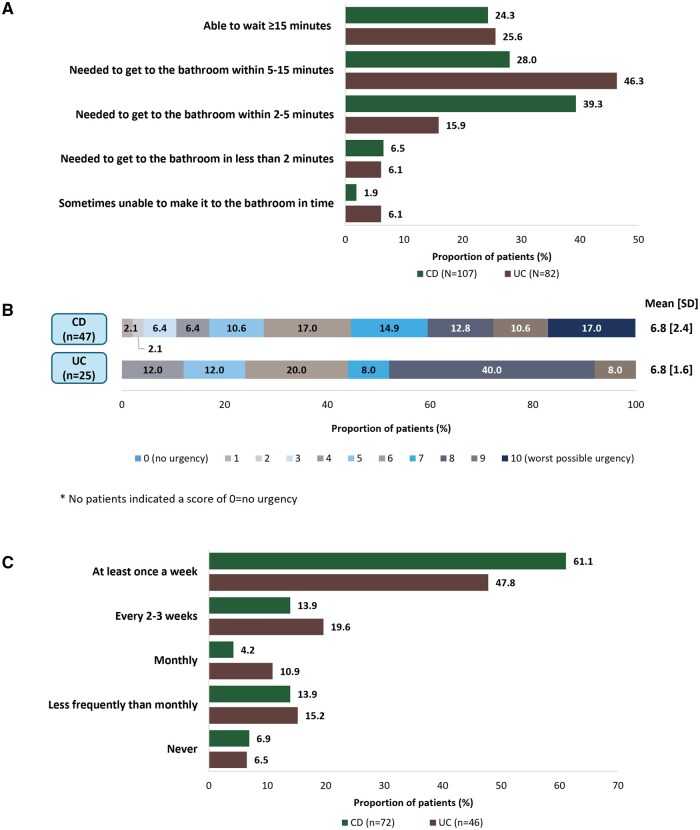
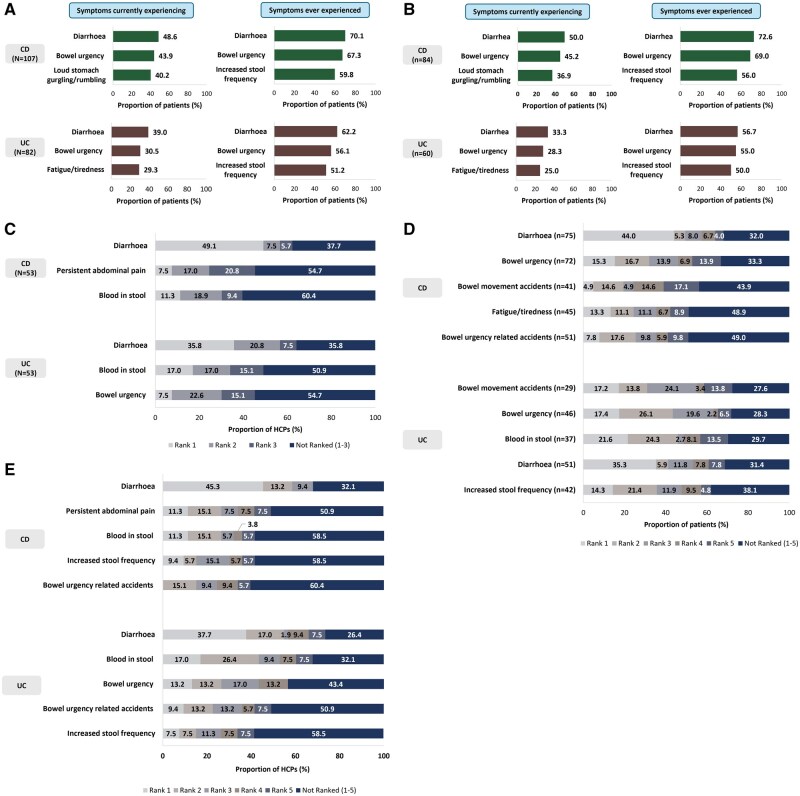
Results: Surveys were completed by 107 individuals with CD, 82 individuals with UC, and 53 HCPs. Bowel urgency was the second most common symptom reported by individuals, following diarrhoea, and it was the most frequently reported symptom leading to declining participation in work/school, social events, and physical exercise. HCP-perceived symptoms with the greatest impact on people with IBD and their treatment decisions were diarrhoea and blood in stool. While most HCPs reported proactive discussion of bowel urgency with their patients, more than a third of those experiencing this symptom reported discussing it infrequently during HCP appointments.
Conclusions: The results indicate that CD/UC symptoms have a substantial impact on the daily lives of people with IBD, even among those receiving advanced therapies. Although both HCPs and individuals with IBD reported a substantial symptom burden, their perceptions regarding the most impactful symptoms differed. Bowel urgency was identified as a common yet overlooked symptom and should be incorporated into regular IBD assessments.



 求助内容:
求助内容: 应助结果提醒方式:

 京公网安备 11010802042870号


