Edna Y Romero, John V Lavigne, Daniel Dickson, Karen R Gouze, Joyce Hopkins, Maryse H Richards
{"title":"The Role of Neighborhood and Parenting in the Development of Effortful Control During Early Childhood.","authors":"Edna Y Romero, John V Lavigne, Daniel Dickson, Karen R Gouze, Joyce Hopkins, Maryse H Richards","doi":"10.1007/s10566-025-09868-2","DOIUrl":null,"url":null,"abstract":"<p><strong>Background: </strong>Effortful control (EC) is a self-regulatory ability that is linked to many individual child outcomes and is influenced by ecological variables (e.g., family, parenting). The influence of neighborhood-level variables has not been thoroughly examined.</p><p><strong>Objective: </strong>The present study examined poorer neighborhood quality as a predictor of EC development, and the moderating role of parenting in relation to poor neighborhood quality and EC development.</p><p><strong>Method: </strong>Latent growth curve modeling analyses were used to assess changes in EC across time in a community sample (N = 796) of 4 year-olds. Subsequent analyses were run to determine the impact of neighborhood quality and the moderating role of parenting in relation to EC development.</p><p><strong>Results: </strong>Analyses indicated that children experienced steady and significant improvements in EC across ages 4, 5, and 6. Independent of socioeconomic status, poorer neighborhood quality significantly predicted age 4 EC level and the growth in EC from ages 4 to 6. Hostile parenting emerged as a significant moderator of the relationship between poorer neighborhood quality and age 4 EC level.</p><p><strong>Conclusions: </strong>This study underscores the importance of examining neighborhood context in relation to individual child outcomes.</p><p><strong>Supplementary information: </strong>The online version contains supplementary material available at 10.1007/s10566-025-09868-2.</p>","PeriodicalId":47479,"journal":{"name":"Child & Youth Care Forum","volume":"55 1","pages":"247-265"},"PeriodicalIF":1.6000,"publicationDate":"2026-01-01","publicationTypes":"Journal Article","fieldsOfStudy":null,"isOpenAccess":false,"openAccessPdf":"https://www.ncbi.nlm.nih.gov/pmc/articles/PMC12882950/pdf/","citationCount":"0","resultStr":null,"platform":"Semanticscholar","paperid":null,"PeriodicalName":"Child & Youth Care Forum","FirstCategoryId":"102","ListUrlMain":"https://doi.org/10.1007/s10566-025-09868-2","RegionNum":4,"RegionCategory":"心理学","ArticlePicture":[],"TitleCN":null,"AbstractTextCN":null,"PMCID":null,"EPubDate":"2025/5/30 0:00:00","PubModel":"Epub","JCR":"Q3","JCRName":"PSYCHOLOGY, DEVELOPMENTAL","Score":null,"Total":0}
引用次数: 0
Abstract
Background: Effortful control (EC) is a self-regulatory ability that is linked to many individual child outcomes and is influenced by ecological variables (e.g., family, parenting). The influence of neighborhood-level variables has not been thoroughly examined.
Objective: The present study examined poorer neighborhood quality as a predictor of EC development, and the moderating role of parenting in relation to poor neighborhood quality and EC development.
Method: Latent growth curve modeling analyses were used to assess changes in EC across time in a community sample (N = 796) of 4 year-olds. Subsequent analyses were run to determine the impact of neighborhood quality and the moderating role of parenting in relation to EC development.
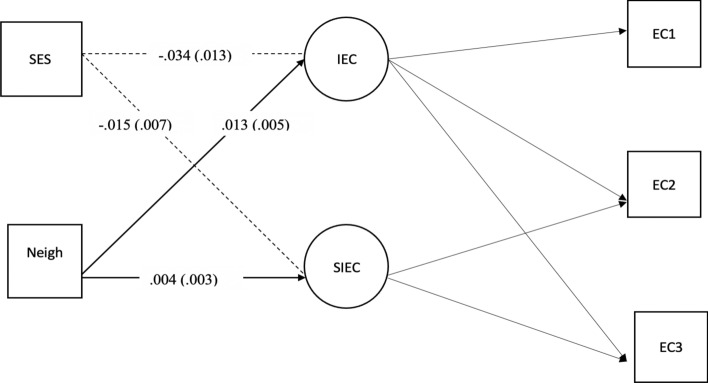
Results: Analyses indicated that children experienced steady and significant improvements in EC across ages 4, 5, and 6. Independent of socioeconomic status, poorer neighborhood quality significantly predicted age 4 EC level and the growth in EC from ages 4 to 6. Hostile parenting emerged as a significant moderator of the relationship between poorer neighborhood quality and age 4 EC level.
Conclusions: This study underscores the importance of examining neighborhood context in relation to individual child outcomes.
Supplementary information: The online version contains supplementary material available at 10.1007/s10566-025-09868-2.
期刊介绍:
Child & Youth Care Forum is a peer-reviewed, multidisciplinary publication that welcomes submissions – original empirical research papers and theoretical reviews as well as invited commentaries – on children, youth, and families. Contributions to Child & Youth Care Forum are submitted by researchers, practitioners, and clinicians across the interrelated disciplines of child psychology, early childhood, education, medical anthropology, pediatrics, pediatric psychology, psychiatry, public policy, school/educational psychology, social work, and sociology as well as government agencies and corporate and nonprofit organizations that seek to advance current knowledge and practice. Child & Youth Care Forum publishes scientifically rigorous, empirical papers and theoretical reviews that have implications for child and adolescent mental health, psychosocial development, assessment, interventions, and services broadly defined. For example, papers may address issues of child and adolescent typical and/or atypical development through effective youth care assessment and intervention practices. In addition, papers may address strategies for helping youth overcome difficulties (e.g., mental health problems) or overcome adversity (e.g., traumatic stress, community violence) as well as all children actualize their potential (e.g., positive psychology goals). Assessment papers that advance knowledge as well as methodological papers with implications for child and youth research and care are also encouraged.



 求助内容:
求助内容: 应助结果提醒方式:

 京公网安备 11010802042870号


