
Impact of bariatric surgery on the gut microbiota and metabolomic profile of the enterohepatic axis in an experimental model of obesity
引用次数: 0
Abstract
Obesity is a complex metabolic disease associated with alterations in the gut microbiota and the metabolism of fatty acids and bile acids. Bariatric surgery can modify this axis, contributing to benefits beyond weight loss, and the response may differ between surgical techniques. This study investigates this differential impact in an experimental model of obesity. Both surgical procedures reduced body weight, although gastric bypass (GB) induced a more sustained weight loss and deeper metabolic changes. GB significantly decreased butyrate levels while increasing bile acids and the abundance of beneficial bacteria such as Akkermansia muciniphila and Bacteroides. Only GB reduced serum TMAO levels, a metabolite linked to cardiovascular risk, possibly through modulation of the hepatic enzyme FMO3. The results indicate that GB exerts a markedly distinct metabolic impact compared to sleeve gastrectomy (SG), which may largely explain its greater clinical efficacy.
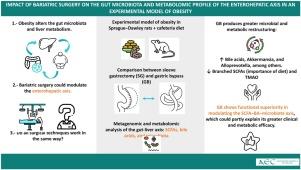
在肥胖实验模型中,减肥手术对肠道微生物群和肠肝轴代谢组学的影响。
肥胖是一种复杂的代谢性疾病,与肠道微生物群的改变以及脂肪酸和胆汁酸的代谢有关。减肥手术可以改变这个轴,除了减肥之外,还能带来其他好处,不同手术技术的效果可能不同。本研究在肥胖实验模型中调查了这种差异的影响。这两种手术都减轻了体重,尽管胃旁路术(GB)引起了更持久的体重减轻和更深层次的代谢变化。GB显著降低了丁酸水平,增加了胆汁酸和有益菌如嗜黏液阿克曼氏菌和拟杆菌的丰度。只有GB降低了血清TMAO水平,这是一种与心血管风险相关的代谢物,可能是通过调节肝酶FMO3来实现的。结果表明,与袖胃切除术(SG)相比,GB具有明显不同的代谢影响,这可能在很大程度上解释了其更高的临床疗效。
本文章由计算机程序翻译,如有差异,请以英文原文为准。
求助全文
约1分钟内获得全文
求助全文

 求助内容:
求助内容: 应助结果提醒方式:

 京公网安备 11010802042870号


