
Phosphate binders suppress glutaminase activity for treatment of cirrhosis and hepatic encephalopathy murine models
IF 6.5
2区 医学
Q1 PHARMACOLOGY & PHARMACY
引用次数: 0
Abstract
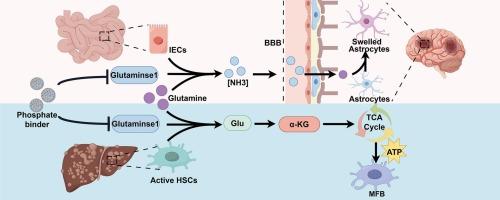
Hyperactivated glutaminase1 (GLS1) promotes the progression of cirrhosis via the reprogramming of hepatic stellate cells (HSCs). Hepatic encephalopathy (HE), the main complication of cirrhosis characterized by abnormal ammonia metabolism, is also associated with increased glutaminase activation in intestinal epithelial cells (IECs). The enzymatic activity of glutaminase depends on inorganic phosphate (Pi). In this study, a retrospective study of serum Pi levels was performed in 185 cirrhosis–HE patients. The pharmacology and pharmacodynamics of Pi binders (sevelamer and lanthanum carbonate) were evaluated in CCl4-induced cirrhosis and both type A and C HE murine models. The biological events downstream of Pi binders were evaluated via glutamate rescue in activated HSCs and GLS1-overexpressing IECs. We found that serum Pi is an independent risk factor for cirrhosis progression to HE. Both binders stimulated HSC senescence and rebalanced interorgan ammonia, alleviating cirrhosis and HE and reversing liver dysfunction. They had better therapeutic effects than L-ornithine L-aspartate (OA). Pi deprivation weakened glutaminase enzymatic activity, lowering collagen and Alpha-smooth muscle actin (α-SMA) production in HSCs and ammonia production in both wild-type and GLS1-overexpressing IECs. Since Pi deprivation alleviates glutaminolysis and ammonia production by decreasing glutaminase activity, Pi binders might hold great promising to treat cirrhosis and HE.
磷酸盐结合物抑制谷氨酰胺酶活性治疗肝硬化和肝性脑病小鼠模型。
过度激活的谷氨酰胺酶1 (GLS1)通过肝星状细胞(hsc)的重编程促进肝硬化的进展。肝性脑病(HE)是肝硬化的主要并发症,以氨代谢异常为特征,也与肠上皮细胞(IECs)谷氨酰胺酶激活增加有关。谷氨酰胺酶的酶活性取决于无机磷酸盐(Pi)。在这项研究中,对185名肝硬化- he患者进行了血清Pi水平的回顾性研究。在ccl4诱导的肝硬化和A型和C型HE小鼠模型中,对Pi结合物(sevelamer和碳酸镧)的药理学和药效学进行了评估。在活化的hsc和gls1过表达的iec中,通过谷氨酸拯救来评估Pi结合物下游的生物学事件。我们发现血清Pi是肝硬化进展为HE的独立危险因素。两种结合物均刺激HSC衰老,重新平衡器官间氨,减轻肝硬化和HE,逆转肝功能障碍。它们的治疗效果优于l -鸟氨酸l -天冬氨酸(OA)。Pi剥夺削弱了谷氨酰胺酶活性,降低了hsc中胶原蛋白和α-平滑肌肌动蛋白(α-SMA)的产生,以及野生型和gls1过表达iec中氨的产生。由于Pi剥夺通过降低谷氨酰胺酶活性来减轻谷氨酰胺水解和氨的产生,因此Pi结合物可能在治疗肝硬化和HE方面具有很大的前景。
本文章由计算机程序翻译,如有差异,请以英文原文为准。
求助全文
约1分钟内获得全文
求助全文
来源期刊
Biochemical pharmacology
医学-药学
CiteScore
10.30
自引率
1.70%
发文量
420
审稿时长
17 days
期刊介绍:
Biochemical Pharmacology publishes original research findings, Commentaries and review articles related to the elucidation of cellular and tissue function(s) at the biochemical and molecular levels, the modification of cellular phenotype(s) by genetic, transcriptional/translational or drug/compound-induced modifications, as well as the pharmacodynamics and pharmacokinetics of xenobiotics and drugs, the latter including both small molecules and biologics.
The journal''s target audience includes scientists engaged in the identification and study of the mechanisms of action of xenobiotics, biologics and drugs and in the drug discovery and development process.
All areas of cellular biology and cellular, tissue/organ and whole animal pharmacology fall within the scope of the journal. Drug classes covered include anti-infectives, anti-inflammatory agents, chemotherapeutics, cardiovascular, endocrinological, immunological, metabolic, neurological and psychiatric drugs, as well as research on drug metabolism and kinetics. While medicinal chemistry is a topic of complimentary interest, manuscripts in this area must contain sufficient biological data to characterize pharmacologically the compounds reported. Submissions describing work focused predominately on chemical synthesis and molecular modeling will not be considered for review.
While particular emphasis is placed on reporting the results of molecular and biochemical studies, research involving the use of tissue and animal models of human pathophysiology and toxicology is of interest to the extent that it helps define drug mechanisms of action, safety and efficacy.
 求助内容:
求助内容: 应助结果提醒方式:

 京公网安备 11010802042870号


